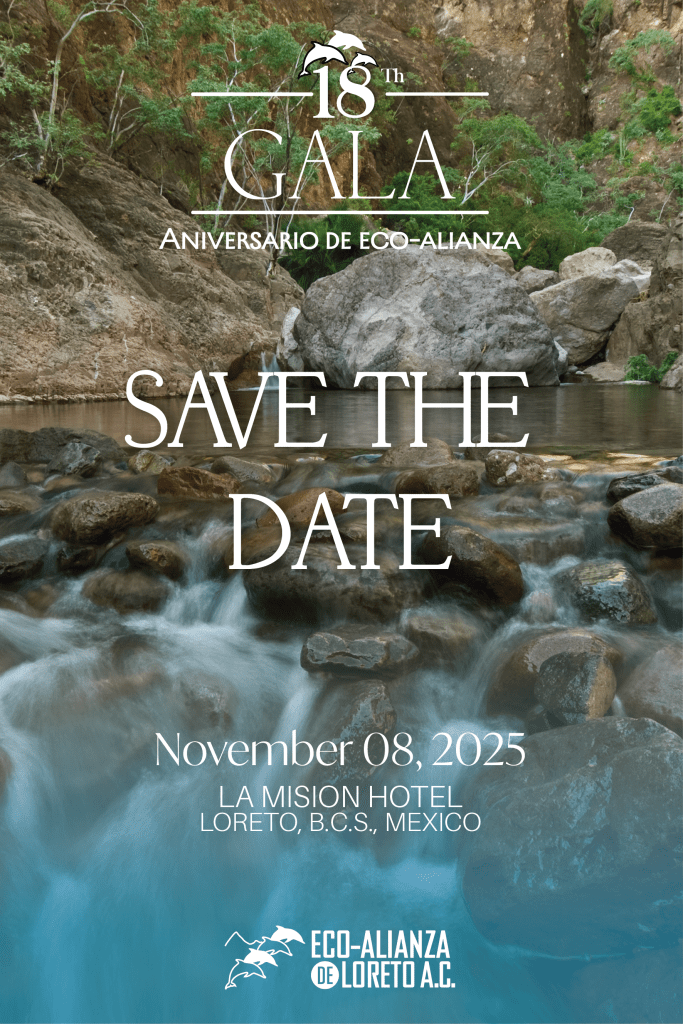
Eco-Alianza’s Annual Gala promises to be a night to remember. Celebrating 18 years of environmental education and outreach, the Gala, known as one of the ‘best parties in Loreto’, provides support for our on-going programs in education, clean water, sustainable fisheries, scientific exploration and more. Our central focus is the health and sustainability of Loreto and surrounding areas.
Once again, La Mision Hotel‘s gorgeous ballroom will be the site of a sumptuous feast, surprising silent auction treasures, and lively bidding-wars on items ranging from adventurous outings, fishing packages, guest stays, and more.
Mark your calendars – November 8, 2025 – SAVE THE DATE! Make early travel and accommodation arrangements, and prepare to enjoy all the magic that Loreto has to offer. Extend the invitation to family and friends. More details and tickets sales forthcoming.
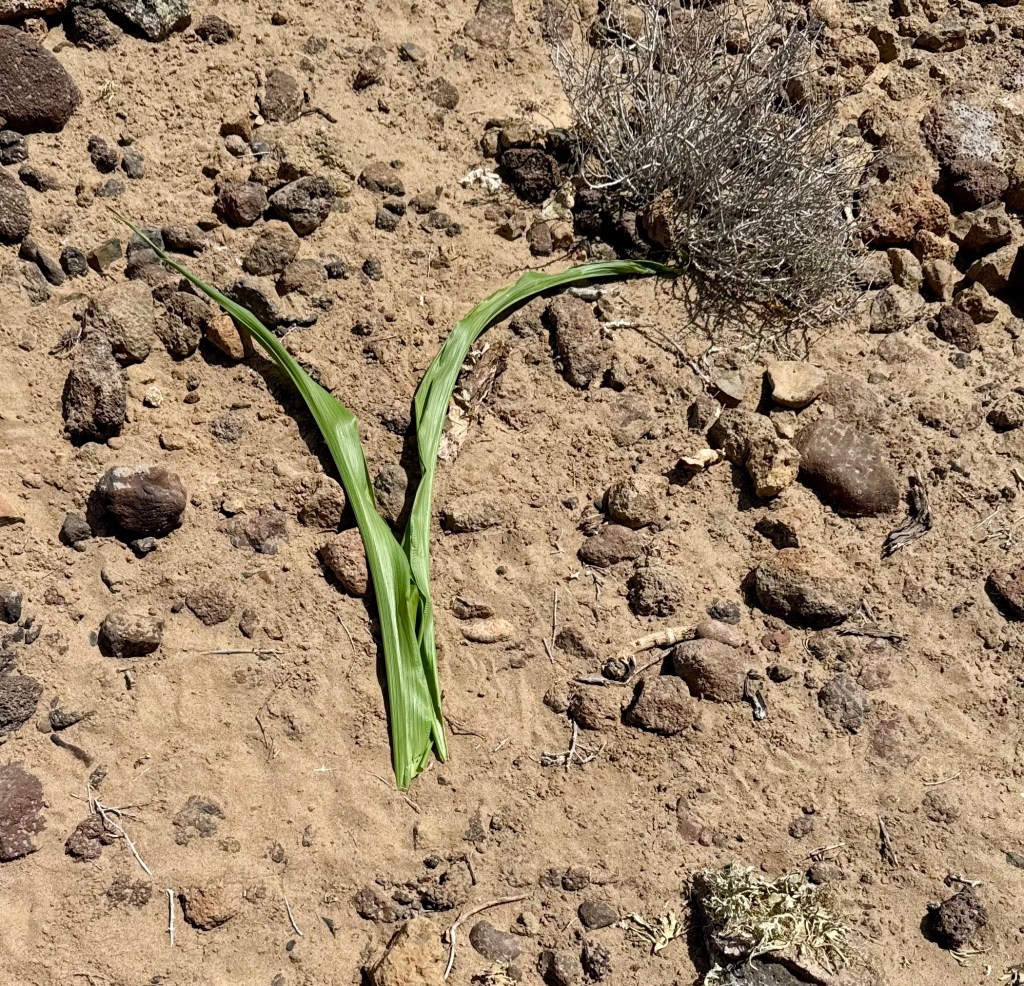
The large jackrabbit to be exact. The one who has been mowing down my corn, chomping off the recently sprouted stalks, and strewing leaves across the rocky soil. I sprinkled wolf piss around the base of the rows, and it’s slowed him down, but I don’t trust the solution to last. Today, the corn and squash/melon patch will be enclosed with small animal fencing. I don’t mind sharing, but I have my limits.
In the dream, there were footprints everywhere. Rabbit footprints on the couch, the bed, the sheets. Across the floor. A trail of dusty tracks, as if he’d even moved into the house.
The garden is part of a community project for sustainable living. The ultimate goal, spearheaded by my neighbors, is to have a network of at least 26 vegetable gardens in our tiny pueblo of San Juanico. While in college, I’d had a backyard produce garden that provided for six of my neighbors, so a program of sharing what is grown feels right at home.
Early in the afternoon, I had removed the netting from the vegetable bins to allow the birds to help me deal with an invasion of cutworms that were gnawing their way through the carrots and lettuce. The birds must have been watching me, the black-chinned sparrows and the cactus wrens descended onto the freshly turned earth as soon as I stepped away. Their small beaks made fast work of my refuse. Worms a delicacy in the dry arid desert.
The dream startled me awake. My mind racing with thoughts of the rabbit, about the unprotected produce. The lure of lettuce. Enough so, I went out with flashlight at 3am, but no rabbit could be seen. The lettuce, of course, is already spent, so not really an issued. Bolted, and lifting its flowery heads to the sun. I’m waiting patiently to collect their seeds, which I’ll use in the fall for the next crop. But in my sleepy state, I imagined it vanished, like a 5-course meal and a very stuffed rabbit unsuccessfully trying to hop away.
Morning light, coffee in hand, I trudged outside to assess the damage. There was none. My dream had been for naught, or possibly a future warning? What my approach did do was to startle the feeders. Mr. and Mrs. Quail and a pair of tiny cactus wrens had taken to the bin to assist in pest control and continue the worm consumption. No food sources go untouched in the desert.
I found myself thinking about historically how man has moved into wild-lands, filled them with tasty treats – green crops and animal herds, like cattle and sheep – and then been furious, that the wild-life decides to feast on the buffet laid out before them. The wolves and coyotes, akin to kids in a candy store, delighting in such delicacies, and then poisoned or trapped or shot for doing what comes naturally.
My rabbit, well, he’s cute in a big-jackrabbit kind of way, and I have no intention of harming him, no matter the struggle over my garden. I’m just going to help him not be so teased. Or at least, I’m putting a more defensible barrier between my crops and his taste buds.
Update on osprey love story and nesting development.
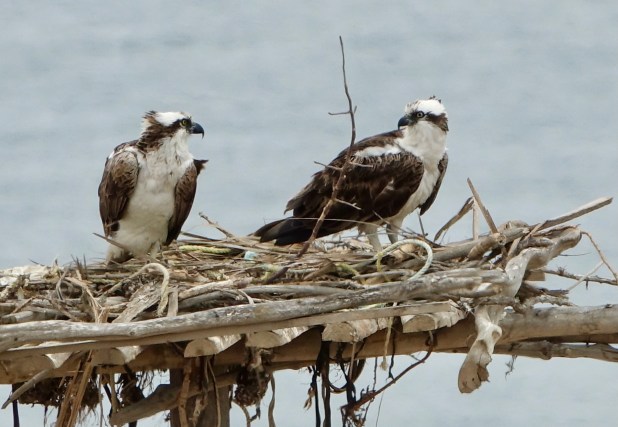
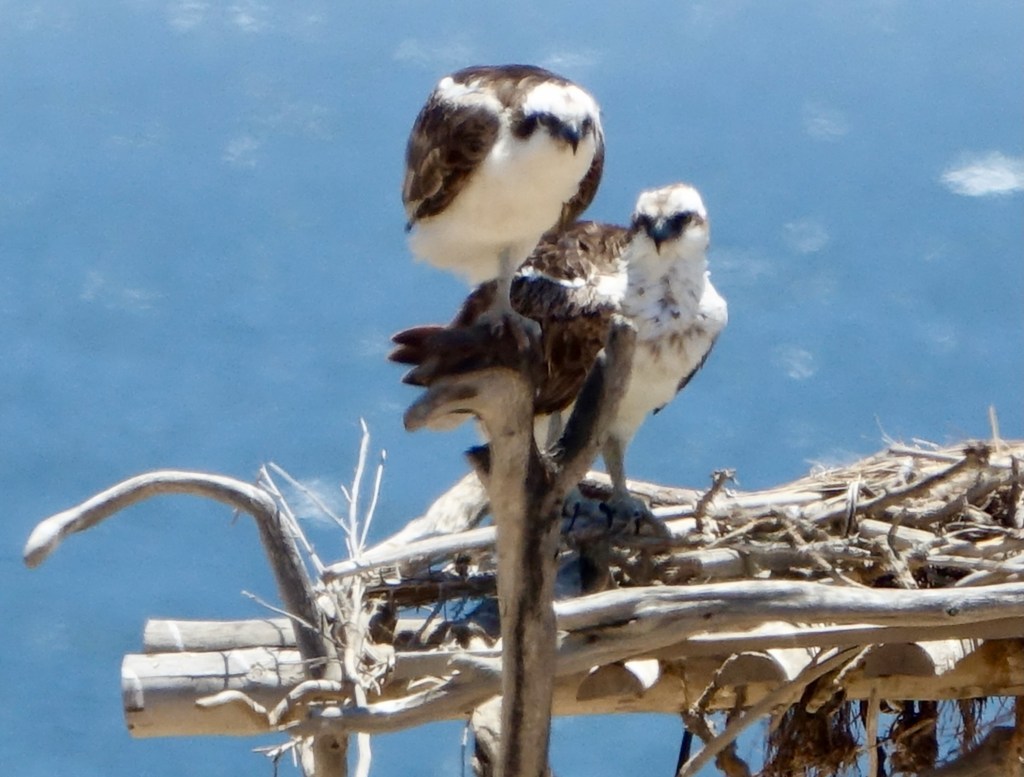
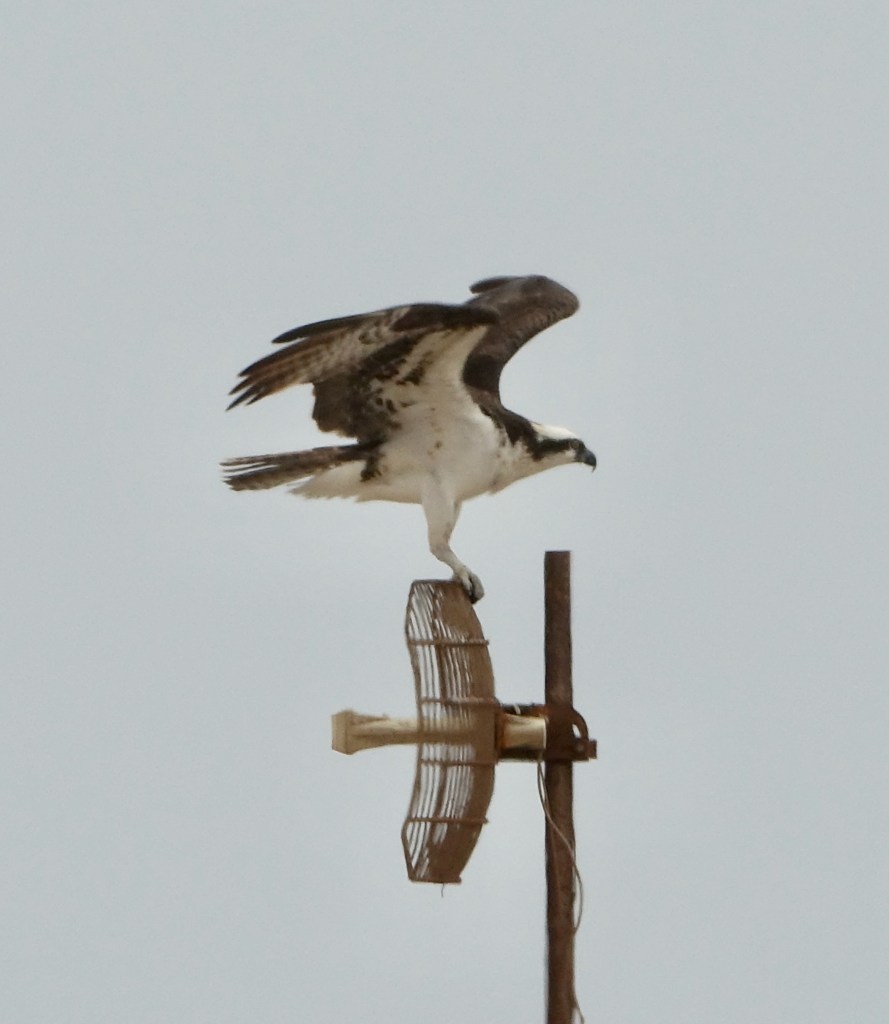
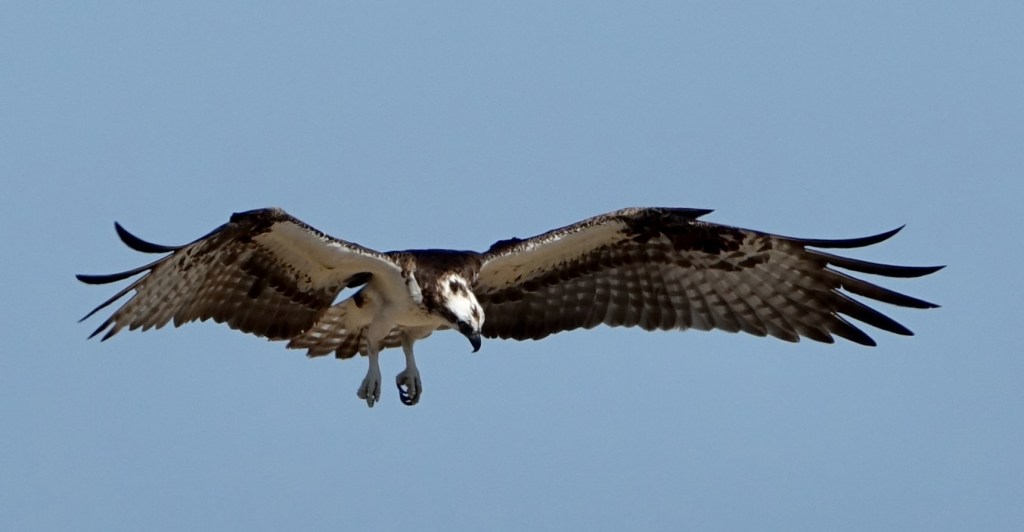
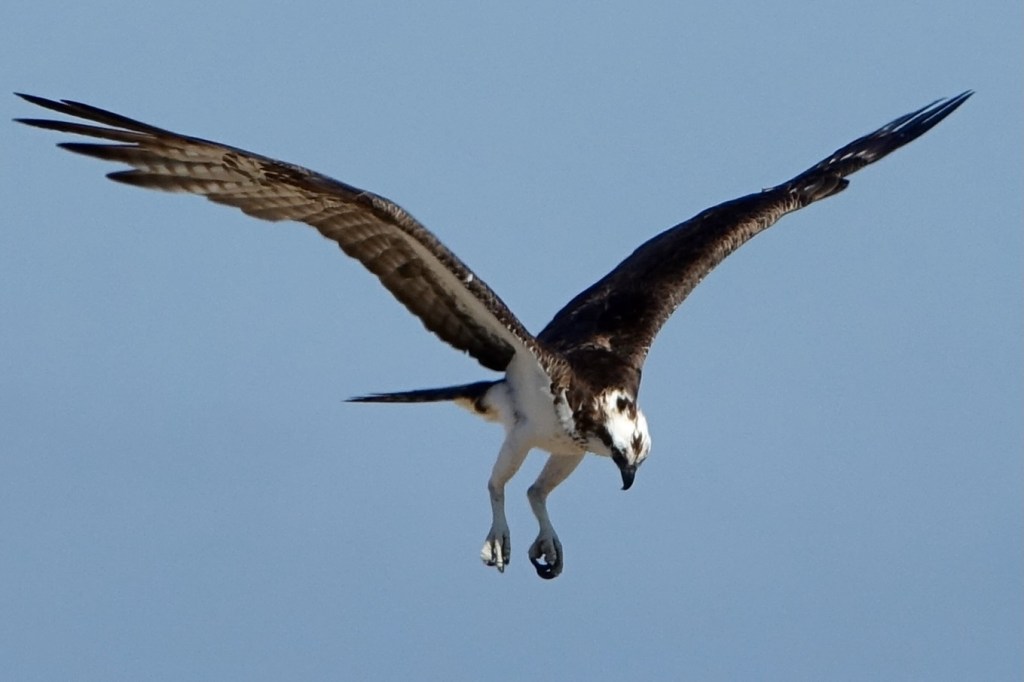
First, they need a new architect. This nest, well, the truth is, they’ve never finished the nest. My guess, and I’m only an observational scientist, is that they are likely two-year old birds, at least the male. He has definitely chosen a nesting site, made an honest attempt to attract a mate, found a willing female, and then wasn’t quite sure what to do next. The photo above is either a look of love, or a look of “I don’t know, do you?”
Second, it’s VERY late in the season for mating. While other nests have hungry chicks demanding constant nutrition, ‘our’ birds (my neighbors deeply involved in what has been a challenging love triangle), come and go, more like dating than mating. Although they do coo (if you can call an osprey call a coo), neck a bit, as in rubbing beaks, and spend some afternoons simply hanging out together.
Male #1, who Ii will give a name, has certainly secured his nesting site. He is present in the mornings, brings his fish breakfast or lunch back to sup on site, and occasionallly adds a stick or piece of seawood to his abode. Afternoons, he’ll call until the female shows up and then they just sit for a while, watching, always alert to the surrounding sounds and activites.
Male #2 continues his attemps to usurp the nest. When the pair is together, he will fly in, swoop down on them, ‘glare’ from the neighbors attention perch above, and do his best to disrupt the romance in progress.
As I type, Male #1 has returned with a fish and is hard at work consuming his lunch. The drama of the love saga and the joy of watching certainly interferes with my other ‘work’, as I can’t seem to stop watching. I love getting to know them, identifying their unique characteristics, and learning their behaviors, all by observation. It’s the best kind of science I can imagine and hugely rewarding.
For two years, the osprey platform remained empty. A gift from my contractor, a wooden platform with a couple of randomly placed sticks perched above a tall phone-pole like wooden stand to attract the sea-hawk raptor. My belief was that the structure had been placed too close to the water, the hunting grounds for all the other waterfowl, too close for any bird in its right mind to choose as a nesting site. At the start of year three, I had it moved farther back on the property, and still, no takers. Plenty of nests in town, huge looming collections of sticks, ropes and gathered seaweed, but my platform remained bereft of bird.
And then, he appeared. A long male who one day arrived with a stick. One stick, and deposited atop the wooden structure. You could probably hear my ‘whoopee’ on the other side of the pueblo. Day after day, for hours, he sat and waited, chirping in hopes of attracting a female. Slowly, he added a few more sticks. Some dried seaweed bulbs. Some green grasses. He’d return to the nest after hunting, large fish in his talons and settle in for his meal. Each time he spied another osprey, his calls rang out across the terrain.
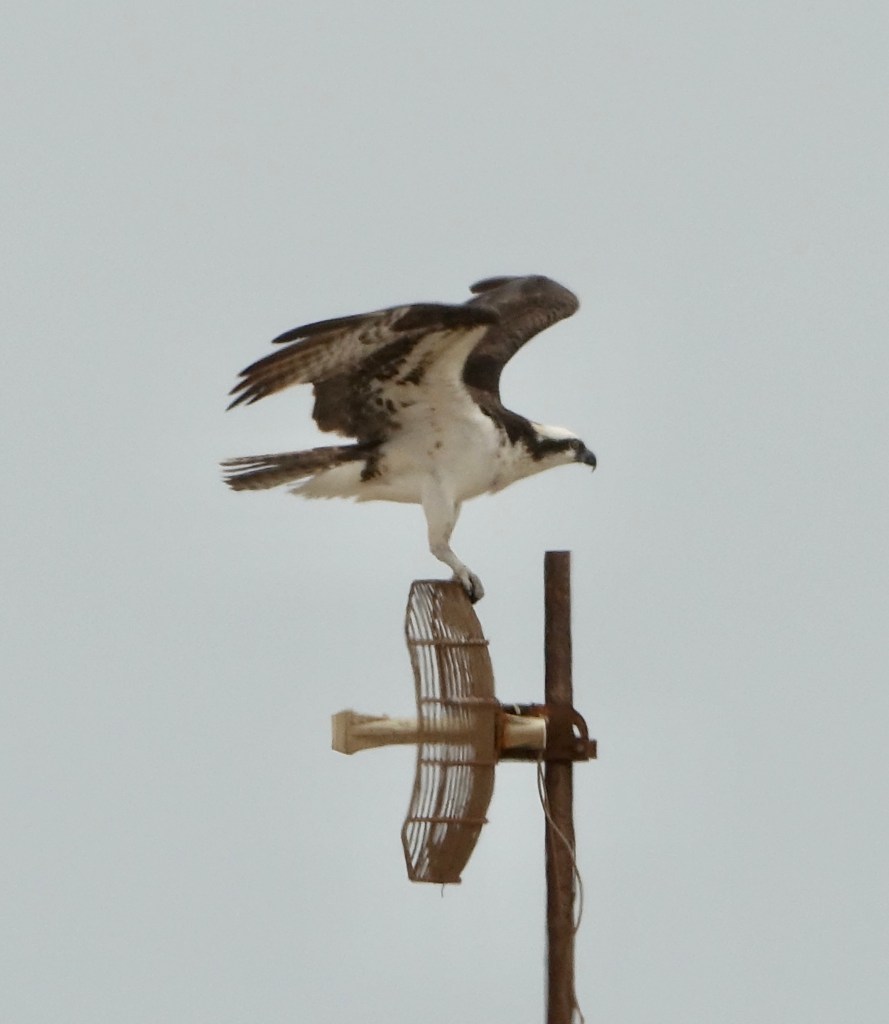
And then, she arrived. A slightly larger-then-he female who perched on the side of the nest-to-be and seemed to be waiting for him to make his move. He flapped his wings. He vocalized. He had her in his sights when another male showed up, and took a position on the neighbor’s weather antennae above the potential nest. Male #1. as I had grown to call him, seemed beside himself, confused as to what was more important. Chase off male #2 or get to creating a marriage with Female #1.
Eventually she grew tired of waiting and flew away. Male #1 was back to solitary. Less time on the nest, but still, but he did add a few more sticks. A bit more seaweed. Lunch and dinner of his catch. Always vocalizing his shrill call whenever another osprey entered the neighborhood.
And now, two weeks after her initial visit, Female #1 has returned. She’s decided to spend more time on the platform. I have yet to see her bring her own nesting materials to what might be her home, but I remain hopeful.
I’ve spent much of early spring fixated on nesting cameras of bald and white eagles across the USA landscape. From Big Bear Mountain in southern California to U.S. Steel in Pennsylvania, a cam in Traverse City, Michigan and elsewhere, the laying of eggs, the hatchlings, the loss of chicklets, an almost consuming watch of eagles has only whetted my appetite for an experience up close and personal on the platform at the edge of property.
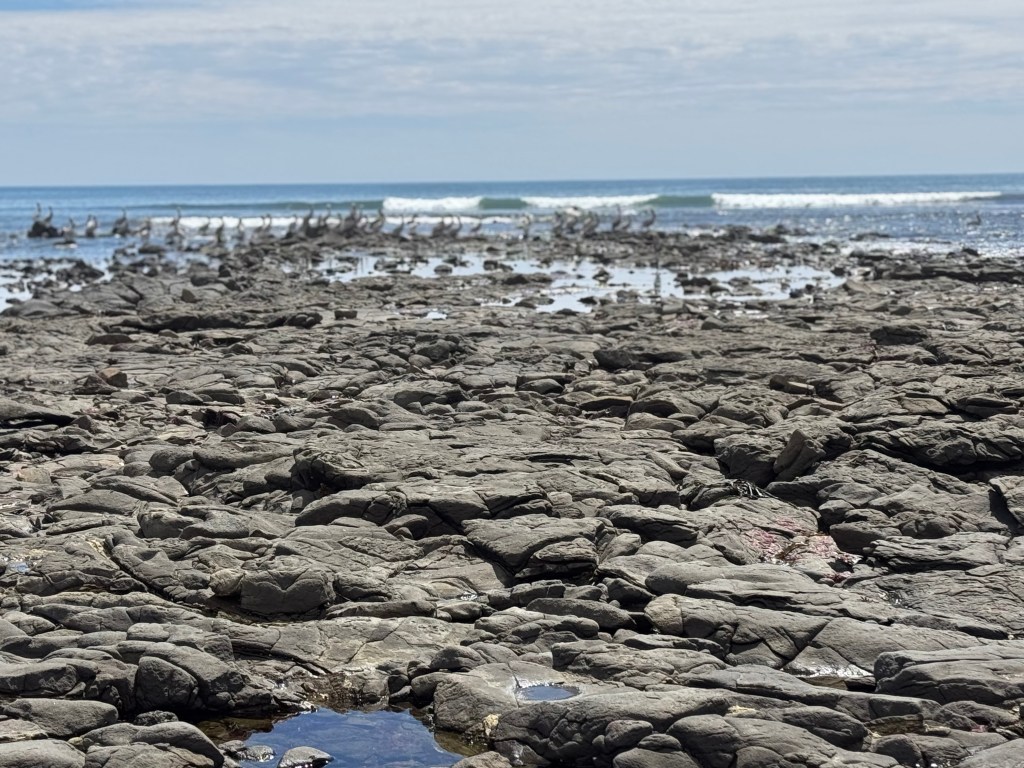
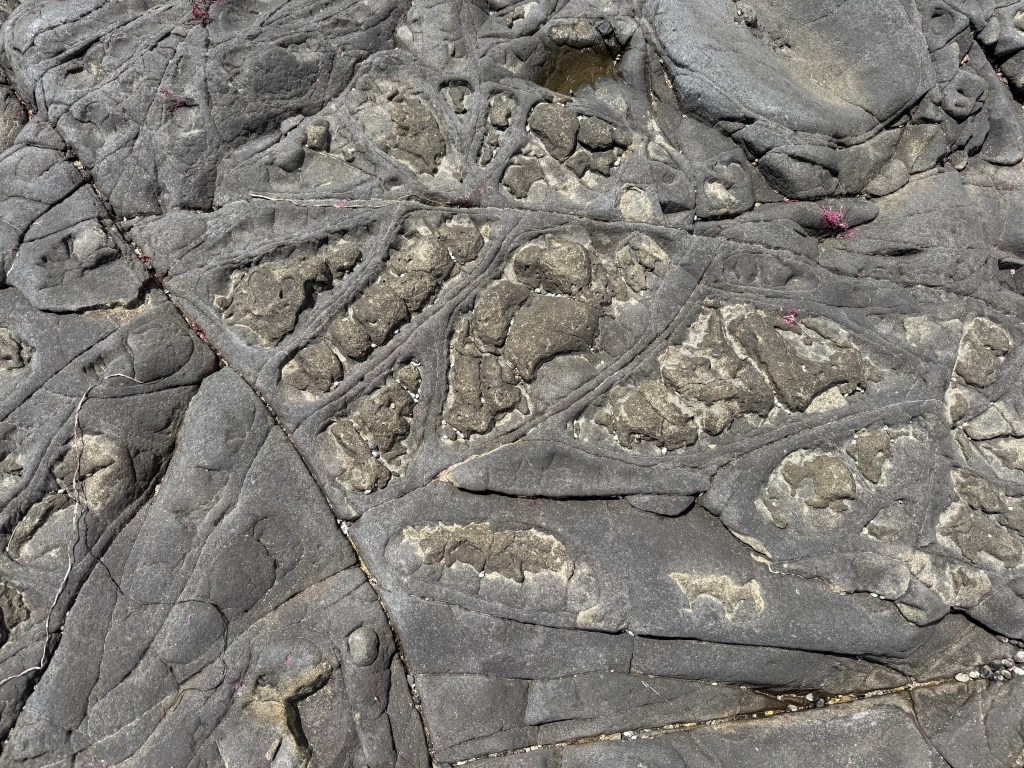
Hidden in the crevices of the flat reef faces, tiny crustaceans create art-like patterns, akin to indian wall art, which at first glance appear to be small stones or heavy grains of sand. But a closer look, and an entire ecosystem reveals itself. Communities gathered together in the shelter of cracks in the rock surfaces.
The discovery, made during a morning meditation walk, reminds me that things are not always as they seem. That my assumptions might cloud my ability to perceive, and that to question and explore will gift me with new insights and knowledge.
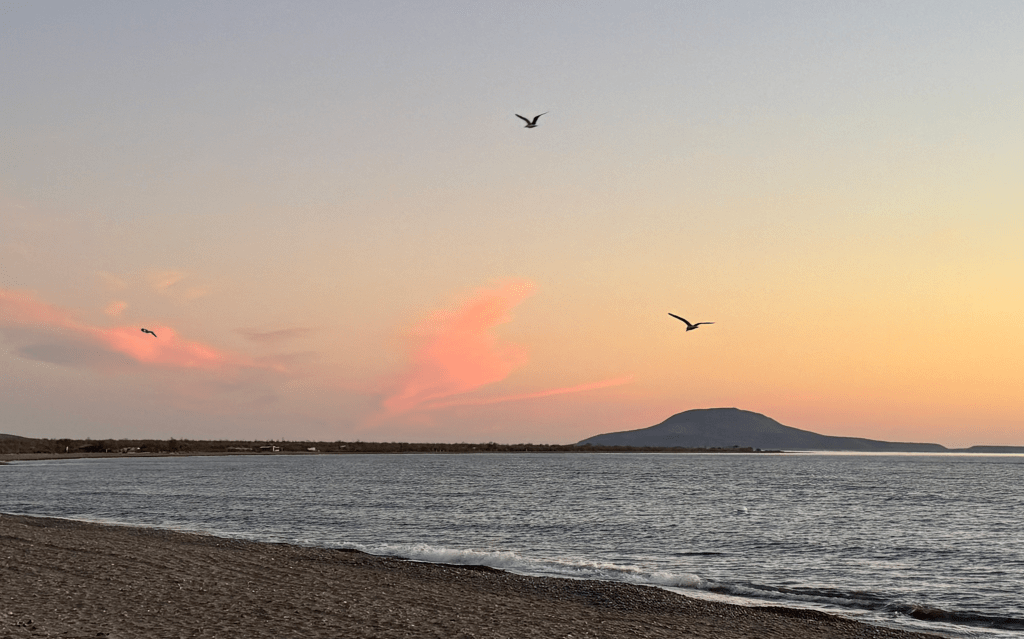
Quietly, I sit on the sand, and watch as the earth turns toward the edge of the eastern horizon, and paints the sky in shades of pink and salmon. The shoreline glistens, replete with wind waves from the evening blow, and the dancing antics of pelicans as they dive for bait fish.
I realize this is a refuge, this morning ritual I’ve created of sitting next to the sea. It is here I let my mind clear the clutter of worry and the weight of the assault on much of what i hold dear. I realize that I am blessed in my ability to retreat to this seashore, and I never take it for granted. What I have learned in my own life, is that to the ocean I return, for solace, for healing, for a reset.
I lean back on Mary Oliver, a poet who has been lodged in my heart since my first reading of her work.
She writes:
“I am in love with Ocean
lifting her thousands of white hats
in the chop of the storm,
or lying smooth and blue, the
loveliest bed in the world.
In the personal life, there is
always grief more than enough,
a heart-load for each of us
on the dusty road. I suppose
there is a reason for this, so I will be
patient, acquiescent. But I will live
nowhere except here, by Ocean, trusting
equally in all the blast and welcome of her sorrowless, salt self.”
–Mary Oliver, Ocean
I share Mary Oliver’s trust in the watery world that encases the planet. The ocean actually unites the shores of all the continents and connects us together.
I don’t understand the world right now. I don’t understand hate, or demonizing those of different color or race or opportunity. I don’t understand the spewing of lies repeated until somehow they become some alter truth. I don’t understand where critical thinking fell off the cliff, like watching a horrific accident in slow motion. Special interests and those with the most money are tearing us apart.
I don’t understand lack of empathy or a misunderstanding of all that is human. I don’t understand those who choose not to see that working together – this misshapen ungainly world of disparate parts and regions and cultures – we can be so much more, gain so much more, make all of our lives so much better.
It is my hope, that you, too, can find that space where for a moment, you can take a breath, let your shoulders slip down and root yourself in your own best essence. Hold on to what you love. It is the best antidote to toxins and hate.
For the first time since I’ve lived out of the United States, I was able to cast my ballot via the internet. I had requested an online ballot from the County of Orange. The registrar had forwarded a packet that included a statement of oath, swearing to my identity, a digital envelope that matched the type that I had used for mail-in ballots, and the ballot itself.
Each was in a PDF format, which when completed, was no longer editable. There were instructions to fax, or email the documents to a registrar’s fax service for delivery. With some help from google search, I was able to find a free ‘online fax’ service.
I had signed each document digitally, including the envelope, and was fascinated, and gratified, when a woman from the registrar’s office contacted me. She said i needed to print the envelope, hand sign it, and resend. This allowed them to check my signature against what I have previously used. Yes, it’s me.
I dutifully scanned my now ‘inked’ signature envelope and sent the replacement. The registrar’s office notified me when it had arrived and that my ballot was now complete.
What a thrill to participate in my democracy and support my country, even while living outside it’s borders. Secure and safe elections, again in 2024.
Sometimes there are waves, and sometimes, not so much. Nothing quite as entertaining than a group of surfers after days of a no-show swell, sitting around grousing, as if the ocean gods were punishing them.
Of course, we’d all love a consistent flow of rideable fun surf, but then, would we truly appreciate the wonder when the waves show up? When we can say to ourselves and our friends, “That sure was a fun session!” or “What an epic wave!”
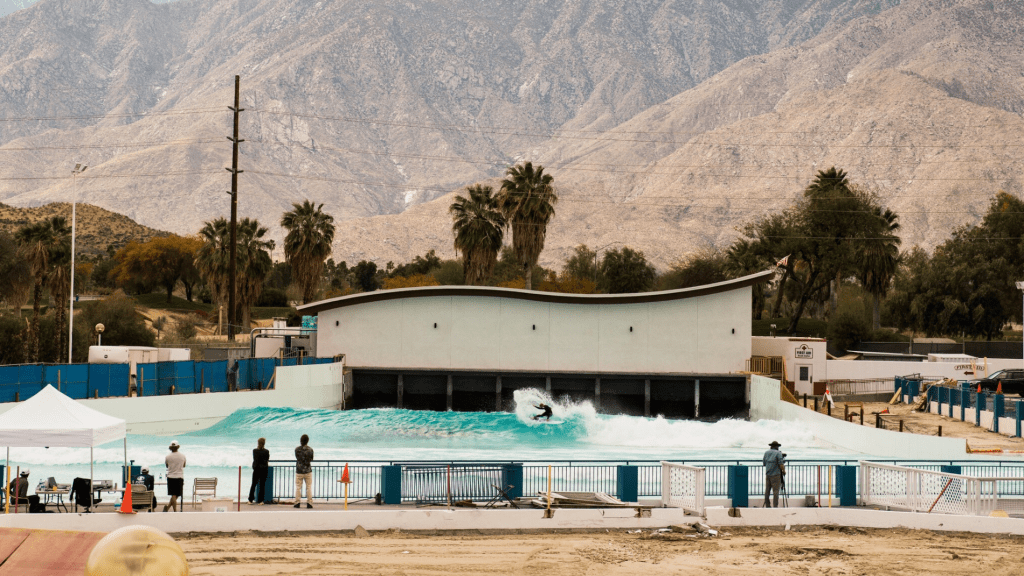
To solve the problem (ha) of fickle surf, wave pools are springing up across the country and the globe. This past week, a long board competition was held in Abu Dhabi on perfectly formed mechanical waves. I watched in wonder as wave after wave challenged the contestants, not to pick and choose a wave, but to demonstrate their skill sets, back to back on exactly the same surface and faces. You can watch a replay of this contest here: https://www.worldsurfleague.com/events/2024/lt/313/abu-dhabi-longboard-classic/main
I was trying to wrap my head around a wave pool in Saudi Arabia, https://www.surfer.com/news/wave-pools/20-years-making-kelly-slater-abu-dhabi-wave-pool, created by Kelly Slater, whose first pool, “The Surf Ranch,” set the bar and started a trend toward mechanically produced perfect waves. The technology to create the waves can alter the shape and size for different types of acrobatic performances, from a pro-level “WSL Competition,”to a famiily beginner called “Waikiki.”
There are wave pools in Palm Springs, CA. https://palmspringssurfclub.com/, South Korea, Australia, England, Switzerland, Japan, Brazil and there is even a wave pool in Ewa Beach, Hawaii. https://www.waikai.com/wai-kai-wave-oahu, which seems almost counterintuitive. I mean, isn’t Hawaii the homeland of surf?
Aside from yet another man-made attempt to upstage nature, these mechanically formed waves are changing both the nature of surfing as well as the location. As of this moment, research indicate that there are 346 mechanically generated wave pools either open, under construction or in the planning stages across the globe.
While Slater opened the door with Surf Ranch, the creative minds hungry for wave experiences outside the ocean continue to push the mechanical door. While Surf Ranch and Abu Dhabi use a one-of-a-kind soliton generating hydrofoil to displace standing water, other technologies include turbine driven pushed water which creates ‘standing’ waves, akin to what. one might find in a river, a plunge technique, currently found at Surf Lake in Australia, and an air piston system, like the one found in Palm Springs.
The sticker shock for the bulk of these waves will limit most action to professional surfers intent on honing their skills. Hourly rates begin around $50USD for group sessions of beginners, and rise from there. Surf Ranch can be rented for the day for $70,000, or a daily per person rate (at 10 surfers) for $5K to $7K, a sure indication of the exclusivity for the best wave creation and the most individual opportunities. Wave costs at Wai Kai range from $175 per session for the 100-foot wave, $140 per session for th 65-foot wave, and $90 per session for the 30-foot wave. Multipack discounts are available.
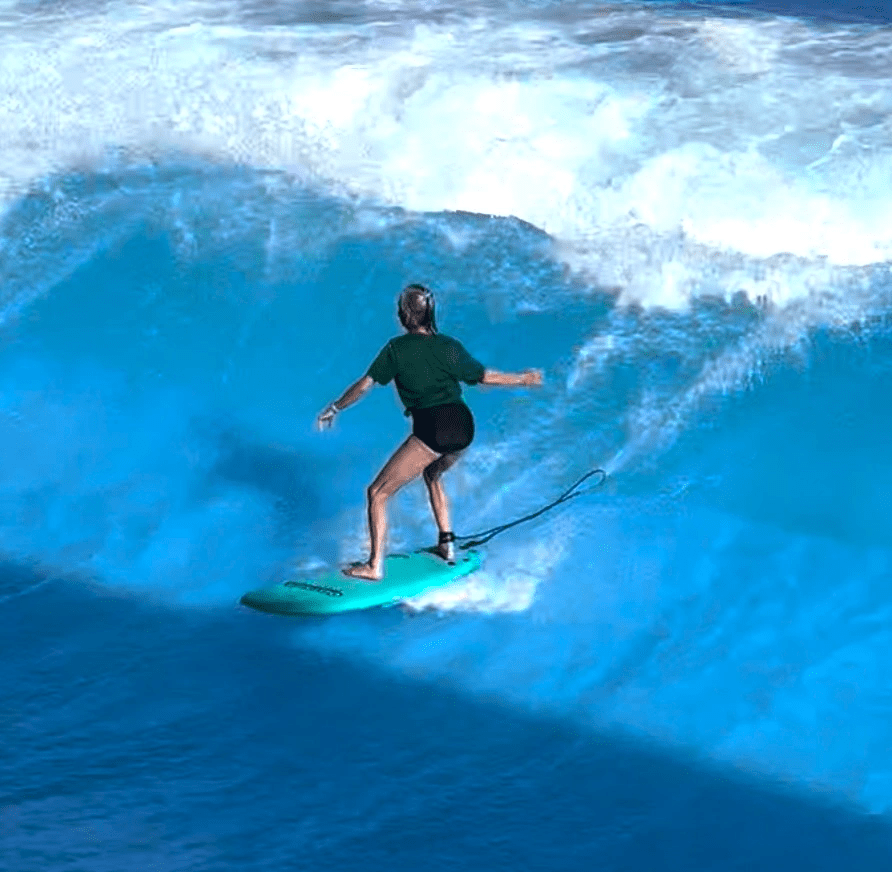
I was lucky enough to enjoy a session at Wai Kai, and found the standing wave to be challenging and fun. Several crashes and a couple of successful rides, and i gave the pool over to the kids. I still prefer paddling out into the deep blue sea, but for some family fun on discounted days, and training grounds for tomorrows (and today’s) pros, the possibilities seem endless.
Lucky Catharine Cooper on Wai Kai wave in Ewa Beach, HI.
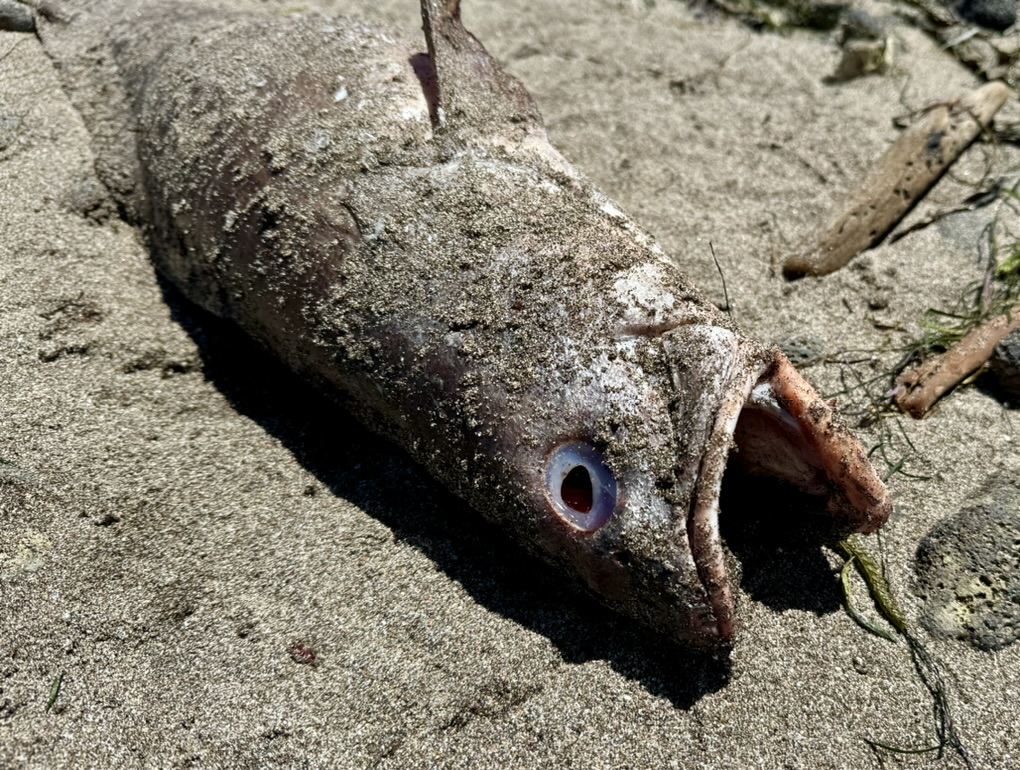
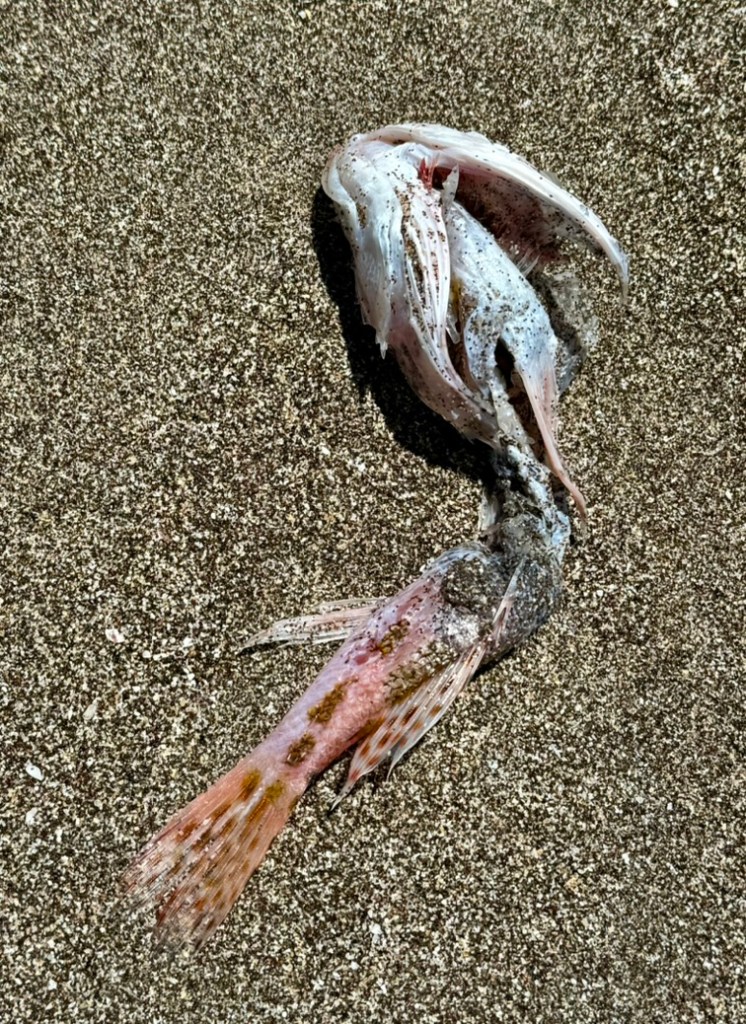
The beach was littered with small baby corals, obviously ripped from the sea floor. But why? And how? We did not have a big surf. There had been no storms. What had caused the mass landing on the sand, left behind as the tide ebbed?
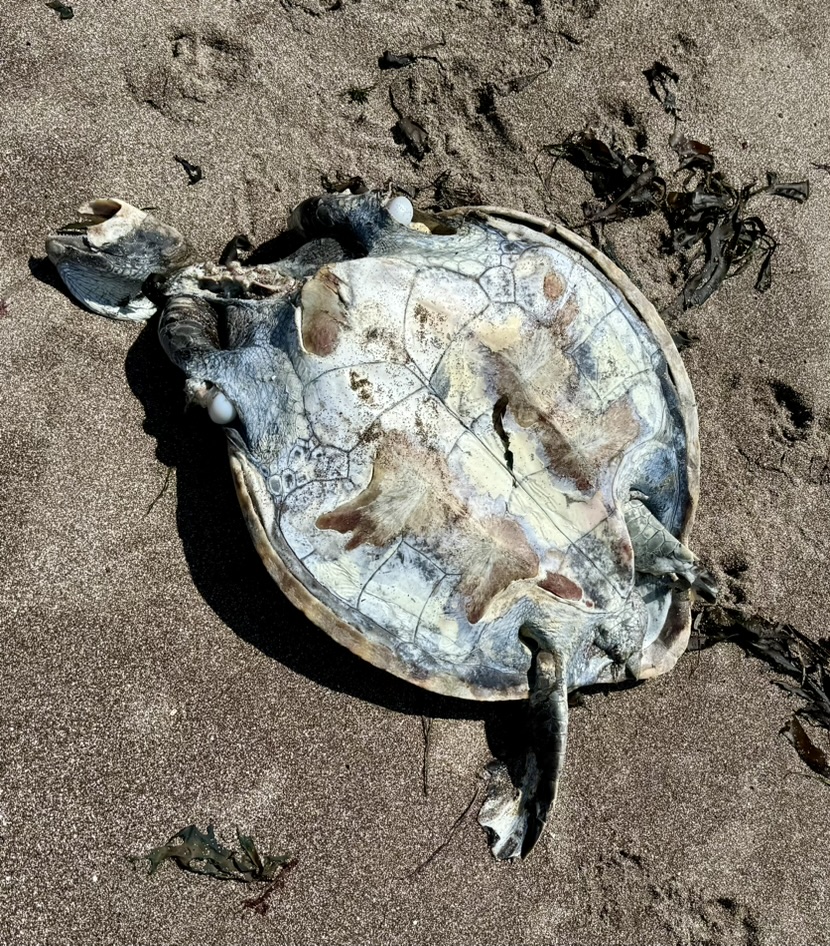
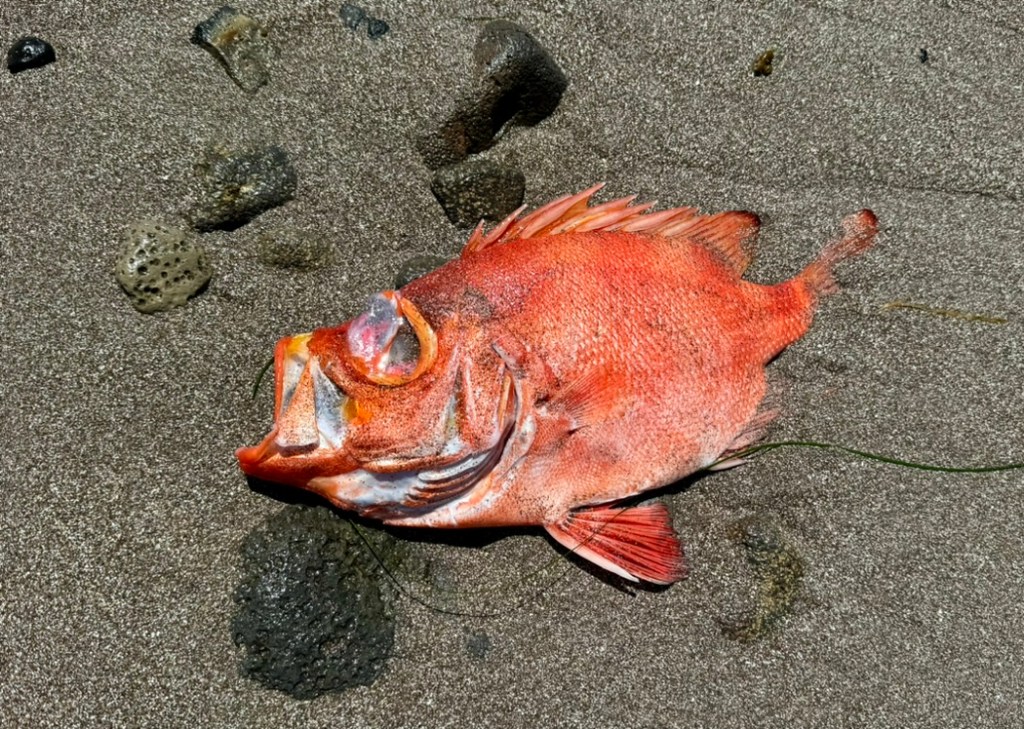
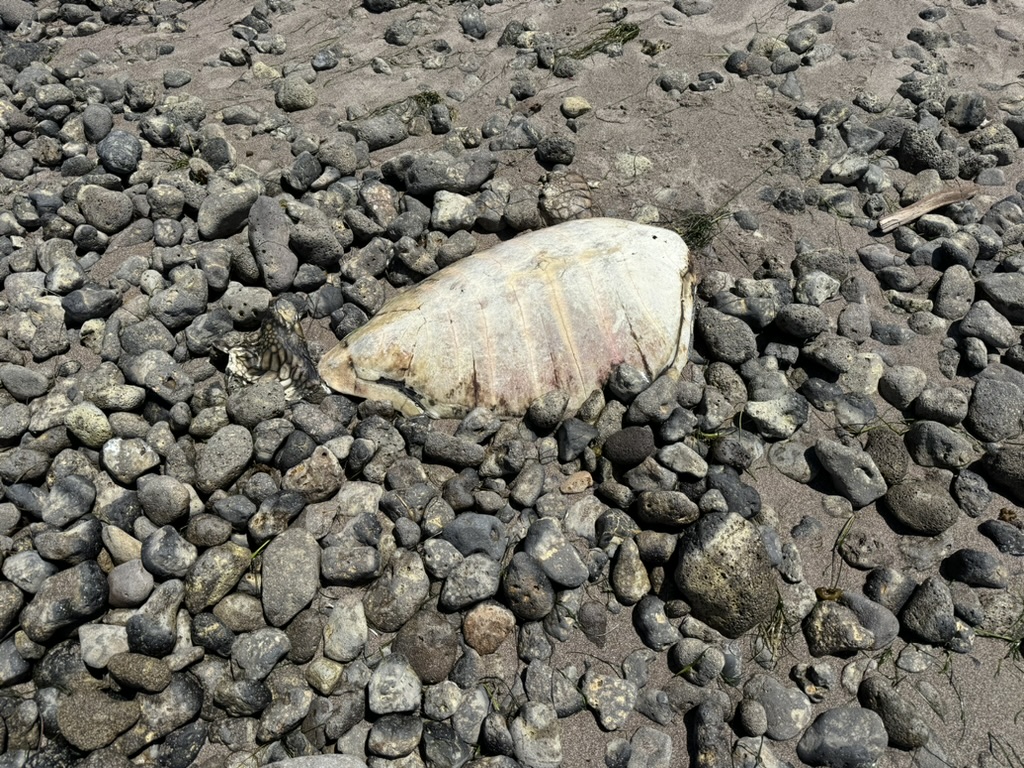
Further on, not merely coral, but eels, small fish, Garibaldi, and turtles. Fresh kill and some not so much, the carrion eaters had begun their clearing of flesh, but recent enough. Was there poison in the water? Some toxic chemical spill? But wait. I was hundreds of miles from any industrial pollution source, and we were not amid an algae bloom. My heart hurt so badly that the evening’s sleep was disturbed and uneven, visions of the dead marine life like a wave washing in and out of my dreams.
I remembered the netting. The shift from pole fishing to net fishing. And then a shift from net fishing to finer mesh netting because already, there weren’t any big fish to catch in the wide mesh net.
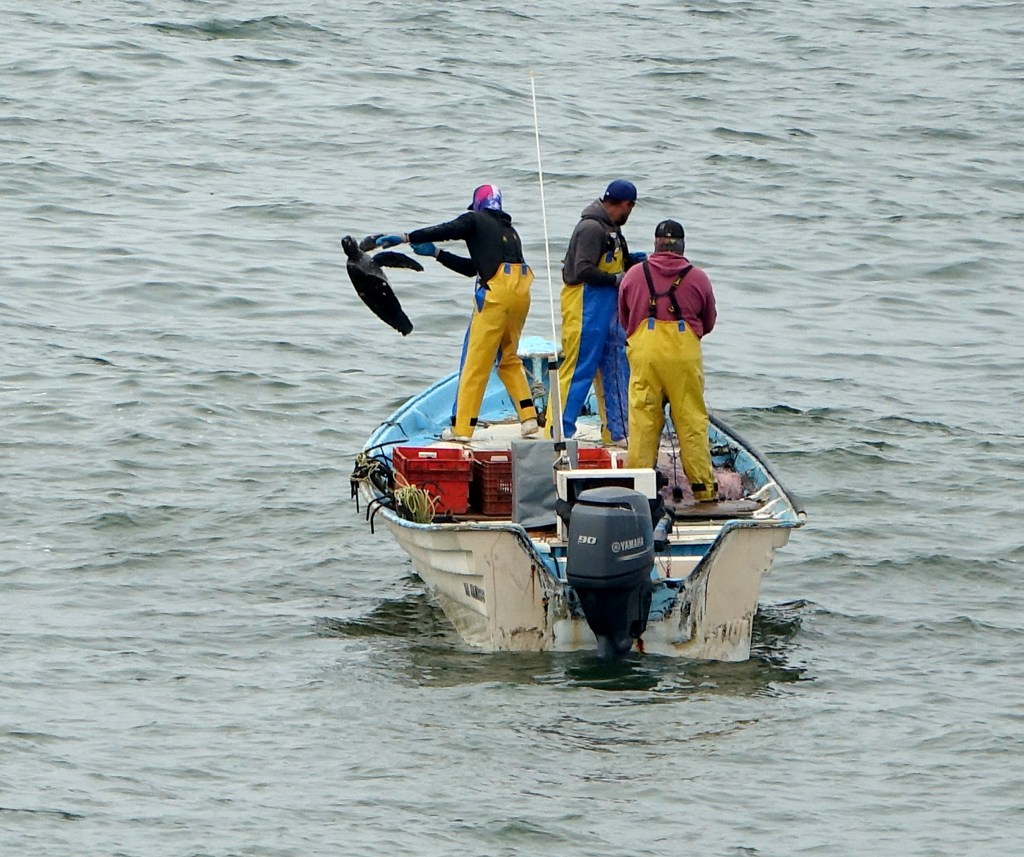
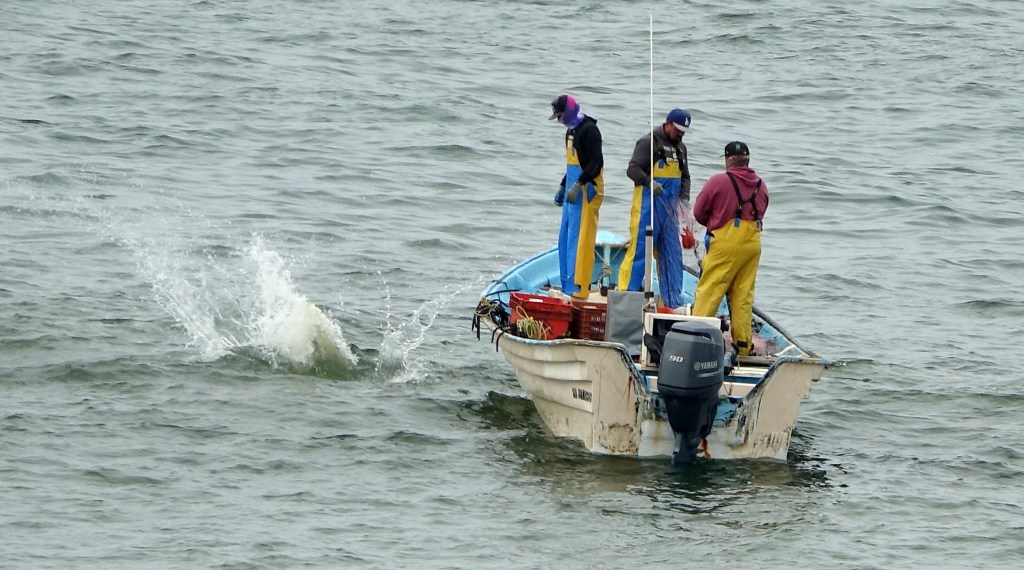
The next morning, I watched one of the panga fishers drawing in their net. I didn’t witness a single fish being salvaged, but I saw several small fish tossed back into the sea. The waiting pelicans greedily watched for whatever free meal they could garnish. It could have been my viewpoint. There must have been sell-able fish in that net.
The questions swirled in my head. I live in a small fishing community on the Pacific Coast of Baja California. The fishing has been hard hit, first by foreign trawlers that rape the sea of anything their massive operations can suck from the water, and now, even the local netting is producing less than hoped-for results. The at-market price for fish is low, and the cost of gasoline to run their boats is high.
Again, it’s a fishing community. The fishermen have no other means of creating income. They have not been trained in other skills. Fishing is a manly, macho occupation. The fishermen are proud people. And when there are no fish and there is no money, what will happen to the community?
Locals beliece the problem is one caused by large trawlers. The squid ships especially, whose nets mercilessly scrap the bottom. Unregulated. Unchallenged.
The damage from net fishing is not merely limited to habitat destruction. All creatures in the water column and on the seafloor in the net’s path are scooped up along the way. Targeted commercial species are kept to sell, but the rest of the catch, by-catch as it is known, plants, turtles, and other fish, are discarded, usually dead or dying.
Who am I to say how, where, and what the locals should fish? I am a cultural outsider, living on a saved income that allows me to reside next to the Pacific, my dearly loved and cherished body of water. What are the answers? How do you convince someone who is hungry that they should stay hungry so that later, they might be able to encounter more bounty? Science has shown us that Marine Protected Areas (MPAs) work. Small fish sheltered in protected waters grow up to be big fish that swim out of the sanctioned area, replenishing the species. Mexico has successfully implemented MPAs in many locations, Cabo Pulmo and Loreto being two examples, but limited and declining resources and lack of enforcement challenge regulated waters. Education is a key factor in every environmental concern, and too often in short supply outside population centers.
When I saw the coral on the beach, the round, spongy carcasses drying in the sun, I immediately thought of how the coral are fish nurseries, protection of food sources, crab and lobster habitat, and the very column of life that begins on the ocean floor. I thought about my community and wondered if they realized the long-term damage that short-term netting may have caused. I wondered if it was even in my place to say something.
I realize what I am experiencing is a small microcosm of a global issue. In that vein, I continue to believe that education, beginning with youth, is the foundation for potential solutions and health. In the meantime, answers are developed from collective thinking.
How do you tell a hungry man that he cannot fish? You don’t. You hold optimism in your heart. You ask, and you ask again, what can change the course? The bounty of the sea is not unlimited.
Catharine Cooper is a writer, surfer, and painter. She lives on the southern Baja coasts – both the east and the west – with her dog, Loki.
The pintails arrived a few weeks ago, taking up residence in the local mangrove pond. Somehow, they crossed the border without passports or any other form of ID. Just drifted in on winds and chose their winter home. My normally ponderous mind, grabbed hold of the idea of borders, about how they are constructs, power structures, and quite out of step with the innate rhythms of our blue planet.
I harken back to American Indian tribes, who believed that no one owned the land (at least that was what i was taught), that the earth belonged to everyone. Seems the birds have it right. So I ponder and go about my day.
Northern pintails are long, slender ducks with long, narrow wings, earning them the nickname “greyhound of the air.” Pintails are named for their elongated central tail feathers, which constitute one-fourth of the drake’s body length. (Duck’s Unlimited)
Dabbling ducks, they filter out seeds and insects from the surface of the water with their bills. They also waddle at the edges of wetlands and through agricultural fields feeding on grain and insects. They form large groups and readily associate with other ducks during the nonbreeding season.
They can be found on every continent except Antartica, which i suppose means they have a true GLOBAL ENTRY certificate. In any case, I enjoy watching the two pairs, and hope that their mating brings some ducklings to our watery pond.




















 Baja Dreaming
You must be logged in to post a comment.