Only in Mexico

Only in Mexico could the transport of a huge tank that utilizes the entire width of Mex 1 – the solitary two-lane highway that spans the peninsula – take place in the full light of day. No matter that traffic backs up for hours over the spiny mountain climb through the central deserts of Baja. No. Just a couple of guys riding on the very back (no seat belts or other security measures) waving traffic to ‘back off.’

At special spots on ridges with a small pullout, the caravan (three huge trucks all tied together – imagine a Burlington-Santa Fe train – pulling this enormous tank) would simply stop. Rather than the rigs pulling over, the dudes on the back jump down and begin to direct north and south bound traffic around the road covering vehicles.

In between the stops, the traffic sooooo slow (around 8 MPH) let travelers kind of hang out, chat while ‘parked’ in the middle of the road.

In the States, it would require mountainous piles of permits, special hours of travel, police escorts with sirens and flashing lights, a special traffic co-ordinator, and specified rest stops.

It’s scenes like this that really bring travel Mexico to my heart. All that’s required is patience and a good sense of humor – along with a dollap of curiosity.

The tank? Probably bound for Santa Rosalia and the newly re-established copper mines.

Tsunami debris: Garbage wave could hit Hawaii, U.S. West Coast & Baja California

The ocean does link us all,and whatever we toss into it, it simply floats through its cycles and currents. Think about her, before you toss random garbage, drain your car wash into the streets, or imagine that somehow, your actions don’t count …

Fukushima (global-adventures.us): Massive amounts of debris are floating in the Pacific Ocean; and between one and five percent of the garbage could wash up on the shores of Hawaii, Alaska, British Columbia, and the U.S. west coast. The ocean debris, estimated at 3.6 million tones, is a result of the magnitude-9 earthquake and the resulting tsunami in Japan (Global Adventures reported here). Several large buoys, possibly originating from Japanese oyster farms, already washed up on Alaska shores, and Nikolai Maximenko, a senior researcher and ocean current expert at the University of Hawaii, says that 0.9 – 1.8 million tons of debris could reach the islands in early 2013.

“In a year, the Northwestern Hawaiian Islands Marine National Monument will see pieces washing up on its shores; in two years, the remaining Hawaiian Islands will see some effects; in three years, the plume will reach the U.S. West Coast, dumping debris on Californian beaches and the beaches of British Columbia, Alaska and Baja California,”

read more ::: ”

via Tsunami debris: Garbage wave could hit Hawaii, U.S. West Coast « Global Adventures, LLC.

beauty where we find it …..

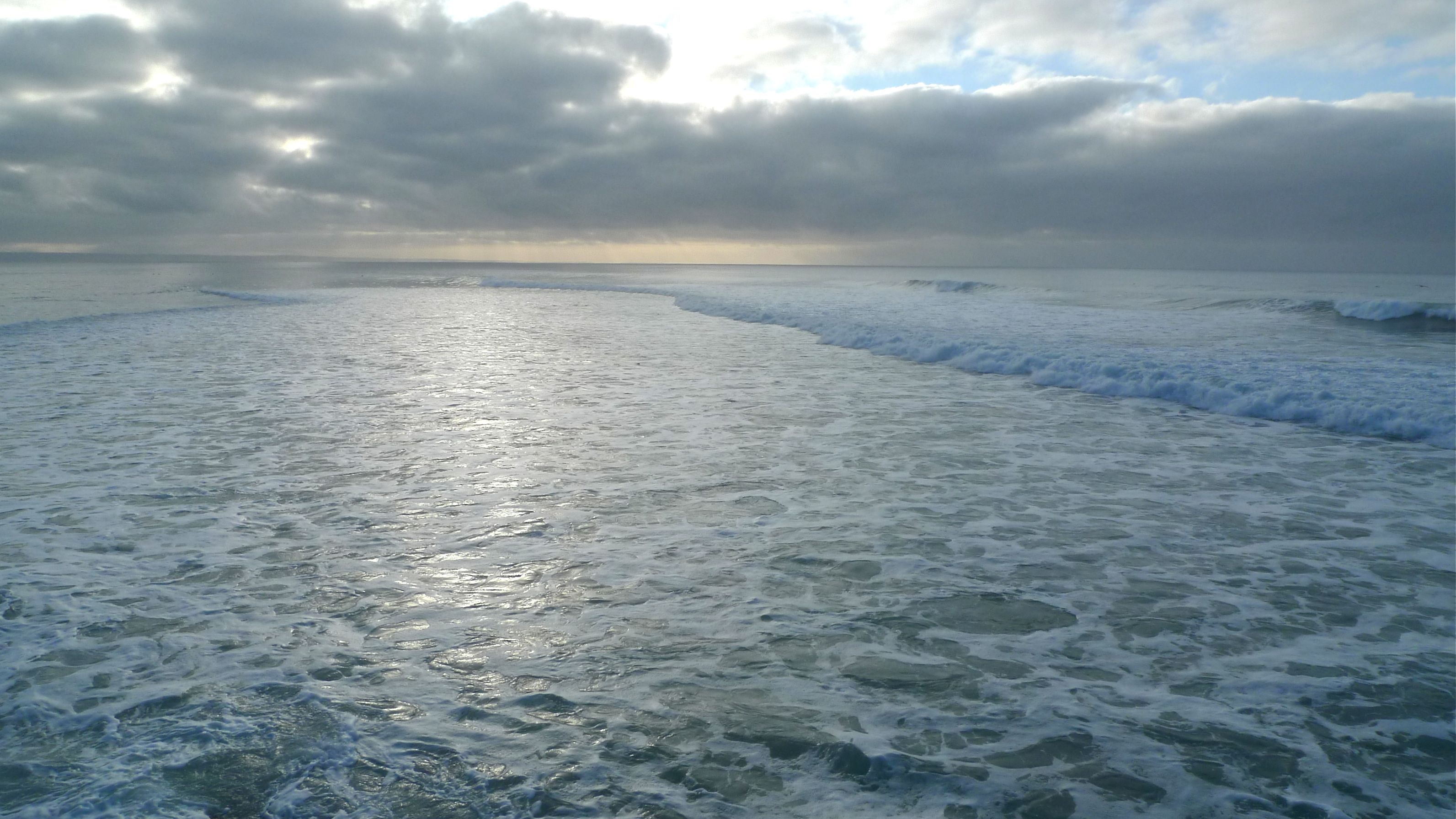
Baja : Pacific Morning

For the uninitiated, there is little that can be said to fully express the beauty of Baja California Sur.  From the moment one leaves the populations of Colonet & San Quintin, makes a requisite gas stop in El Rosario, and heads into the heart of undeveloped land of cardon, bojum, cholla, poloverde, cirrius and more …  the heart slows, the shoulders drop, and the mind begins to embrace again that primal space of undeveloped land.

Mex One zigzags across the peninsula in undulating rhythms, following for the greater part, the easiest passage through rough terrain.  That translates to switchbacks, mountain climbs and descents, and arroyo crossings.  Wide plains, dry lakes and craggy rock piles – the spewn evidence of long-ago volcanoes litter the landscape.  I’ve stopped counting the trips. I never fail to be inspired.  I am always stunned by her beauty.

For those who are afraid to travel, I am sorry.  So much the greater landscape and less crowded roads for me.  While the horrors of the drug cartels are not to be ignored, the city streets of any major metropolitan area has its own body and assault count.  I feel safer in my home in Loreto than I ever did in the states.

The Pacific side teases with waves that follow distant swells.  Spots like the Wall, Shipwrecks, the local spots of Ensenada .. and of course, Pescadero, Todos Santos and Cabo San Lucas beckon surfers from across the globe.

The east coast, the beautiful bountiful Sea of Cortez, is filled with dolphin, sea turtles, fish of every color and size, rays and whales – blue, pilot, fin and orca.  Sunrises, sunsets .. kayaking, paddling, surfing, hiking, sailing, scuba diving, snorkeling .. exploring ..  magic.  To be with and surrounded by such beauty is to me – pure magic.
And then there are the people – beautiful kind warm family loving folks.

Food!  Beverages!  Music!  Dancing!  Camping under stars and/or a full moon. Yes : Baja : I love and dream of you always.

My kind of traffic jam ….

Traffic Jam

Traffic Jam

Imagine : Barreling down a dirt road in the middle of nowhere (actually true) and beginning to believe that you really are in the middle of nowhere (it’s been nearly 100 miles on deserted dirt roads) when suddenly, you have to slam on the brakes and wait for the traffic to clear.

First it’s the barking of dogs. Then it’s the lyrical giggle of a small child. Then it’s the lead goat with the tinkling bell. Then it’s the dad : aka goat herder : walking with the dog and the child and the goats home to the safety of their pen for the evening. Their home? A small house with goat pen and garden ‘off the road’ (at least 20′) in the middle of that same nowhere.

Water? From a well. Shopping? What does one need? Serenity : Sorry mastercard, but this one really is priceless.

The traffic jam? Pure joy. About 10 minutes of listening to goat/child/herder/dog chatter, and then passing through.

My kind of Mexico. Simple and without pretense.

… too much time in baja! ….

(coming round again)

You my have spent too much time in Baja if:

You open the refrigerator and are stunned it’s not filled with Coronas.

You can’t drink anything unless it has a slice of lime.

It’s not a meal without salsa fresca and chips.

You greet everyone with “Hola” or “Buenas Dias”.

You keep trying to throw your toilet paper in the wastebasket.

There are too many paved roads in your neighborhood.

You go out to check the pila, but it’s not there.

The electricity stays on for days without an outage.

You suddenly understand your gardener and your maid.

You step outside to swim, and all you find is your lawn.

Your neighbors’ dogs are all on leashes and snarl instead of licking you.

There’s nobody riding in the back of pick-up trucks.

The phone interrupts your siesta hours.

You try to bargain with the butcher.

Your feet no longer fit in hard soled shoes.

You’ve forgotten how to wear a necktie.

You’re surprised to find all your groceries at one store.

You don’t need to make an ice run for the drink cooler.

Shrimp, shrimp, shrimp.  Is there any other food?

One hardware store carries everything.

You think nothing of driving the length Mex 1 in a day.

Your trips are measured by distance between gas stations.

Doritos are a poor substitute for the real thing.

Baja Rummy is actually a game.

A traffic jam means there are three cars stopped in front of you.

Your electric bill comes in the mail, instead of being stuffed in the fence.

You actually have a water meter.

You wake for sunrise because it is breathtakingly beautiful.

Dorado is both a fish and a style of taco shell.

Golf carts are used everywhere except on a course.

You start jonesing for fresh tortillas.

The guy who fixes your electric, also does your plumbing, builds your fence, plants your trees, looks after your house, and feeds your dogs when you are away.

No one has a doorbell and everybody stops by.

A palapa, a panga, and a hammock are three of your favorite places to be.

Your friends ask you when you’re coming home and you wonder if they’re crazy.

Blue Mind …

Sunrise

“This is Your Brain on the Ocean,” is a must read article about our ‘own’ Wallace J. Nichols – who’s research and perseverance has led to protection and enhancement of turtle nesting grounds in and around Loreto (okay, and the globe).  The interview of Nicols by Jeff Greenwald for onearth,  a survival guide for the planet, explores the work of J. and the foundations he has created and supports.

When asked the question by Greenwald, “What do you mean by ” Blue Mind,” J. answered, “When we think of the ocean — or hear the ocean, or see the ocean, or get in the ocean, even taste and smell the ocean, or all of those things at once — we feel something different than before that happened. For most people, it’s generally good. It often makes us more open or contemplative. For many people, it reduces stress. And that’s ‘Blue Mind.'”

J. organized this past summer, the first Blue Mind Summit: “a revolutionary new approach to studying — and energizing — the complex relationship between humans and the sea.”  Nicoles believes that the our connection with the ocean is neurological, and an awareness of this inter-relationship can change the way we treat the seas.

The article and J.’s research opens the question and dialog : What is your own personal relationship with the sea?  What actions can you take to protect her bounty and beauty?  Check out : Blue Marbles for ideas of ‘random acts of ocean kindness.’

sentinels

Sentinels

Known as ‘the cleaners’ of the desert,’ an appearance of turkey vultures circling overhead is a sure sign that something in the vicinity is dead. With haste and efficiency, the flock will find and eliminate all fleshy materials, and leave a skeleton and fur/skin in place of what was once an animal.

On the beaches in Baja, vultures oftentimes compete with seagulls for spent fish or squid that wash up on the shore. The seagulls are in first – going for the freshest of the remains, while the vultures gather to the side – waiting – to follow up and eliminate the remains. What the vultures leave is not enough to attract a fly.

While not considered a particularly handsome bird – they have turkey-like wattle around their beaks – they are in well suited for their task. They have broad short wings that let them glide aloft with little to no effort and easily spot the carcasses of dead rabbit, ground squirrel, or fish.

I came upon this group in the photograph above sitting atop one of the larger cardons in the open land behind my home. They weren’t hunting, nor drying their wings – more like they were having a chat session – gossiping about the local rabbits or the long summer’s lack of rain. The building clouds just slightly to the west hung most of the afternoon with promise, but if they let go of precious water, it was in the mountains and not the seaside plain.

This morning – vultures again down the beach hopping around/over something left behind by the tide – doing the job that they are admirable designed to complete.

Conservation and the Plight of the Vaquita

‘The last fallen mahogany would lie perceptibly on the landscape, and the last black rhino would be obvious in its loneliness, but a marine species may disappear beneath the waves unobserved and the sea would seem to roll on the same as always.”
– G. Carleton Ray in “Biodiversity”, National Academy Press, 1988

Last week I had the honor of attending the Conservation Science Symposium in Loreto, BCS, sponsored The Ocean Foundation and a consortium of charitable organizations. Researchers, scientists, and resource managers from both the United States and Mexico, joined with local community members in a dialog about conservation in the Gulf of California and Baja.

For the most part, Baja California is a rugged and arid desert region with mountain ranges that separate the Pacific Coast from the eastern Sea of Cortez. There are small eco-systems within the overall peninsula that affect fisheries, agriculture, and the availability of water.

The symposium was broken into multiple tracks with presentations ranging from “Protected Areas and Biodiversity” to “Species of Concern.” Overarching was a discussion of community involvement, government interaction, and how to manage conservation for the most effective outcomes, both to habitat and to human populations.
The conversations were lively. Everyone is a stake holder – whether a developer who wants to grade down a mountain for a real estate development (and disrupt and/or destroy a watershed in the process) or a fishermen, whose entire livelihood is based on the bounty of the sea. In many ways, it is only now, in this age of rapid and constant information exchange, that we become increasingly aware of the effects of our actions and activities.

In the northern Gulf of California, there is small dolphin, the Vaquita, which has been seen by very few human beings. It is the smallest – less than 5’ long, with calves the size of a loaf of bread – and rarest cetacean on earth. It is estimated that less than 200 remain. When they are seen, they are tangled in the shrimp fishermen’s gillnets and drowned – adults, juveniles, and newborns.

Vaquita, or “The Desert Porpoise,” came into a small spotlight after a 2006 expedition led by Bob Pitman to search for the Baji dolphin on the Yangtze River in China. After two months of searching, not one dolphin was spotted, nor had the local population seen any. The Baji had become extinct because of human population expansion and related activities. Extinct: as in no more, never again, gone forever.

The situation in the upper regions of the Gulf of California is similar to that of China. The men who fish the region know no other trade, nor are there opportunities for change. They do what they know how to do to feed their families, and in most instances, live a subsistence existence. How to convince a man who needs to eat, that his activities, which are killing off a small sea mammal, need to be changed?
Several approaches have been developed and are being tried simultaneously. Education about the plight of the Vaquita is a keystone.

A protected zone – a no-take area – was established with the northern waters around the known Vaquita habitat. Alternatives to gillnet fishing are being explored. The Mexican government, along with several NGOs, developed a plan that either bought out fishing permits or ‘rented’ them.

If all the programs fail, then the Vaquita – like the Baji – will no longer swim in the Sea of Cortez.

It did not go unnoticed by the attendees at the Conservation Symposium that the US administration voted not to list the Bluefin Tuna as an endangered species. The rationale was that no one could prove, that without protection, that the tuna would disappear.

There were cheers from the fishing industry, where one Bluefin can sell in the Japanese market for up to $400,000. There were wails from those whose research has followed the majestic tuna’s decline. Between 1970 and 1992 the eastern Atlantic’s stocks declined by 80 percent; the western stocks by more than 70%.

The National Oceanic and Atmospheric Administration classified the fish as a species of concern. The Bluefin’s’ fate now lies in the hands of international management, which has high levels of infighting and insufficient oversight.

Which brings the conversation full circle to governance. How to we choose what to protect – be it a watershed, a desert porpoise, a wolf, or a migrating swan? And when we collectively decide, how do we implement agreed upon standards to ‘police’ those protections, whom do we choose to enforce them, and how do we fund the process?

The Conservation Science Symposium opened a dialog that is valuable to continue. Since human activities appear to be the cause of modern day species extinctions, it is up to us to change that course.

First published in the Coastline Pilot, “Chasing the Muse: Reversing the Course of Species Extinction,” June 3, 2011.

Morning Birthday Gifts

Loreto Sunrise

Quiet seas and shimmering dawn. Early morning osprey calls. The whiz of hummingbird wings next to my face. The splash of hungry pelican. A brisk walk to a thought provoking seminar by Mark Spalding the Ocean Foundation on environmental governance, part of the three-day Simposio de Ciencia de la Conservación en Loreto (Conservation Science Symposium). A vulture parked atop a palapa waiting for???

A seven mile SUP on glassy blue green seas filled with fleets of small yellowtail, puffer fish, sulking rays, fat faced puffer fish …. and … a sea turtle! First time paddling I’ve had that kind of up/close encounter. Cormorants and gulls. Lots of wonderful messages from friends all over the world.

Now, to hop a flight back to the states just in time for dinner with my mother, Kay Wright. It just happens to be her birthday, too! Happy Birthday, Mom ….

Homage to the Home Planet

Earth Day-Loreto Pride 2011

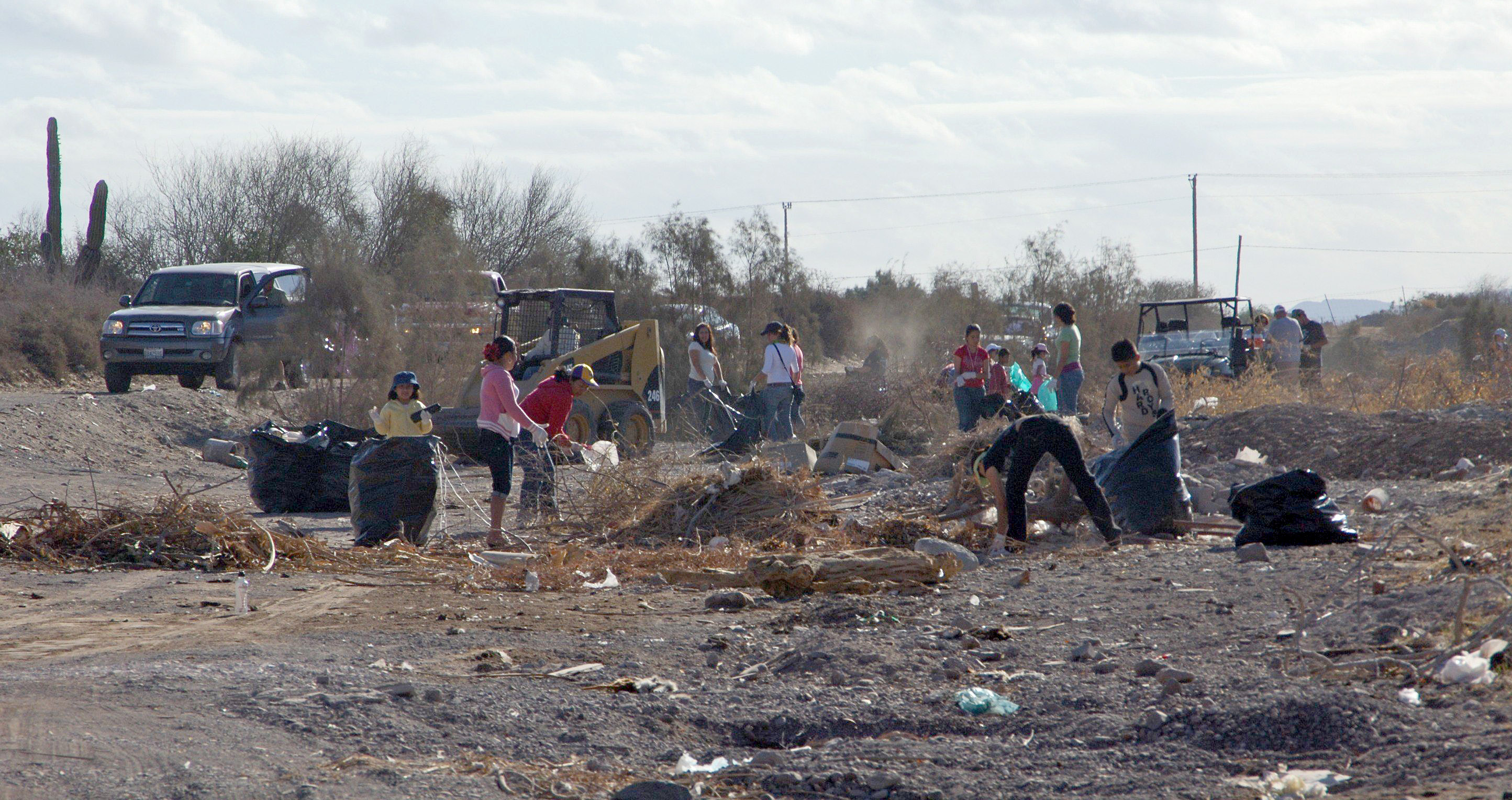
Earth Day – Loreto Pride were celebrated on April 10, 2011 with a community cleanup of the Arroyo Candeleria.  The event was sponsored by the Waterkeeper Alliance, Parque Nacional Bahia de Loreto, Loretanos por un mar lleno de vida, and Eco-Alianza de Loreto. A.C.

As in years past, the arroyo had been used by those less educated about the affects of garbage as a dumping ground for unimaginable waste.  During the dry winter season, the arroyo serves mostly as a road from Mex 1 into the beach front community, but in the rainy season, it can/does become a roaring torrent, pushing everything in its path into the Sea of Cortez.  Hence, the need to remove the accumulated refuse, and save the waters from unnecessary pollution.

Discarded Refuse in the Arroyo Candeleria

There was grousing in the community about ‘cleaning up “that” place again’ … accompanied with ‘they’re just going to fill up up with trash when we’re finished’ … but the choice of the arroyo was the right one.  Intelligent and needed, no matter who caused or created the refuse.  At the end of the day, it was the sea that won – and those who live near it and call upon it for their livelihood.

Waste management is an on-going concern for every community, not only pickup, but what to do with our collective garbage once it leaves our doorstep?  It’s not only a residential problem, but a commercial one, as well.  The nuclear fuel crisis in Fukishima, Japan heightens awareness of exactly what we humans create, and the havoc we face in disposal.  Batteries, florescent tubing, toxic motor oils, paint thinners, industrial cleaners, acids …substances poisonous enough to cause serious and even deadly harm to man.  We create them, we use them, but what do with do with them when we are ‘done’?

On Earth Day this year in Loreto, something wondrous happened.  Over 200 school age youth arrived at the registration desk, ready to put their energies into their community.  They were not the creators or the garbage mess, nor did they necessarily live in close proximity, but there they were, ready to put muscle and heart into protecting the waters that they love.

Over 200 Local Youth Signed Up to Help with the Cleanup!

Rubber gloves and contractors trash bags were disseminated at both registration, and along the cleanup route.  There was a water truck to make sure that everyone was hydrated, and multiple pickup trucks to cart the collected refuse to the dump – where is should have been deposited in the first place.

They brought friends, cellphones, and great attitudes.  In fact, I don’t think the arroyo has ever been cleaned as quickly as with this small energetic army!  There were expected ughs and gags.  I mean, not only garbage but dead animals were in the mix.

Some of the things I personally picked up : plastic, plastic, plastic (remind me NEVER AGAIN to use a plastic bag to carry something)((when it sits in the sun, plastic doesn’t degrade, it merely hardens – so that when you go to pick it up, it breaks into millions of itty bitty pieces of plastic!!)), dirty diapers, plastic bottles (yes, more plastic), tin cans, empty food containers, partially full food containers, cigarette boxes, broken and unbroken bottles, cardboard boxes, broken plastic cracks, broken trash cans, toilet paper, Kleenex, more plastic bags wrapped around cactus and trees, building materials, old bits of rubber piping, florescent light bulbs shattered into millions of pieces –

SIDEBAR : As I sat in the dirt trying to pick up as many tiny fragments of glass as possible, I was struck by the beauty of the sunlight on the shards, and my thoughts was – wow – if I were a fish or a dolphin or whatever – I’d be attracted by the shimmering beauty and for sure take a bite!  Sudden – or maybe agonizingly slow – death.

… and still more : old bricks, broken tiles, trashed appliances – and/or parts of appliances, motor oil cans, paint cans, foam cups, foam bits and pieces, school books, notebooks, papers, cigarette butts, plastic trays (does the uses of plastic never end?), plastic water bottles, lamp shades …… There was more – over 30 filled trucks and trailer trips to the dump!
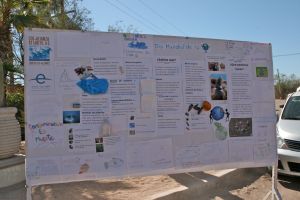
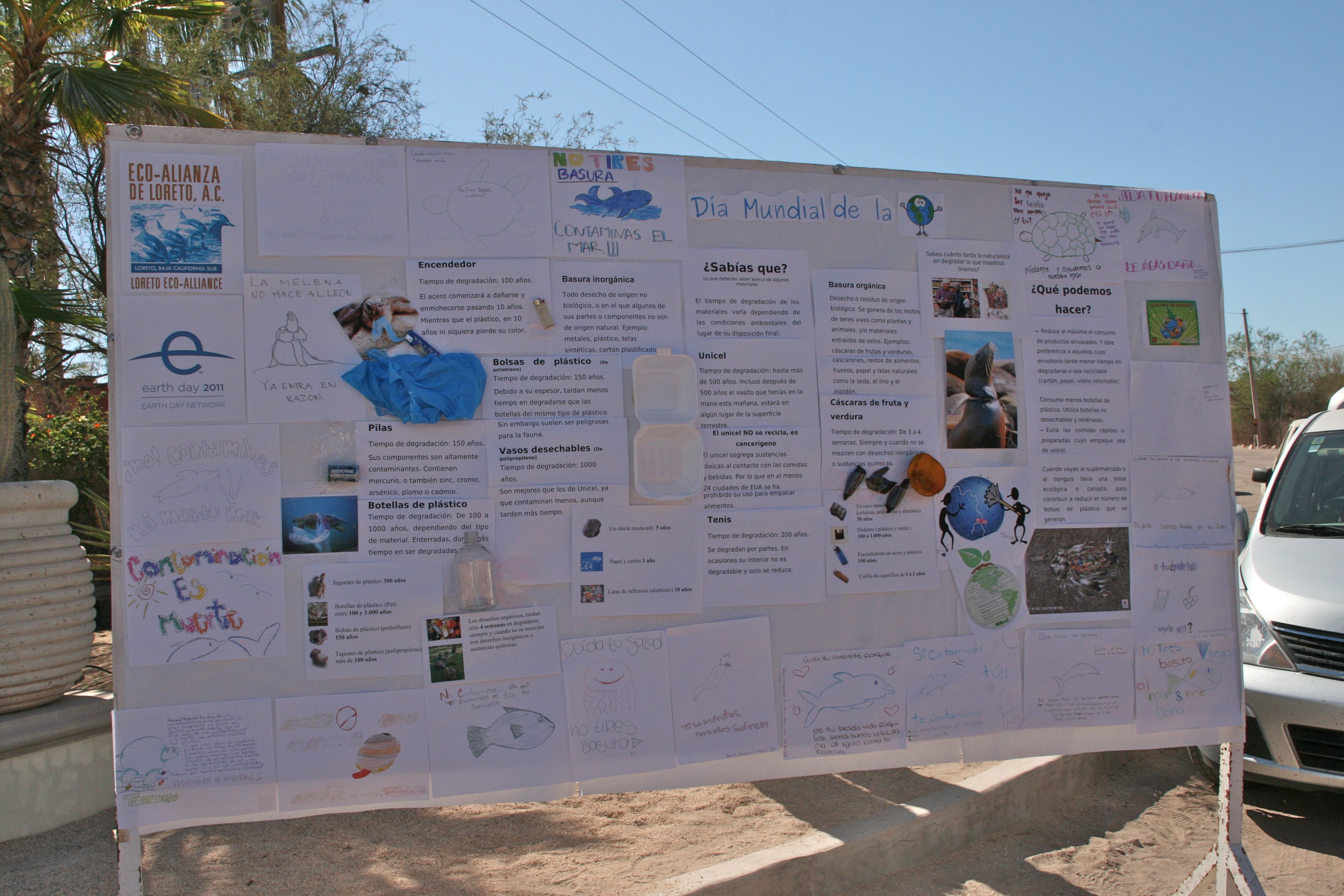
Students Created a Demonstration Board on Value of Clean Seas

And when we were done?  Amazing.  A clean arroyo, just as it should be.  Filled with mesquite and paloverde.  For a few minutes, we all sighed, smiled, and congratulated ourselves on our work… and then set to thinking how to educate those who do not understand the relationship between their actions and the health of the seas.

The crowd of dusty dirty volunteers headed up the beach to Rancho Jaral, where a celebratory barbecue was held.  Hats off to all community volunteers, including the Marine Park, ZOEFEMAT, Hugo Quintero, Tony and Linda Kinninger, Pam and Kent Williams, Mary and Nick Lampros, Catharine Cooper, the students and their participation in the EAL workshop under the direction of Edna Peralta, Program Administrator for Education and Outreach, Horacio Gabrera – Exectutive Director of Eco-Alianza, and Gaby Suarez – Program Director for the new Waste Management Program.