
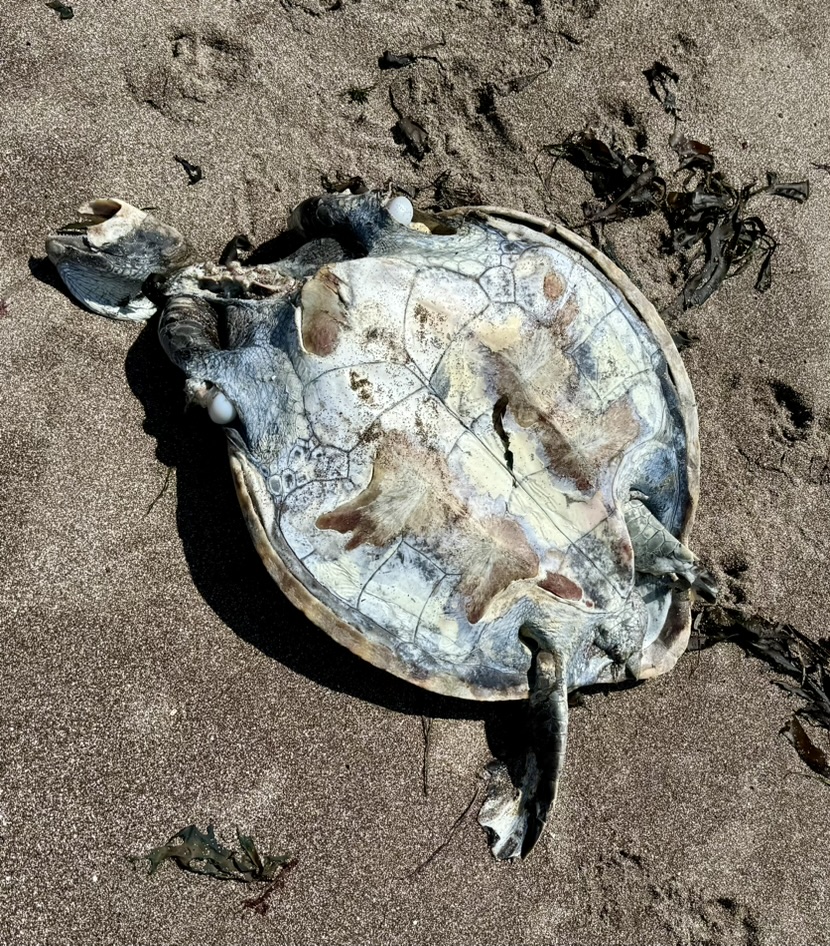
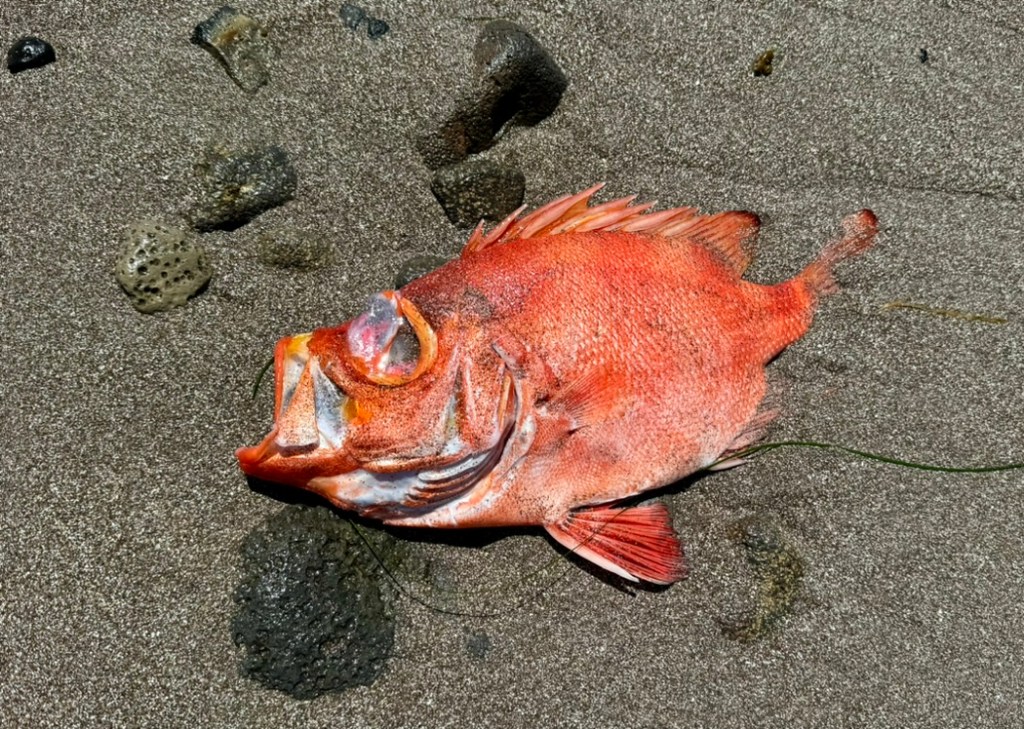


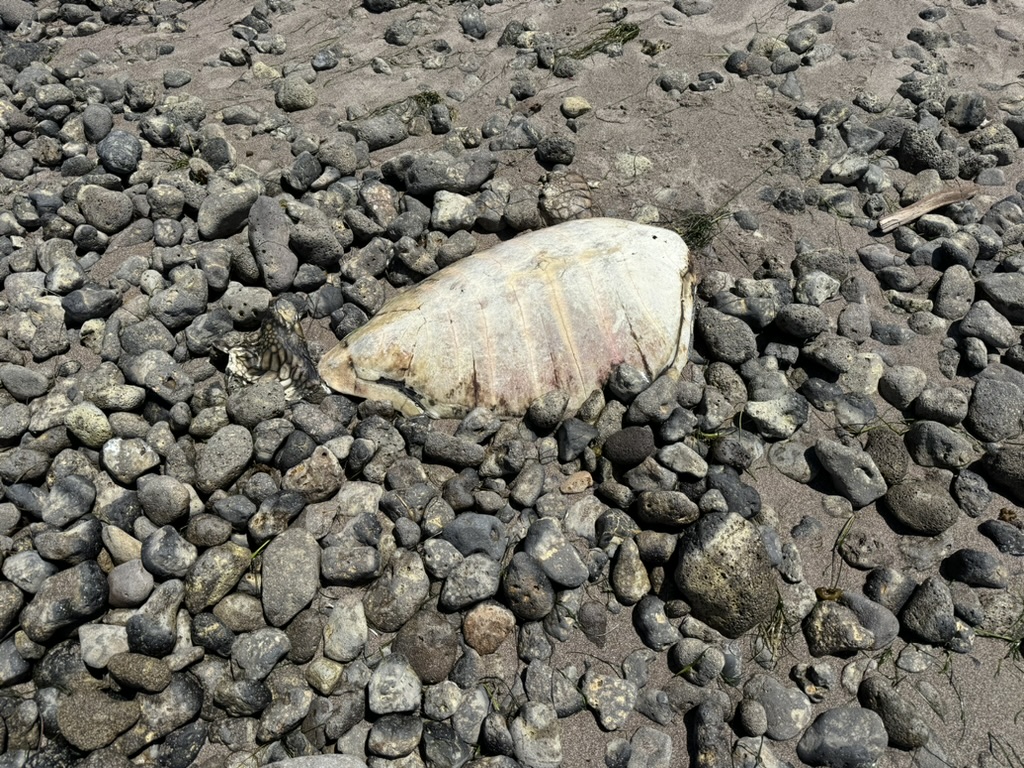
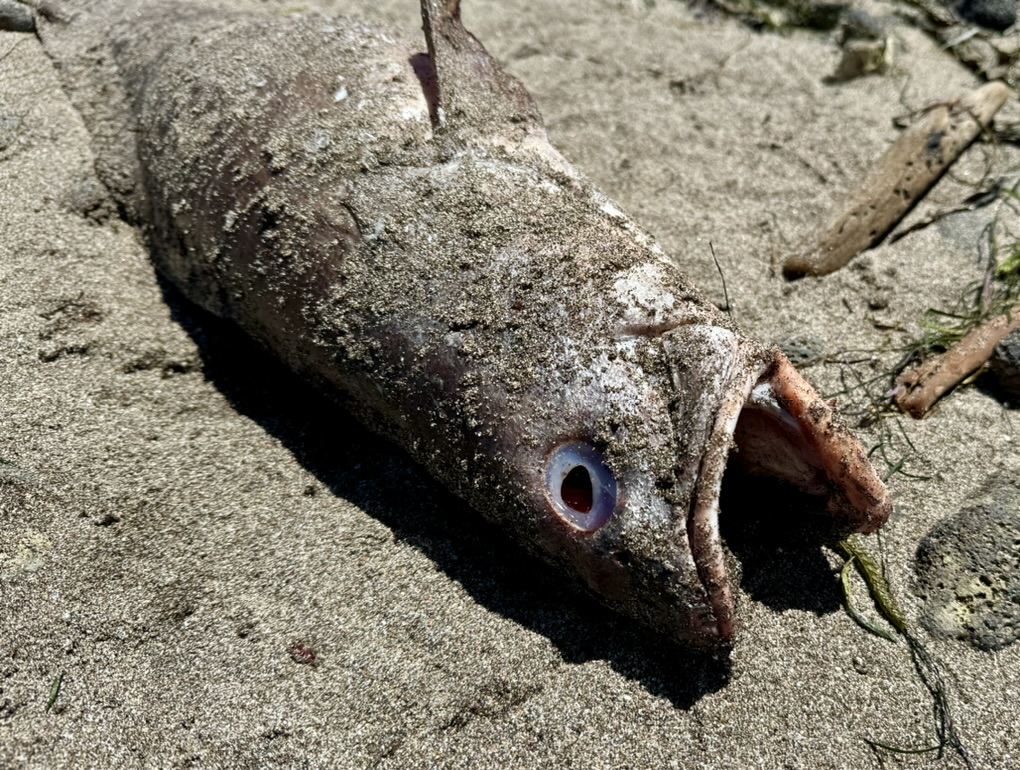

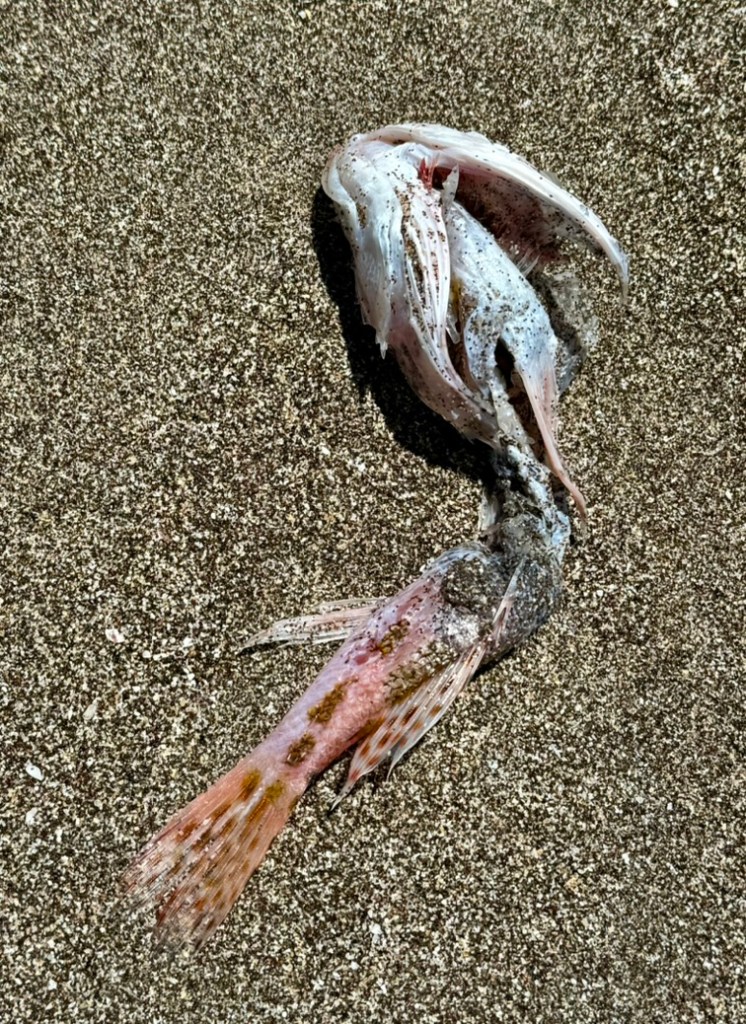
The beach was littered with small baby corals, obviously ripped from the sea floor. But why? And how? We did not have a big surf. There had been no storms. What had caused the mass landing on the sand, left behind as the tide ebbed?
Further on, not merely coral, but eels, small fish, Garibaldi, and turtles. Fresh kill and some not so much, the carrion eaters had begun their clearing of flesh, but recent enough. Was there poison in the water? Some toxic chemical spill? But wait. I was hundreds of miles from any industrial pollution source, and we were not amid an algae bloom. My heart hurt so badly that the evening’s sleep was disturbed and uneven, visions of the dead marine life like a wave washing in and out of my dreams.
I remembered the netting. The shift from pole fishing to net fishing. And then a shift from net fishing to finer mesh netting because already, there weren’t any big fish to catch in the wide mesh net.
The next morning, I watched one of the panga fishers drawing in their net. I didn’t witness a single fish being salvaged, but I saw several small fish tossed back into the sea. The waiting pelicans greedily watched for whatever free meal they could garnish. It could have been my viewpoint. There must have been sell-able fish in that net.

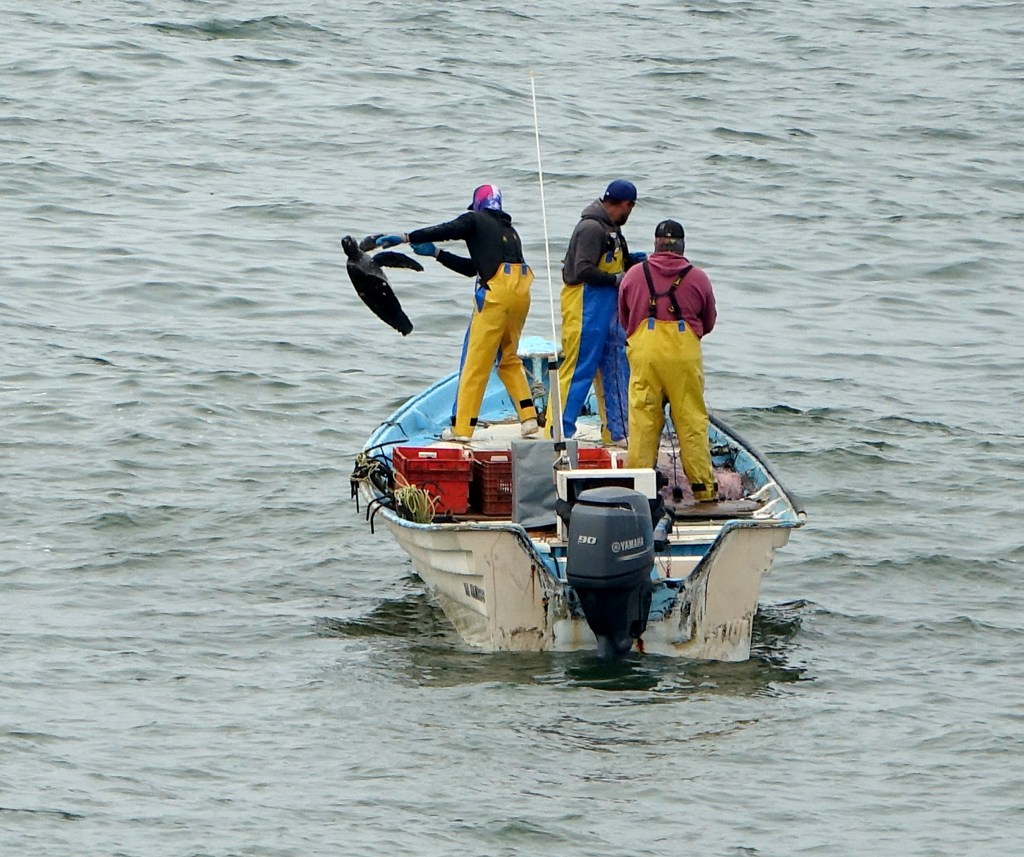
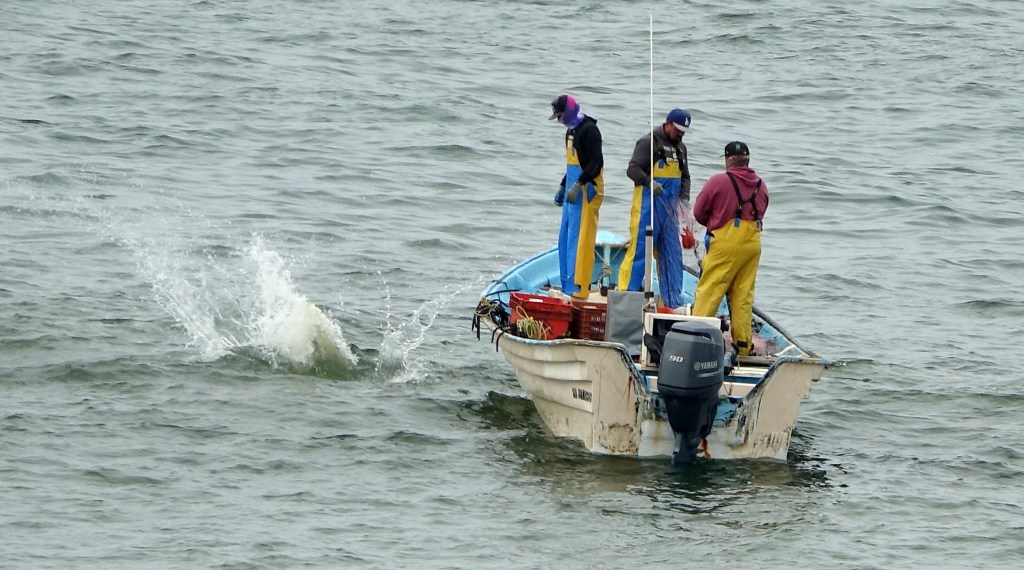
The questions swirled in my head. I live in a small fishing community on the Pacific Coast of Baja California. The fishing has been hard hit, first by foreign trawlers that rape the sea of anything their massive operations can suck from the water, and now, even the local netting is producing less than hoped-for results. The at-market price for fish is low, and the cost of gasoline to run their boats is high.
Again, it’s a fishing community. The fishermen have no other means of creating income. They have not been trained in other skills. Fishing is a manly, macho occupation. The fishermen are proud people. And when there are no fish and there is no money, what will happen to the community?
Locals beliece the problem is one caused by large trawlers. The squid ships especially, whose nets mercilessly scrap the bottom. Unregulated. Unchallenged.
The damage from net fishing is not merely limited to habitat destruction. All creatures in the water column and on the seafloor in the net’s path are scooped up along the way. Targeted commercial species are kept to sell, but the rest of the catch, by-catch as it is known, plants, turtles, and other fish, are discarded, usually dead or dying.
Who am I to say how, where, and what the locals should fish? I am a cultural outsider, living on a saved income that allows me to reside next to the Pacific, my dearly loved and cherished body of water. What are the answers? How do you convince someone who is hungry that they should stay hungry so that later, they might be able to encounter more bounty? Science has shown us that Marine Protected Areas (MPAs) work. Small fish sheltered in protected waters grow up to be big fish that swim out of the sanctioned area, replenishing the species. Mexico has successfully implemented MPAs in many locations, Cabo Pulmo and Loreto being two examples, but limited and declining resources and lack of enforcement challenge regulated waters. Education is a key factor in every environmental concern, and too often in short supply outside population centers.
When I saw the coral on the beach, the round, spongy carcasses drying in the sun, I immediately thought of how the coral are fish nurseries, protection of food sources, crab and lobster habitat, and the very column of life that begins on the ocean floor. I thought about my community and wondered if they realized the long-term damage that short-term netting may have caused. I wondered if it was even in my place to say something.
I realize what I am experiencing is a small microcosm of a global issue. In that vein, I continue to believe that education, beginning with youth, is the foundation for potential solutions and health. In the meantime, answers are developed from collective thinking.
How do you tell a hungry man that he cannot fish? You don’t. You hold optimism in your heart. You ask, and you ask again, what can change the course? The bounty of the sea is not unlimited.
Catharine Cooper is a writer, surfer, and painter. She lives on the southern Baja coasts – both the east and the west – with her dog, Loki.
 Baja Dreaming
You must be logged in to post a comment.