
Author Archives: Catharine Cooper
…. smile you’ve got waves ….

.......waves.........
Chasing Waves!

... projections ....
Going to look for something fun to play on!
¿Tacos de Que?
 Okay, I admit it – I am totally grossed out! Tacos de cabeza? Tacos of head? Oh for sure, I am gagging in the corner. I’ve seen two signs in two days – one for de rez and one for de birra .. We are talking cow and goat here. And while I’m sure the taco wrapping of maize or harina doesn’t really encompass a skull, all I can think of are bones and eye sockets … and I am more certain that my non-hoof-eating diet is the right one.
Gotta luv it ….

Wave Projections - 19 May
If you love waves, you gotta love a wave projection map like this : The west coast looks to be gifted by the first major swell of the season.
Blue Buttons

Stunning Blue Button photo by National Geographic photographer, David Liittschwager, 2007
A new sighting – for me – while SUPing this afternoon in the Sea of Cortez. Curious deep blue ‘buttons’ floating/drifting on the surface. I don’t remember seeing them before, and with homage again to the power of Google, the mysterious creature has been identified.
Blue Buttons are tiny inch size spheres with hair like tentacles that lend a jelly fish like appearance. Not real jelly-fish, but a sea organisms called Porpita porpita, their tenecles are
A wikepdia definition yeilds the following information:
Porpita porpita[1], commonly known as the blue button, is a marine organism consisting of a colony of hydroids[2] found in tropical waters from California to the tropical Pacific[3], the Atlantic and Indian oceans[4] It is often mistaken for a jellyfish, but although jellyfish and the blue buttons are part of the same phylum (Cnidaria), the blue button is part of the class Hydrozoa.The blue button lives on the surface of the sea and consists of two main parts: the float and the hydroid colony. The hard golden-brown float is round, almost flat, and is about one inch wide. The hydroid colony, which can range from bright blue turquoise to yellow, resembles tentacles like those of the jellyfish.[5] Each strand has numerous branchlets, each of which ends in knobs of stinging cells called nematocysts. The blue button sting is not powerful but may cause irritation if it comes in contact with human skin.[2]
It plays a role in the food web, as its size makes it easy prey for several organisms. The blue button itself is a passive drifter, meaning that it feeds on both living and dead organisms that come in contact with it. It competes with other drifters for food and mainly feeds off of small fish, eggs, and zooplankton. The blue button has a single mouth located beneath the float which is used for both the intake of nutrients as well as the expulsion of wastes.
It is preyed on by Violet Sea-snails of the genus Janthina [6].
What a treat to paddle with the tiny blue floating discs all around me. Since they are defined as living in tropical waters, my sense is that their appearance means that the water is warming up – somewhat early – and the summer just may be a sizzler…
Casa Baja Luna for Rent

Casa Baja Luna
Good friends Cynthia & Cal have reason to be stateside for the summer, and are offering their wonderful San Juanico home for rent. It’s a fabulous 2 bedroom main house with rooftop view deck and bar – perfect for entertaining. There is a separate casita with private bath and lovely gardens. Lucky the person who gets to spend time there. For more details : http://www.scorpionbayrentals.com/Site/Rentals/Pages/Casa_Baja_Luna.html#grid

Baja Luna “Closet”

Baja Luna Bedroom

Baja Luna Garden

Baja Luna Casita Bedroom

Baja Luna Dining/Kitchen

Baja Luna Upstairs View Deck

Baja Luna Patio & Garden


Baja Luna Upstairs Bar

Baja Luna Bedroom

Casa Baja Luna
Sunday Morning
the call of dove, the dart and dash of orioles in the palms, a flotilla of small grebes ..
sea like a mirror – so still – and the gentle roll of water on beach stones ..
high cirrus clouds striate the blue and an odd fog bank floats between the beach and the island ..
shimmering yellow green palm fronds in the early light .. radiant red flowers on hummingbird bush ..
somewhere, children hunt colored eggs and play with soft rabbits .. somewhere, church goers bow their heads .. to a portion of the world, this is Easter ……. el Pascua ….
Full Moon Rising …..
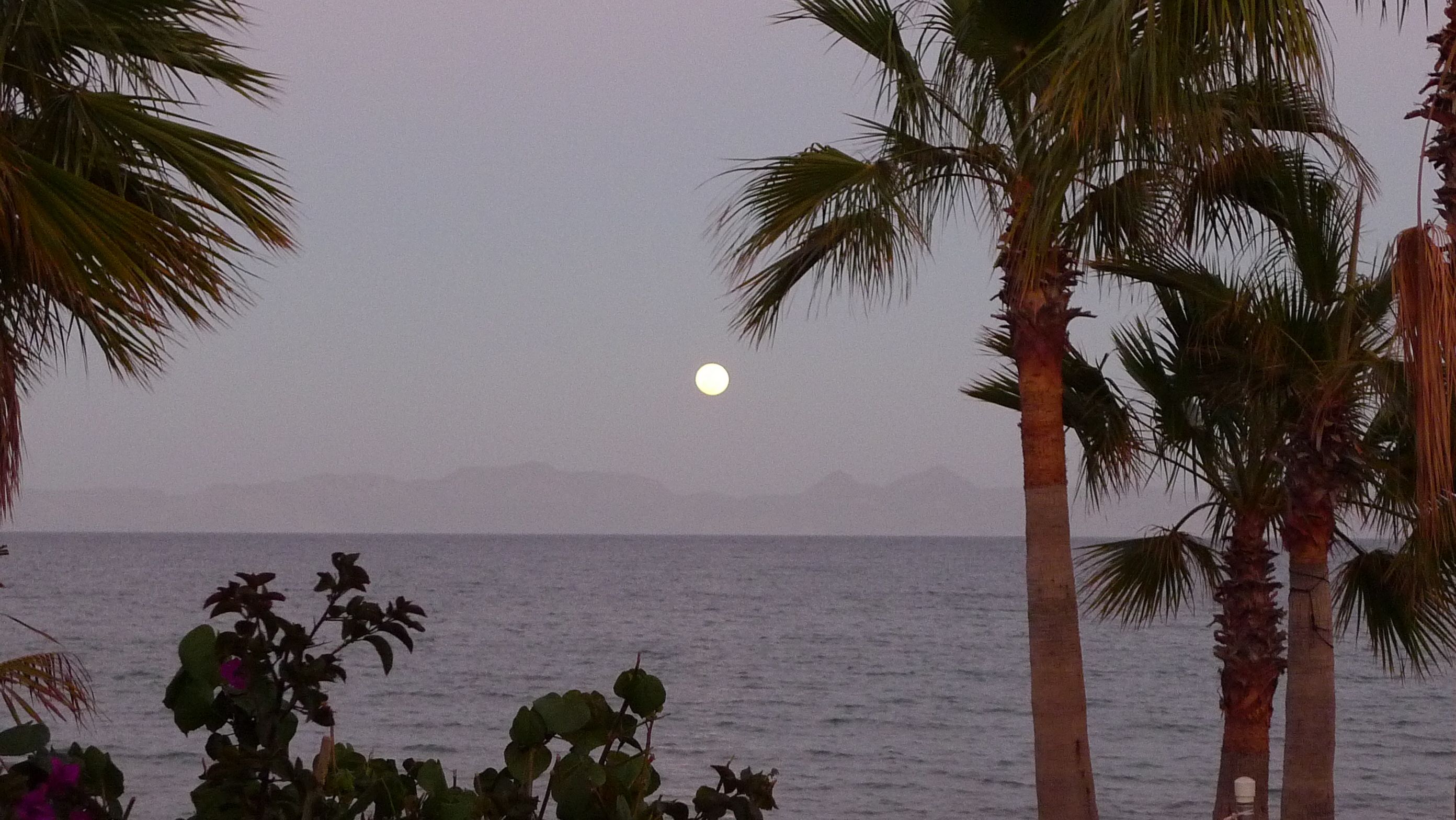
Full Moon Rising : Loreto
Once again, she slips from under cover of island and sea, shimming up the sky toward the heavens .. lighting up everything in her path .. Full moon rising …………… How sweet the night …
sometimes there’s waves …
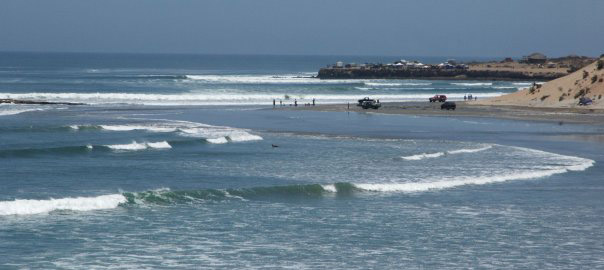
.. and they all went out to play ...
.. and sometimes there aren’t .. and sometimes, there are wondrous swells with seemingly nothing in between .. the magic of the ocean is never lost upon me .. nor her beauty, her wealth, her immeasurable value in protecting life as we know it ……..
 Baja Dreaming
You must be logged in to post a comment.