‘The last fallen mahogany would lie perceptibly on the landscape, and the last black rhino would be obvious in its loneliness, but a marine species may disappear beneath the waves unobserved and the sea would seem to roll on the same as always.”
– G. Carleton Ray in “Biodiversity”, National Academy Press, 1988
Last week I had the honor of attending the Conservation Science Symposium in Loreto, BCS, sponsored The Ocean Foundation and a consortium of charitable organizations. Researchers, scientists, and resource managers from both the United States and Mexico, joined with local community members in a dialog about conservation in the Gulf of California and Baja.
For the most part, Baja California is a rugged and arid desert region with mountain ranges that separate the Pacific Coast from the eastern Sea of Cortez. There are small eco-systems within the overall peninsula that affect fisheries, agriculture, and the availability of water.
The symposium was broken into multiple tracks with presentations ranging from “Protected Areas and Biodiversity” to “Species of Concern.” Overarching was a discussion of community involvement, government interaction, and how to manage conservation for the most effective outcomes, both to habitat and to human populations.
The conversations were lively. Everyone is a stake holder – whether a developer who wants to grade down a mountain for a real estate development (and disrupt and/or destroy a watershed in the process) or a fishermen, whose entire livelihood is based on the bounty of the sea. In many ways, it is only now, in this age of rapid and constant information exchange, that we become increasingly aware of the effects of our actions and activities.
In the northern Gulf of California, there is small dolphin, the Vaquita, which has been seen by very few human beings. It is the smallest – less than 5’ long, with calves the size of a loaf of bread – and rarest cetacean on earth. It is estimated that less than 200 remain. When they are seen, they are tangled in the shrimp fishermen’s gillnets and drowned – adults, juveniles, and newborns.
Vaquita, or “The Desert Porpoise,” came into a small spotlight after a 2006 expedition led by Bob Pitman to search for the Baji dolphin on the Yangtze River in China. After two months of searching, not one dolphin was spotted, nor had the local population seen any. The Baji had become extinct because of human population expansion and related activities. Extinct: as in no more, never again, gone forever.
The situation in the upper regions of the Gulf of California is similar to that of China. The men who fish the region know no other trade, nor are there opportunities for change. They do what they know how to do to feed their families, and in most instances, live a subsistence existence. How to convince a man who needs to eat, that his activities, which are killing off a small sea mammal, need to be changed?
Several approaches have been developed and are being tried simultaneously. Education about the plight of the Vaquita is a keystone.
A protected zone – a no-take area – was established with the northern waters around the known Vaquita habitat. Alternatives to gillnet fishing are being explored. The Mexican government, along with several NGOs, developed a plan that either bought out fishing permits or ‘rented’ them.
If all the programs fail, then the Vaquita – like the Baji – will no longer swim in the Sea of Cortez.
It did not go unnoticed by the attendees at the Conservation Symposium that the US administration voted not to list the Bluefin Tuna as an endangered species. The rationale was that no one could prove, that without protection, that the tuna would disappear.
There were cheers from the fishing industry, where one Bluefin can sell in the Japanese market for up to $400,000. There were wails from those whose research has followed the majestic tuna’s decline. Between 1970 and 1992 the eastern Atlantic’s stocks declined by 80 percent; the western stocks by more than 70%.
The National Oceanic and Atmospheric Administration classified the fish as a species of concern. The Bluefin’s’ fate now lies in the hands of international management, which has high levels of infighting and insufficient oversight.
Which brings the conversation full circle to governance. How to we choose what to protect – be it a watershed, a desert porpoise, a wolf, or a migrating swan? And when we collectively decide, how do we implement agreed upon standards to ‘police’ those protections, whom do we choose to enforce them, and how do we fund the process?
The Conservation Science Symposium opened a dialog that is valuable to continue. Since human activities appear to be the cause of modern day species extinctions, it is up to us to change that course.
First published in the Coastline Pilot, “Chasing the Muse: Reversing the Course of Species Extinction,” June 3, 2011.
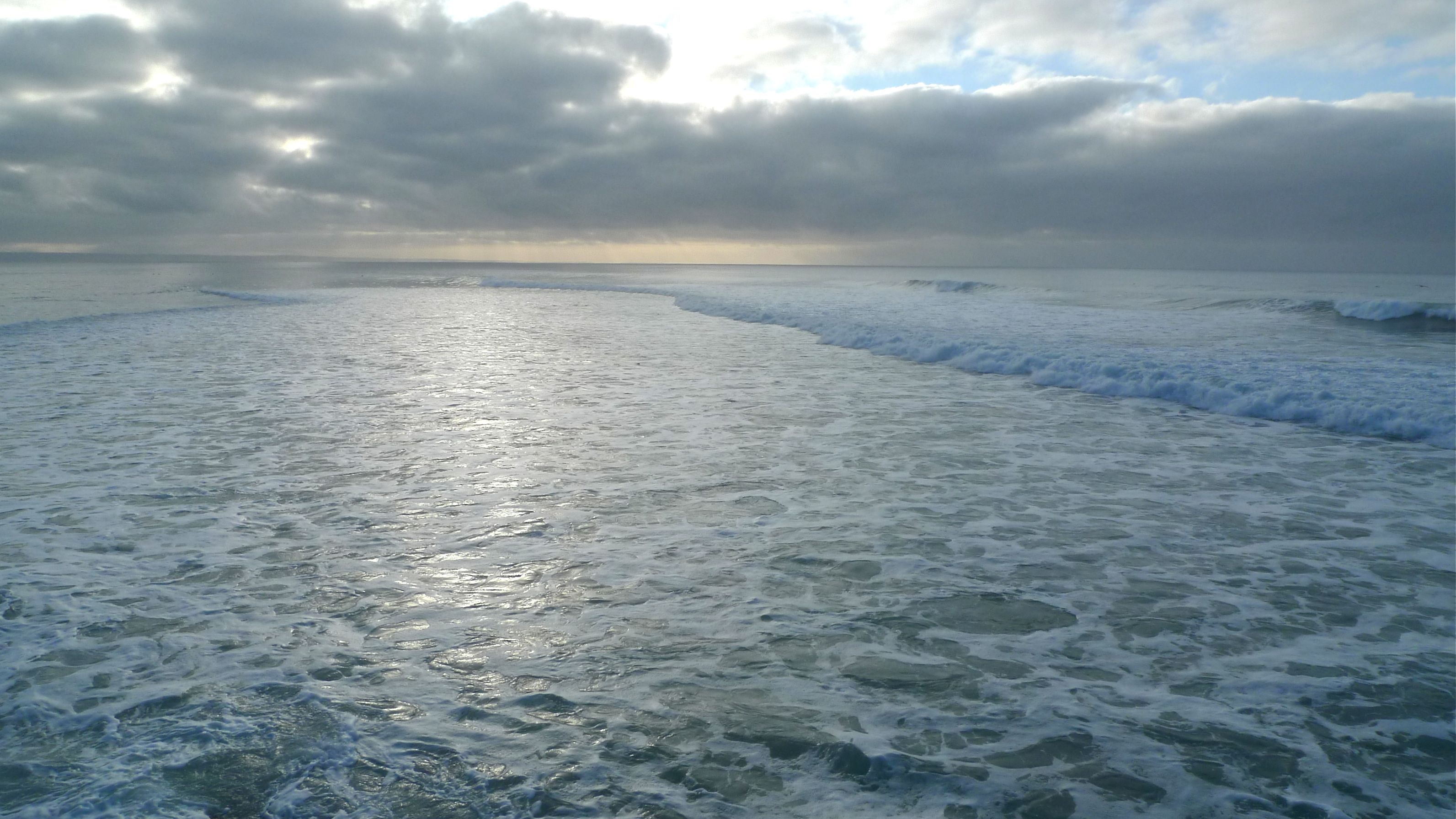
 Baja Dreaming
You must be logged in to post a comment.