after the longest night

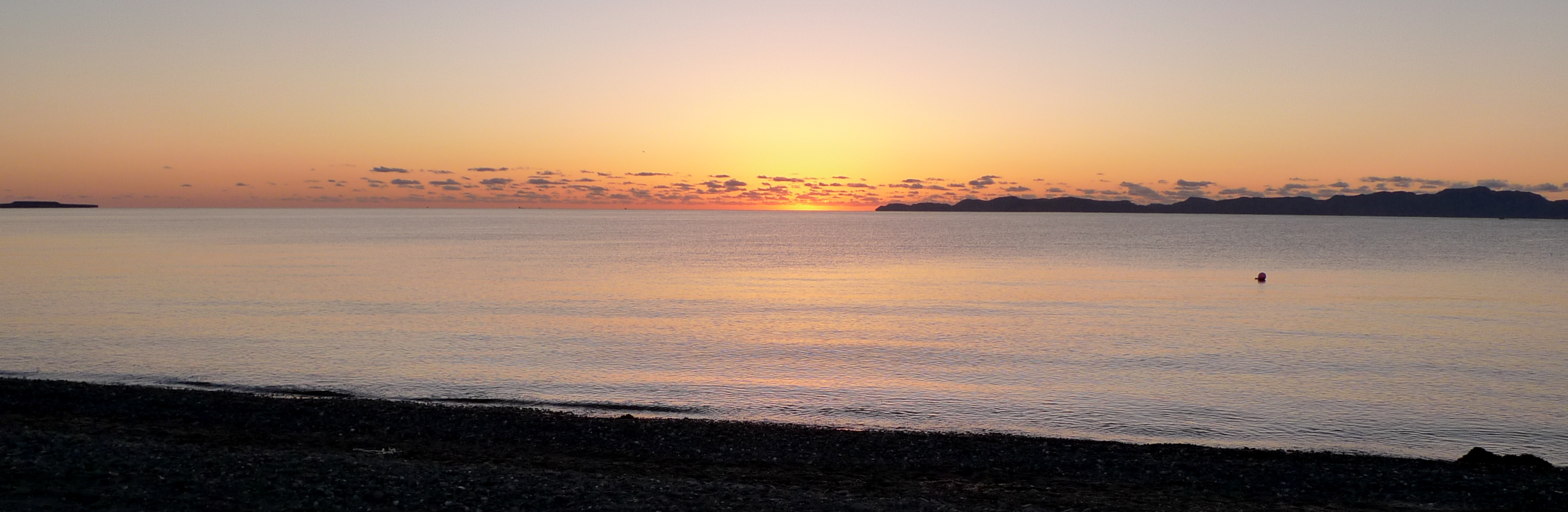
the sun crested the isla carmen one minute earlier this morning : 7:14 instead of 7:15 .. yes, the shortest day and longest night have passed … there must be a metaphor in this.

the air is still and warm. no waves and hardly a ripple on the water. i find this magical, as i continue to drink in living in such close proximity to the water .. a constant that defies my emotional ups and downs, the comings and goings of friends, the wild off-road racer revving his engine somewhere in the distance, the cock-a-doodle do, and the grazing of cattle on the flowers and trees in my garden. i wish i could craft a plan – to do something more to protect her, to nourish her .. as i write that, i remind myself to listen .. that the messages are always present, it’s merely plucking one or the other from the chorus ..

a pelican dives for fish. his splash is another of the sounds that burn into my memory bank. yesterday hundreds of blue-footed boobies diving in formation like fighter planes .. my joy expands ..

Wings & Wonder

The sky ablaze this morning with 60 or so vultures, circling, searching. What has died? What is about to die? Joining the fray, a Magnificent frigate bird, his long lanky body with split tail stark against the chunky vulture bodies. As they continued to swirl, a lone red tail hawk joined the sky born dance. Similar in size, in their silhouette against the sun, he was almost hidden, except for a distinctive wing formation and different soaring/flapping pattern. Soon, more vultures, another frigate bird and the sky was bird bird bird … and then gone. Whatever they had hoped for or sensed, had scurried deep into the stark desert landscape, and the winged ones dispersed.

Egret in the shallows

Yesterday on our early dog walk, one of the ‘resident’ egrets fished the estuarian inlet near the house.  While the dogs played, I sat on the side of the water watching the tall white bird hunt for tiny fish trapped by the tidal flow.

In the desert it seems, it is bird life that is most obvious.  Their appearances at all times of the day and weather remind me of the mysteries of life, the magic of flight .. the dreams of Icarus.

Sanctity of the Seas

Tuna Boats : Maria Veronica & her sister ships

Off shore, three tuna boats have sat at anchor for the last four days.  At first, I had been told that they were National Geographic research ships and I was thrilled that they had stopped in Loreto.  When I discovered that they were anything but research ships, my heart felt a deep sadness.

Perched on top of each vessel is a helicopter which is used to spot schools of tuna.  What chance does a tuna have against a helicopter?   Oft times, dolphin swim in the same schools, and become innocent prey in the fishing fleets nets.  While the local seas are all part of Loreto National Marine Park, and commercial fishing is prohibited, the necessary enforcement is all but non-existent.  The boat captains know all to well that there is nearly no one to stop them, and so our seas suffer.  Local fisherman complain that both quanitity and size of all local catch has diminished in the last decade.  It is these long lingers that are mostly to blame.

I scanned the hulls of the ships looking for a name.  The largest of the three is Maria Veronica.  A quick Google and I pulled up more distressing information.  A posting in 1995 about the vessel and her tactics made me furious to see her sitting with her sister ships in our waters.

Here’s what the poster said:

Tuna Meltdown :
On November 9, 1995, I was aboard the dive boat Don Jose. We were anchored on El Bajo seamount, a dive site in Mexico’s Sea of Cortez renowned for an abundance of marine life, including schools of hammerhead sharks. Small groups of divers were going out in skiffs to drift dive over the seamount. Between dives I saw pods of dolphins and noticed a small helicopter circling the area. Shortly after that the tuna ship Maria Veronica arrived.

In a matter of minutes, without any warning whatsoever, the tuna boat and its tender dropped a net directly across the bow of the Don Jose.  Within moments, the tuna net encircled the entire seamount. Inside the circle of net was one of our skiffs with four divers aboard. If these divers had been in the water, they surely would have been killed.

The Don Jose’s captain quickly cut our anchor, which had become entangled in the tuna net. As we left the area, we watched the Maria Veronica cut its net and ditch its equipment. Our captain radioed the Maria Veronica for an explanation. We were told that the spotter helicopter saw the pods of dolphins and a large dark area under the Don Jose and concluded that the seamount was a large school of tuna. Furthermore, they said that they were unaware of the seamount’s existence because it was not identified on any of their maps; they were also unaware that we were anchored and that we were diving, since no dive flag was flown. While it is true the Don Jose was not flying a dive flag, it’s difficult to believe they could not tell we were anchored and that divers were in the area, as their spotter helicopter had made several passes close to our ship and the skiffs containing divers.

The following day we returned to El Bajo. As I made drift dives over the seamount, I was sickened by what I saw — tuna net caught on most of the north mount, chains and steel cables on the main seamount. Worst of all, the entire south seamount was completely covered with tuna net. Caught in and under the net were many, many fish. The marine ecosystem had been severely traumatized and will undoubtedly suffer permanent damage.

It seems apparent that the Maria Veronica should be held accountable for its actions and responsible for removing its nets and equipment from the damaged seamount. In addition, the Mexican government needs to take stringent action to protect its natural resources and its tourists by establishing and mapping marine sanctuaries in the Sea of Cortez and initiating a mooring system at El Bajo and other popular dive sites such as Los Islotes, Las Animas, and San Diego Reef.

Deanna and Dave Hotchner Mt. Prospect, Illinois

Baja Expeditions and another local dive operator helped organize a massive cleanup to remove the nets, cables, and debris from the seamounts. They were helped by an arriving dive group. The Mexican government reacted quickly; it fined the Maria Veronica $50,000 and agreed to a Baja Expeditions request to fund a study on creating a protected area.

An aside:  The El Bajo seamount is one of only 3 places in the world where hundreds of hammerhead sharks congregate.

Also referred to as “shoal, or bank, of the Holy Spirit” in Spanish. It is a submarine ridge that, in less than 2 kilometers, rises steeply from a 1,000-meter basin to within 18 meters of the surface.

It supports rich stocks of pelagic fishes because of an abundance of plankton that attracts consumers. The plankton (and the rest of the food web) is enriched due to the so-called “Venturi effect,” which describes how flow speed increases when a fluid is forced through a narrow area. The same volume of water carrying a given number of plankters must flow through the more constricted space between the seamount and the ocean surface, providing more drifting prey over time for predator fish lurking near the peak.

from Steinbeck’s Log

sunrise : isla carmen : sea of cortez

“One thing had impressed us deeply on this little voyage: the great world dropped away very quickly.  We lost the fear and fierceness and contagion of war and economic uncertainty.  The matters of great importance we had left were not important.  There must be an infective quality in these things.  We had lost the virus, or it had been eaten by the anti-bodies of quiet.  Our pace had slowed greatly; the hundred thousand small reactions of our daily world were reduced to very few.”

– John Steinbeck, The Log from the Sea of Cortez

2 days and counting …..

Sunrise in Loreto

Countdown to Friday departure as the Baja Peninusla lures me south once again.  This trip, I’ll again have the joy experiencing the extraordinary and diversified beauty of the long finger of desert, rock and mountainous terrain.  If you’ve never done the drive, then you don’t really know Baja.

Cathy and Patrick are packing their respective bags.  This will be Cathy’s first road trip, and I’m excited for her to experience the open spaces.  We’re still jockeying between one or two cars .. but in any event, the clock is ticking and soon the open road will be under our wheels.

Plan is first night at El Jardin, the most serene motel tucked off the road just north of San Quintin.  The gardens surrounding the motel are amazing – even a small grove of orange trees fills out the back.  Early Saturday, we’ll book it for Loreto, checking into “Casa de Catalina” for a day’s road rest.  Supplies will be gathered and a joy trip to the Tiligues (Sunday open air market) to fill out the fresh veggie/fruit part of our food group.  Either late Sunday, or early Monday – depending on surf and social life conditions 🙂  – we’ll make the drive to San Juanico, surfboards and suntan lotion loaded on the Explorer.

The last two days have been registration, insurance – and the procurment of a sentri transponder for my car – the second in the ‘fleet’ – for easier crossing back into the United States.  It’s part of the Trusted Traveler Program of Homeland Security and it’s nice to be a vetted American.

Promises to self this trip : Stop for more photographs. Take time to sketch and to paint. Surf ’til you drop!

Dog races …

Dog Walk

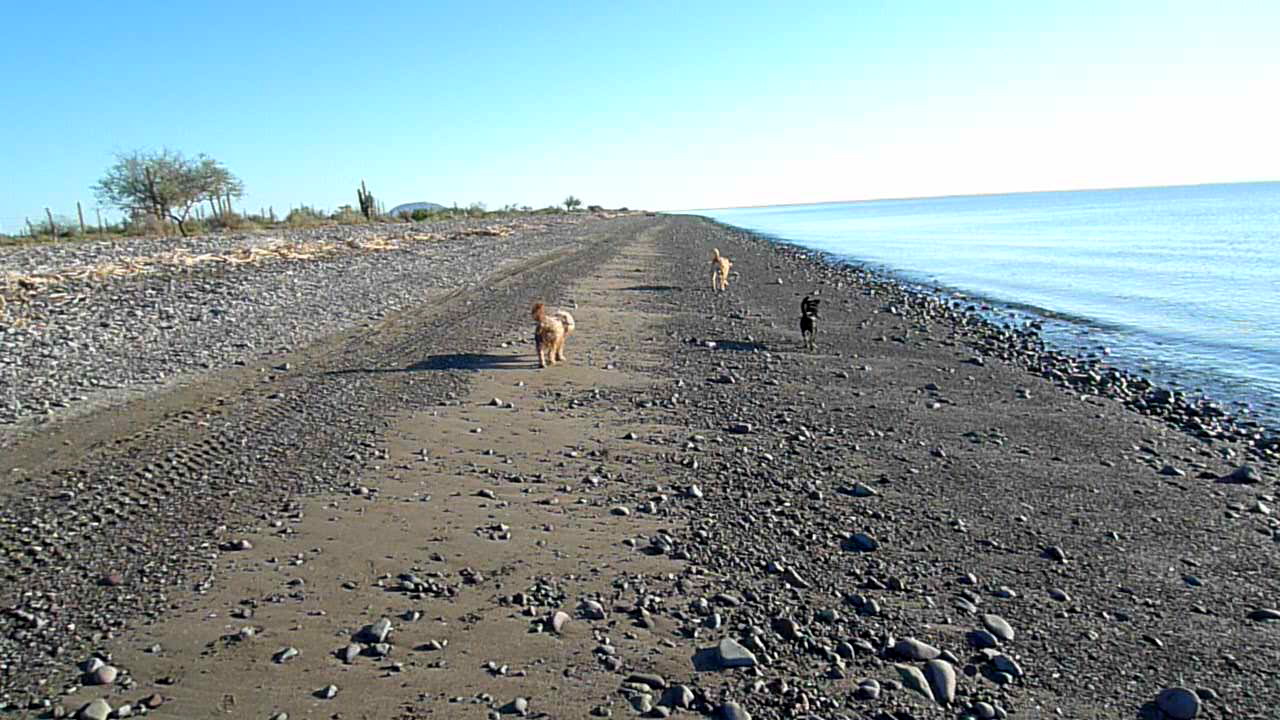
One of the best things about Loreto dog beach walks : NO LEASHES!  No rules .. Just head out the door and let the dogs run.  The long stretch of beach backs up to estuaries with herons & egrets … osprey and gulls .. The desert stretches to the west, covered in cardon and mesquite, like a carpet of greens and yellows sprinkled across the dusty ground.

Down the beach, around the point .. Cormorants & grebes ply the waters .. Over head, the terns and the blue-footed boobies spy and dive for small fish … The dogs take it all in .. but mostly, they are just dogs … full of joy and play.

Ocean Breezes ….

Wind swept

Between the space of surfing and hanging out with my friends, I always take the opportunity to find quiet time .. Reflection and opportunities to gather my thoughts.

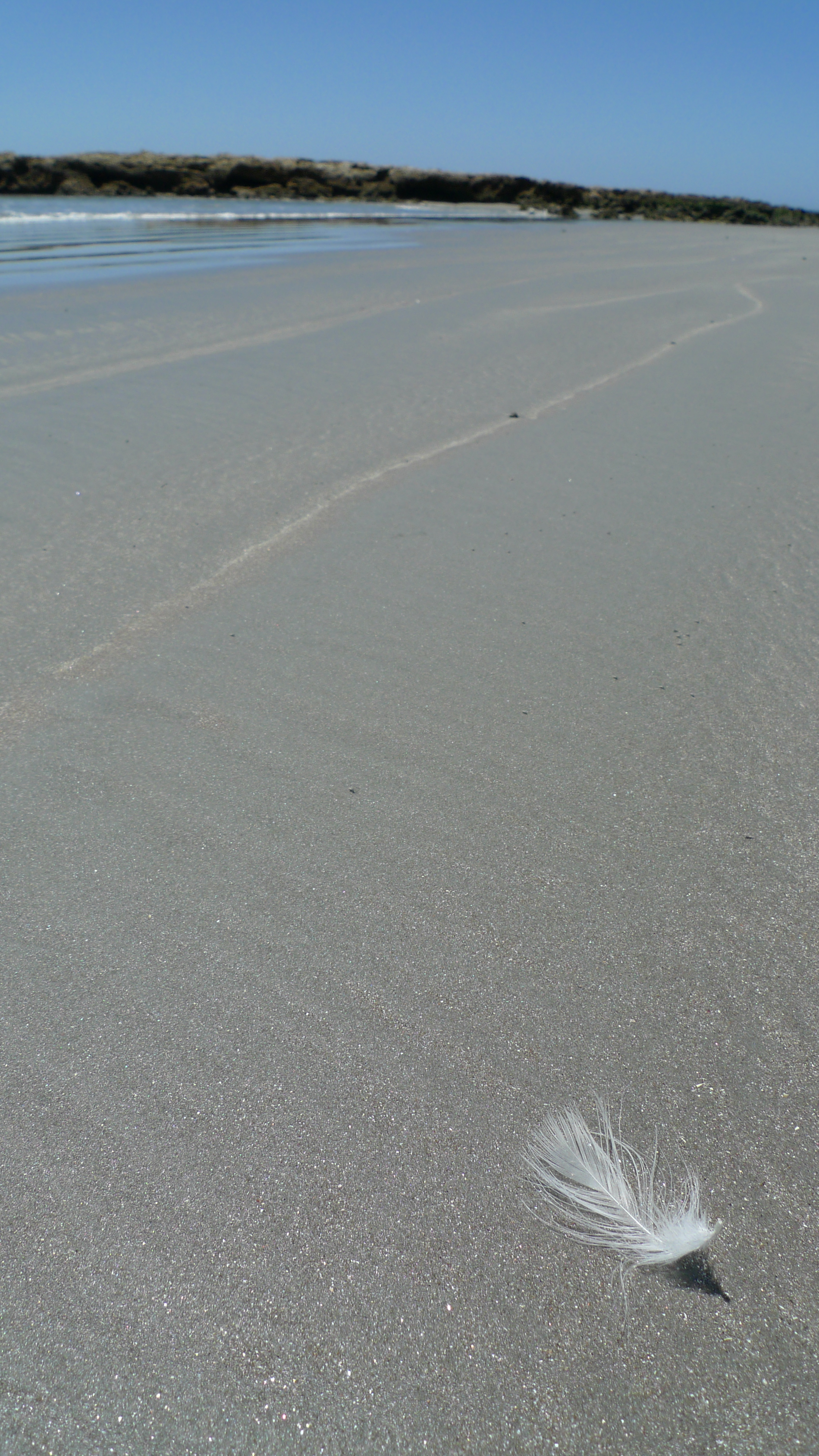
This small gull feather, caught on the afternoon breezes, danced along the shoreline before coming to rest right below my feet.  I pondered the bird that had dropped it – all the miles it might have flown.  The sand underneath, created by the pummel of waves on unseen corals.  the wind ruffled the edges of the feather along with my hair.  Small waves echoed their cresting against the dusty cliff faces.

So much beauty ..  all it asks is to be seen.

Earth Day – Loreto, BCS, Mexico – 2010

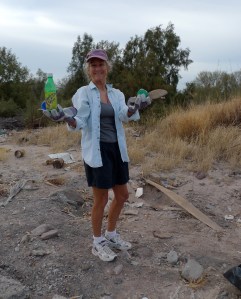
Catharine Cleaning Up!

Catharine Cleaning Up!

“There are hundreds of ways to kneel and kiss the ground…” – Rumi

40 years ago 20 million Americans pooled their energies and created the first Earth Day.  As envisioned by U.S. Senator Gaylord Nelson, the day was to be filled with educational teach-ins.

Thousands of colleges and universities organized protests against the deterioration of the environment.  Isolated groups that had been struggling against issues such as oil spills, polluting factories, raw sewage, pesticides, loss of wilderness and extinction of wildlife suddenly realized they shared common values.

The most impressive thing about the beginnings of the movement was its grassroots organization.  “Earth Day” had no central governing body and simply grew on it’s own.  The event is now celebrated in more than 175 countries.

Earth Day in Loreto, BCS, Mexico, – “Loreto Pride in Action” – was celebrated on Sunday, April 18th.  Fueled by the relentless dream of the local environmental awareness group and sponsor, Eco-Alianzia, this year’s event had over 200 participants from all walks of the community, with the greatest number being youths from Loreto.

A location was selected that had become a dumping ground of local trash and garbage.  Arroyo Candeleria is the second largest arroyo in Loreto and during the summer storm season, becomes a raging torrent, sweeping anything within its banks into the Sea of Cortez.  To clean this dry river bed not only benefits the current environment by ridding it of trash and toxic chemicals carelessly left behind, but protects the waters and its inhabitants in the upcoming months.

The event began with sign-ins at 7:30 in the morning.  Participants were given name tags, t-shirts displaying the Pride Campaign logo of the Chocolate Clam, the Bay of Loreto National Park, Eco-Alianza and the Waterkeeper Alliance – and a handful of heavy-duty black trash bags.  A short walk to the arroyo was the last easy task of the morning hours.

While not quite a dump, the arroyo had more than its share of disposed diapers, fish heads, empty plastic bottles, tires, paint cans, spent or broken building supplies, broken roof tiles, clothing, discarded shoes, beer and wine bottles, along with molded reeking garbage.  At times a gagging reflex interfered with collecting the waste.

There are several reasons for the refuse. The primary is lack of education and an understanding of the relationship of the arroyo to the health of the sea.  This year’s Pride Campaign logo – “Por un mar lleno do vida” – “For a sea full of life!” – was designed to increase awareness.

The second and third reasons have to do with garbage collection.  While there is a service, not everyone has garbage cans, and the pickup is only once a week.  With fisherman, the catch – and resultant fish heads and remains – are often a daily occurrence.  Most of them have no automobiles or trucks with which to transport the fish refuse to the city dump, and to put them in cans next to their house is to invite a fly fest and stench of unimaginable proportions.

The fourth reason is based on habit – with a hint of laziness.  It’s always been dumped that way. There hasn’t been demonstrated sufficient reason to change.

Which takes the arguments full cycle back to the involvement of the youth in the clean-up process.  Always, it is through the youth that real change is born and instituted.  They may not be able to alter the behaviors of their parents, but they are learning for themselves the interrelationship of land to sea.

For myself, I was fascinated that as I cleaned one area, there were layer upon layer of trash to be removed.  Lifting up a bag of garbage revealed another layer of bottles.  Picking up the bottles revealed another layer of tattered clothing.  Lifting up the clothing revealed another layer of garbage and plastic.

Bags of trash and broken furniture were loaded into pickup trucks and trailers headed to the dump.   At last, the dusty, tired cadre of clean-up crew reached the end of the arroyo at the highway.  Behind us – a pristine environment – the efforts of our labor clearly visible to all.

A barbeque luncheon on the beach at Rancho El Jaral was hosted by Eco-Alianzia for all the participants.  A quick dip in the turquoise blue waters provided the perfect antidote for the dusty cleanup.

“Loreto Pride Campaign” pooled the energies of several local groups, including Rare Conservation’s Director of the Fisheries Fellow Program, Cynthia Mayoral, The Bay of Loreto National Park, the “Pride” Campaign Manager, Perla Lozano Angulo and her colleagues, and Edna Peralta, program coordinator for children’s education and outreach programs of Eco-Alianza.

The ultimate goal of Earth Day is that every day becomes a celebration of the planet we call home.  Again, it’s our job to protect her, to nurture her and increasingly commit ourselves to living within a sustainable envelope.  We all win – the earth and us – when we make conscious choices about our food, water, consumables and waste.   Be thoughtful. Be careful. Envelop the planet with the same love with which you shower your children and friends.

Catharine Cooper loves – cleans – and supports wild places.  She can be reached at ccooper@cooperdesign.net.

Pescadores Vigilantes

On June 1, 2009, the foundation for “Pescadores Vigilantes” (vigilant fishermen) was established in Loreto, BCS.  To address issues concerning conservation of the fishing industry and the National Marine Park, local commercial and sport fishermen were invited to a meeting sponsored by Eco-Alianza de Loreto. Participation was strong as over 100 responses were received by the organizers.

The meeting was held at Mediterraneo Restaurant to coincide with the celebration of Mariner’s Day. Laura Escobosa, the Director of Eco-Alianza, was introduced by Pam Bolles of Baja Big Fish, who expressed her thanks for organizing the event. The purpose of the evening was to communicate the need for the fisherman to work together to protect the sea and thus their livelihood.  Fishing is one of the economic pillars in the community of Loreto, and protecting the sea must be seen as “good business” by everyone. The meeting was designed to create solutions that will insure the stability of the local industry.

Conservation regulations are in place in the Loreto National Marine Park, but there is little enforcement and insufficient resources to protect the area.  Local fishermen complain of the fleets from Sinaloa that drain the resource without permit or conscience, but there seems to be no one to stop them.  Loretano commercial and sport fishers pay fees and licenses that are not charged to those from outside areas.  American sport fishers are often overloaded with guests – and fish without permits that local charter companies are required to purchase.  The system is unjust and not well managed.

Pescadores Vigilantes is designed to address these issues.  Acting as one, instead of isolated voices, is it hoped the local fisherman will be able to increase the weight of their ideas and establish a more powerful position in the future of their industry.

At the heart of the formation of the group is a vehicle for reporting illegal activities.
One of the previous stumbling blocks has been a fear of identification and possible retribution, but channels are now in place to provide complete anonymity.  Fishermen can make a simple phone call or visit the office of Eco-Alianza to report illegal activities, with complete assurance that their names will never be revealed.

Protection of the Park and its resources is everyone’s responsibility – those who live in Loreto and those who visit.  But it is the fishermen, who are on the water daily, who must assume a leadership role.

The Park and all its beauty cannot defend itself against human intrusion as environmental abuses such as dumping of trash, oils, paints and other waste products – both at sea and on land – threaten the health of the marine life.  As the sea becomes over-fished and polluted, the ecosystem will collapse, and the economic effects on Loreto will be devastating.

To further support the Pescadores Vigilantes, Eco-Alianza pledged to develop a clearly delineated map of fishing zones and no-take areas, plus  produce a simple version of current regulations and guidelines inside the park, using information from the recently generated “Ordenamiento Pesquero”.

The meeting provided an opportunity for the fisherman to share their ideas and develop an on-going dialog.  Ms. Escobosa sat with several of the attendees after her presentation, and listened to their questions and suggestions.  They expressed a willingness to help with surveillance, but more than that, they wanted their voices to be taken into consideration when decisions about the future of Loreto are made.  As fishermen, they understand their importance to the tourist economy.

Some of their other ideas included having a booth at the Marina open from 6 AM to 6 PM where visitors could purchase FONMAR fishing licenses and CONANP bracelets.  Currently, nothing is available until after 9 AM.

There was an extended conversation about limiting the number of fishing permits that are available.  If the number were fixed, that would limit outside fishing interests from taking from the park.  Permits could then be sold or inherited by relatives.  This is a technique that has been proven to work as a conservation tool in Canada and Alaska.

Some of the fishermen in attendance included: Loreto Velis Murillo, Alejandro Davis, Victor Manuel Villalejo, Ramon Mayoral Baeza, José Luis Davis Meza, and Octavio Acosta.

It is hoped that different leaders in the community will emerge after the event, and that strategies can be developed to strengthen the fishing sector. A follow up meeting is planned in three months.