Celebrating and Funding Environmental Education

It would be brilliant if environmental intelligence simply rose in the minds of all humans, but that isn’t the case. It takes dedicated and committed individuals to expand educational programs that can be absorbed by a broad swath of the population. And it takes funding … of select programs, of staff, of equipment … to facilitate change.

Eco_A_Fundraiser_Ingles_half_invite_2013Eco-Alianza of Loreto celebrates its 6th Anniversary this week – 6 years of dedication to protecting Loreto’s natural environment. To commemorate the occasion, the organization is hosting a fundraiser – a night of cocktails, dinner created by La Mision’s Master Chef, live and silent auctions, a raffle, and dancing – at the Hotel Mision in Loreto, Saturday, the 9th of November, starting at 5:30pm.

The funds raised by this event benefit the Environmental Education Programs for Loreto youth. The evening is made possible by the generous donation of Scott Serven, owner of La Mision, and is the second annual event.

Tickets are on sale for $27.00 and may be ordered online at Eco-Alianza’s website — http://www.ecoalianzaloreto.org – or with Edna Peralta at Eco-Alianza’s headquarters, the Community Center for the Environment on Miguel Hidalgo in downtown Loreto. This will be a great and fun event, and benefit not only the youth, but the entire community of Loreto.

Building a Blueprint for Coastal Community Conservation

[first published by The Ocean Foundation, November 6, 2013]

Imagine ….

Imagine … a cadre of youth educated and dedicated to protecting and nurturing their environment and sharing that knowledge with family and friends …

Imagine … a group of energetic hands-on volunteers committed to solving local issues of water quality, waste management and resource protection …

Imagine … a community center where like-minded individuals come together, a gathering space for researchers, government organizations, local partners and fishermen to chart paths to preserve natural resources and their ways of life …

Imagine …  a staff of talented enthusiastic leaders guiding and directing activities of such a center with outreach programs in support of environmental goals …

Imagine … partners, sponsors, supporters, and Directors with the resources and connections to fund and support a foothold and voice in the stewardship of a wide range of environmental activities …

Imagine … relentless visionaries with tireless energy determined to make a difference, to manifest a dream, in a small seaside city …

Imagine these things … and then stop imagining, because they are real.

CenCoMa Building (Photo Credit: Rick Jackson)

CenCoMa Building (Photo Credit: Rick Jackson)

On October 19, 2013, the Community Center for the Environment, CenCoMA (Centro Comunitario para el Medio Ambiente), in Loreto, BCS, Mexico celebrated its formal dedication. Over 150 people turned out in support of the celebration, which began a blessing by the Padre of Our Lady of Loreto Mission, and was followed by a ribbon cutting by the representatives from the Local government, the Director of the Bay of Loreto National Park, Everardo Mariano Melendez, and Yvo Arias Salorio, Board President.

Delicious food and beverages were served to the enthusiastic guests who toured the new facility.  A large screen display provided a backdrop amongst the café tables set up for the event, with images that illustrated some of the perils that challenge the local environment The dedication solidified the physical framework of an on-going dream, where making a difference isn’t just something spoken, but actually taking place on a day-to-day basis.

Advisory Board Members/ Richard Jackson, Jill Jackson, Charles Mitchel and Roberto Lopez (Photo Credit: Rick Jackson).

Advisory Board Members/ Richard Jackson, Jill Jackson, Charles Mitchel and Roberto Lopez (Photo Credit: Rick Jackson).

At the heart of CenCoMA is Eco-Alianza de Loreto, founded in 2007 by a group of concerned citizens and friends in the Loreto municipality to support smart growth strategies in response to rapid development by outside interests.  Over the past six years, Eco-Alianza has strived to establish a sustainable community devoted to conserving the abundance and diversity of terrestrial and marine life.

In less than a year since it’s opening, CenCoMA has already become a valued asset to the community of Loreto. The Center is strategically located in the center of town and was made possible through a gift by the Linda and Anthony Kinninger Trust.  Renovations converted the property to offices and a public meeting space and were made possible by a donation from Engineer Hugo Quintero Maldonado, founding President of Eco-Alianza, Kathryn and Charles Mitchell, and an anonymous donation from a U.S. foundation.

The Center currently houses a Water Quality Lab for testing and office space for a professional staff of eight who conduct programs that include:

  • A Campaign for a Clean Loreto
  • Citizen Monitoring of our Marine Environment
  • Loretanos for a “Sea Full of Life”
  • Sustainable Fisheries Project
  • The Loreto Watershed Conservation Campaign
  • The Environmental Leadership Club
  • Environmental Education for Loreto Youth and Community
  • Outreach programs to celebrate conservation days, such as Earth Day, World Ocean Day, World Environment Day, World Water Day, Recycling Day

Along with those programs, Eco-Alianza is working with Loreto’s decision-makers to create responsible growth policies, a watershed conservation ecological ordinance, and fisheries regulations.  It is hoped that these endeavors will become an example for other coastal communities to follow worldwide.

Caption:  Tony Kinninger, Kenneth Quintero, Hugo Quintero, Lorenzo Ochoa, Everardo Mariano, Linda Kinninger, Horacio Cabrera, Jorge Magdaleno, Antonio Verdugo, Mayra Gpe Lopez Lemus, Lizandro Soto, and Lizandro Soto Martinez (Photo Credit: Rick Jackson).

Caption: Tony Kinninger, Kenneth Quintero, Hugo Quintero, Lorenzo Ochoa, Everardo Mariano, Linda Kinninger, Horacio Cabrera, Jorge Magdaleno, Antonio Verdugo, Mayra Gpe Lopez Lemus, Lizandro Soto, and Lizandro Soto Martinez (Photo Credit: Rick Jackson).

Eco-Alianza has embarked on collaborative effort to establish a “Sister Park” program to advance eco-tourism and job opportunity in the region.  To support this endeavor, it has partnered with the Bay of Loreto National Park, the Channel Islands National Park, the University of California Santa Barbara, and the Nature Conservancy.

The Center allows Eco-Alianza to expand its program capability, visibility, and outreach.  The Center will serve as a permanent symbol of conservation and preservation for the entire Loreto region for generations to come.

The Ocean Foundation (TOF) has been an integral part of Eco-Alizana since its inauguration.  TOF President, Mark Spalding and Vice-President of Programs, Kama Dean are members of the Eco-Alianza Advisory Board.  TOF has supported educational programs, the annual calendar, and general activities.  The original funding for the “Pride Campaign,” as well as a fisheries program begun by RARE Conservation were provided by TOF.  Advisory support was provided for CenCoMA.

Phase II of the expansion of the CenCoMA facility has just begun.  A fundraising campaign is underway to build a Natural History Museum and an Interpretive Learning Center on the property to support of the Bay of Loreto National Park and the Sierra de la Giganta region.

To continue the expansion of CenCoMA and help further the efforts of Eco-Alianza and its programs, your help is needed.  To find our more information about Eco-Alianza’s programs, or to make a donation, please visit Eco-Alianza’s website at: www.ecoalianzaloreto.org.

Donations are tax deductible in the U.S.A. or through our fiscal sponsor in the U.S.A., The Ocean Foundation. Click here to donate!

Thank you for being part of our dream.

Teaching Children to Love the Sea

How do you teach someone to love the ocean? 

We know that to love something means to embrace, cherish and protect it.  One of the keys to developing a sense of love and understanding is a sound educational program.  To instill  sense of caring for our seas is critical to the health of our blue planet’s waters.

In the small Baja California Sur city of Loreto, a community-based environmental group, Eco-Alianza, continues to spearhead educational programs for the local youth.   They are committed to introducing the sea in all her aspects – above and below the surface – and the problems facing her – with hands on programs. Theses programs serve multiple purposes:

  • To awaken a deeper understanding and love of the sea that supports their community and lifestyles.
  • To introduce more effective ways to care for the resource, such as proper trash handling and problems associated with plastic
  • To clarify problems associated with overfishing and capture of protected species, such as turtles.

“Cursos Naturales” is one of Eco-Alizana’s programs.  Organized and taught by course director, Edna Peralta, the curriculum familiarizes children 8-12 years old with the treasures of the sea.  The study program is funded in part by local fundraising efforts and by The Ocean Foundation, a Washington, D.C. based philanthropic organization dedicated to reversing the trend of destruction of ocean environments.

During the course of study, the students were introduced to sea kayaking, experienced whales and dolphins, and spent time simply playing on the beach.  These activities were mixed with selected readings, learning games and lectures.  Toward the end of the classes, EcoAlianza paired with Loreto Art School.   Easels were set up, paints provided, and each student was asked to paint a picture of what they had learned and loved.

At the end of their course, a celebration was held in the newly dedicated Community Center for the Environment – CenCoMA of Eco-Alianza.   Family members, friends and community members attended the event which included sharing and song.  Each student stood in turn and gave a short explanation of what was represented in their painting.  Ms. Peralta asked pointed questions, such as, “Why do you love the whales?”  “What threats face them?”  and “What can you do to help protect them?”  Without falter, each student provided answers that reflected an absorbed knowledge base that was now integral to their belief system. “What makes me the happiest,” Ms. Peralta shared with her students, “is when you go home and teach your family and friends what you have learned here.”

What they have learned they now share with their peers, their extended family, and their community – an extension of their education.  Their voices become a guiding force for tomorrow.  These young new stewards carry the future health of our oceans through their knowledge, their actions, and their commitment to protect the seas.

Eco-Alianza de Loreto, A.C. is a grassroots nonprofit organization committed to protecting the coastal, marine and terrestrial eco-systems of the Loreto region, engaging different sectors of Loreto society, carrying out education and outreach campaigns, promoting and conducting research and actively engaging the region’s decision makers.

Sultry Summer Seas

P1040560

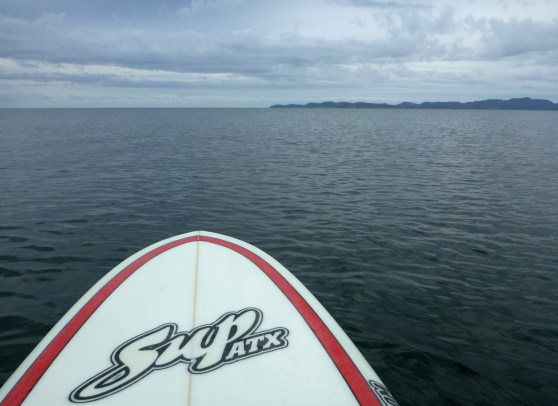
Zen Float

Predawn paddle on shimmering seas.

I float with the sea.  The sky envelopes me.

A baby bat ray dances, his ‘wings’ like tiny shark fins breaking the surface of the water.   He swims toward me–another morning gift– and after a brief exchange of glances, he dives beneath my board and gracefully undulates toward deeper waters.

Blue-footed boobies dive for his breakfast.  Their aqua colored feet always surprise me.

A pelican flotilla glides inches from the sea’s surface.  How can they hold steady so close to the water?

I am so blessed to have these moments .. and thank you for letting me cryptically share them with you.

Morning Comes Round Again

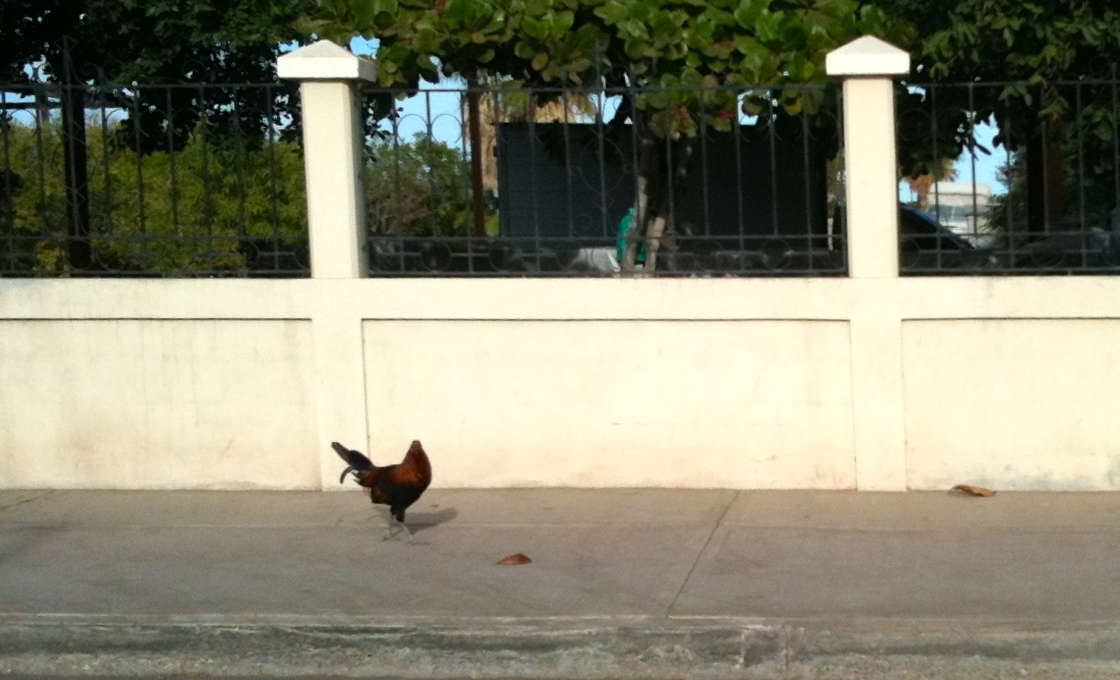
Rooster_on_the_Road

The crow of the first rooster.

The rattle of my car on dusty rutted roads.

The wafting scent of baking bread mixed with the salty sea air.

The cry of the osprey, the tern, the small brown hawk.

The swoop of pelican.

The splash of flying fish.

The glow of reds/pinks/oranges/golds as the sun climbs from behind Isla Carmen.

My own coffee sipped slowly as I honor the dawn.

Morning comes round again ……

The Colorado River Delta

The northern terminus of the Sea of Cortez is an arrid and parched land where once the Colorado flowed into the sea.  It was an area teaming with abundant life and provided vital nutrients to sustain marine life.

Naturalist and writer, Aldo Leopold, traveled the Delta with his brother in a canoe in 1922.  His ensuing essay, “The Green Lagoon,” provided lulling description of the Colorado River Delta at the time:

Dawn on the Delta was whistled in by Gambel quail, which roosted
in the mesquites overhanging camp. When the sun peeped over the
Sierra Madre, it slanted across a hundred miles of lovely desolation, a
vast flat bowl of wilderness rimmed by jagged peaks. On the map the
Delta was bisected by the river, but in fact the river was nowhere and
everywhere, for he could not decide which of a hundred green lagoons
offered the most pleasant and least speedy path to the gulf.

The still waters were of a deep emerald hue, colored by algae, I
suppose, but no less green for all that. At each bend we saw egrets
standing in the pools ahead, each white statue matched by its white
reflection.

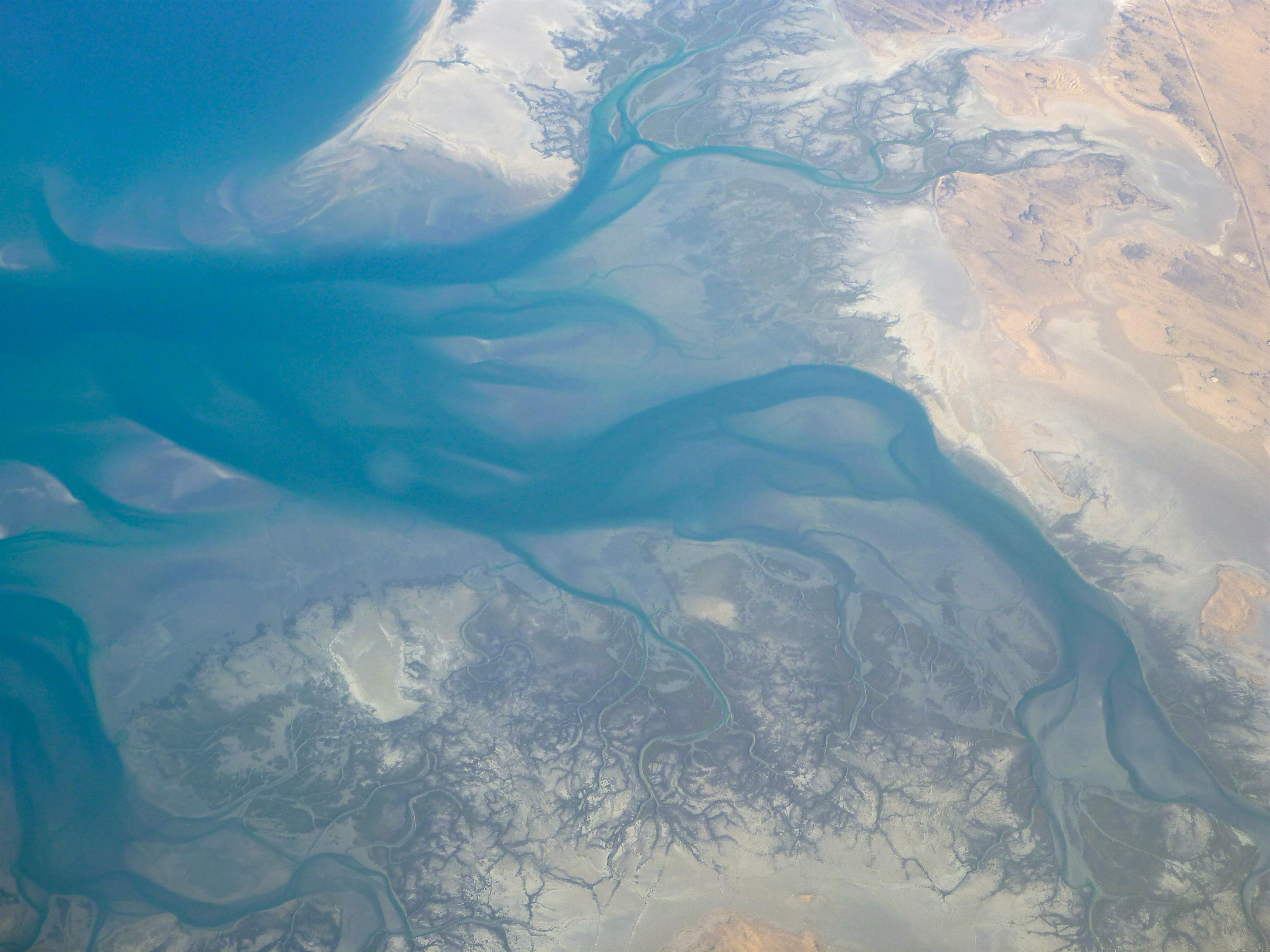
Sea of Cortez meets what's left of the Colorado River (ie, nothing)

Sea of Cortez used to join the Colorado River

The place that Leopold described no longer exists.  Like too many precious and vital places on the planet, the Colorado Delta long ago gave way to dusty sand and desicated land – the victim of water practices in the Western United States that divert water to hydroelectric plants and the thirsty communities of Los Angeles and Las Vegas.

It could easily be argued, that without the water, the expansive growth of these communities would have stalled or been curtailed decades ago.


Today, the Colorado supports about 30 million people and 1 million acres of irrigated farmland. It pours its flow out to Los Angeles and San Diego, Phoenix and Tucson, Las Vegas, Denver and Mexicali. Its waters make the desert burst with tomatoes, melons, alfalfa and cotton.  But with no water reserved for the river itself, the Colorado dries up long before it reaches the sea, and much of its delta is at death’s door.– Sandra Postel, LA TIMES

The resulting paucity in nutrients reaching the Sea of Cortez has manifested in loss of marine life in the area.  Without the cascading effect of constant replenishment provided by the river, fish no longer spawn in the waters, and basically, that area of the sea has entered a period of deep decline.

Caught between humans jockeying for control of the resource, the river itself holds little sway.  It falls on the shoulders of a small number of activists who recognize an earth-based need to create a voice and speak for the river.

“A Changing Delta,” narrated by Alexandra Cousteau and sponsored  by The Ocean Foundation and Marine Ventures Foundation premiered at the Wild And Scenic Film Festival on January 12th.  The film  explores the history of the Colorado Delta from its original vibrancy to the present day restoration efforts by groups such as BlueCloud Spatial and Pronatura.  Says Ocean Foundation President, Mark Spalding, “I cannot imagine a better way to document the story of how we have changed the Colorado Delta over time.”

It is only through the ceaseless desire to make the Delta right again, that change slowly has begun to take place. One of the complications with the Delta property is that it exists entirely within the Mexican borders, but is fed – or was fed – by a river that has its origins in the United States. When the Glenn Canyon dam was built in the 90s, water reaching the Sea of Cortez vanished. Mexican outrage was ignored.

And so it was history in the making, when on November 20, 2012, Mexico and the United States turned a new page in their relationship to the Colorado River. The two countries united to sign a 5-year bilateral Colorado River agreement. Minute 319 is probably the most important water treaty since 1944.

The term of the agreement is short, and the Delta is but one provision of a large number of terms, but it establishes a framework for cooperation and recognizes the river needs on both sides of the border. With continued efforts, maybe the rich riparian Delta that Leopold and his brother canoed in 1922 will once again flourish.

Honoring the day …….

Morning SUP Loreto

Morning SUP Loreto

yes .. there were gulls … and blue-footed boobies, arctic terns, curlews, herons, fluffy egrets, Magnificent frigate birds, cormorants, sandpipers, yellow-legs, and an osprey ……

there were big fish, little fish, jumping fish and flying fish ..

15 December 2012

15 December 2012

and there was the quiet stroke of my paddle in the early morning waters…

the water ruffled from breezes that clocked from north to west to south …

such an honoring way to begin a day …….

sunrise : again

sunrise : october : loreto

stop
inhale the morning

listen
bird chatter and the tumble of beach stones
gull chatter and hammer of woodpecker on palm

feel
moist / dry
desert with a hint of breeze

watch
blue becomes orange becomes red becomes pink
yellow orioles, diving terns, rummaging godwits

night ending
day opening

yes
again

A “One Tide” Day

Tide Chart : Loreto, BCS : 23 October 2012

A one tide day? With the low tide last evening before midnight, and the subsequent low tide tomorrow at 12:07am, Loreto will on this day, have only one tide.

How is that possible?

As I’m not an expert on tides, I sourced Oceana, in an attempt to understand this conundrum.

Tides are regular rises and falls in sea level, accompanied by horizontal flows of water, that are caused by gravitational interactions between the Moon, Sun, and Earth. They occur all over the world’s oceans but are most noticeable near coasts. The basic daily pattern of high and low tides is caused by the Moon’s influence on Earth. Variations in the range between high and low tides over a monthly cycle are caused by the combined influence of the Sun and Moon.

Okay – That part is simple. Digging deeper :

High and Low Tides
Although the Moon is usually thought of as orbiting Earth, in fact both bodies orbit around a common center of mass—a point located inside Earth. As Earth and the Moon move around this point, two forces are created at Earth’s surface: a gravitational pull toward the Moon, and an inertial or centrifugal force directed away from the Moon. These forces combine to produce two tidal bulges in Earth’s oceans: one toward the Moon, and the other away from it. As Earth spins on its axis, these bulges sweep over the planet’s surface, producing high and low tides. The cycle repeats every 24 hours 50 minutes (one lunar day) rather than every 24 hours (one solar day), because during each cycle, the Moon moves around a little in its orbit.

Tidal Patterns
If no continents existed and the Moon orbited in Earth’s equatorial plane, the sweeping of the tidal bulges over the oceans would produce two equal daily rises and falls in sea level (a semidiurnal tide) everywhere on Earth. In practice, landmasses interfere with the movement of the tidal bulges, and the Moon’s orbit tilts to the equatorial plane.

Consequently, many parts of the world experience tides that differ from the semi-diurnal pattern. A few have just one high and one low tide per day (called diurnal tides), and many experience high and low tides of unequal size (known as mixed semidiurnal tides). In addition, the tidal range, or difference in sea level between high and low water, varies considerably across the globe.

Monthly Tidal Cycle
In addition to the daily cycle of high and low tides, there is a second, monthly, cycle. In this case, the Sun and Moon combine to drive the cycle. As with the Moon, the interaction between Earth and the Sun causes tidal bulges in Earth’s oceans, though these are smaller than those caused by the Moon. Twice a month, at the times of new and full moon, the Sun, Moon, and Earth are aligned, and the two sets of tidal bulges reinforce each other. The result is spring tides—high tides that are exceptionally high and low tides that are exceptionally low. By contrast, at the times of first- and last-quarter moon, the effects of the Sun and Moon partly cancel out, bringing tides with a smaller range, called neaps.

Okay, neap tide. Alas, the moon is not at it’s last quarter, but “waxing gibbous,” or a moon that is “appears high in the east at sunset. It’s more than half-lighted, but less than full.”

A further web search takes me to discussions of distant places, such as the Gulf of Carpentaria in Australia, where one-tide-per-day are not uncommon – something to do with narrow opening of the bay and water trapped.

Tides, it turns out, are more complex than the simple pull of the moon. A final note from abc.net.au,

Now this special one-tide-a-day thing happens in other places, for exactly the same reason – places like the Gulf of Thailand, the Persian Gulf, the South China Sea and even the Gulf of Mexico. It just so happens that all these places are some of the very best places on Earth for catching fish. I wonder if the once-a-day tides makes the fish all confused, and easier to catch?

It did seem that extra Pangeros headed from the Loreto Marina this morning before sunrise. Maybe there is something to more fish and one tide?

All I really KNOW at this point, is that today, there is one tide – a high of 1.64′ will occur at 8:27 AM, followed by a low of 0.09′ tomorrow morning at 12:07 AM.