The Look of Love

Update on osprey love story and nesting development.

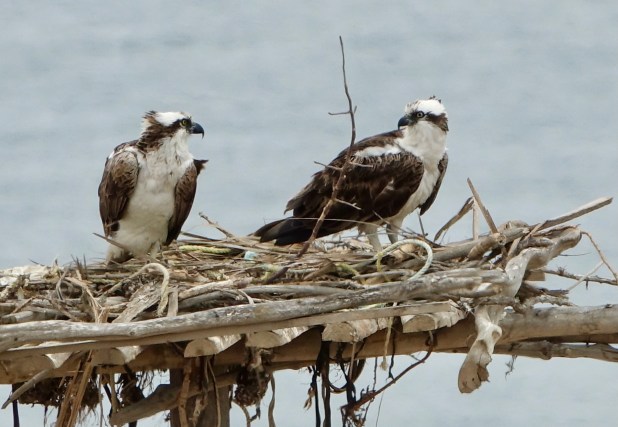
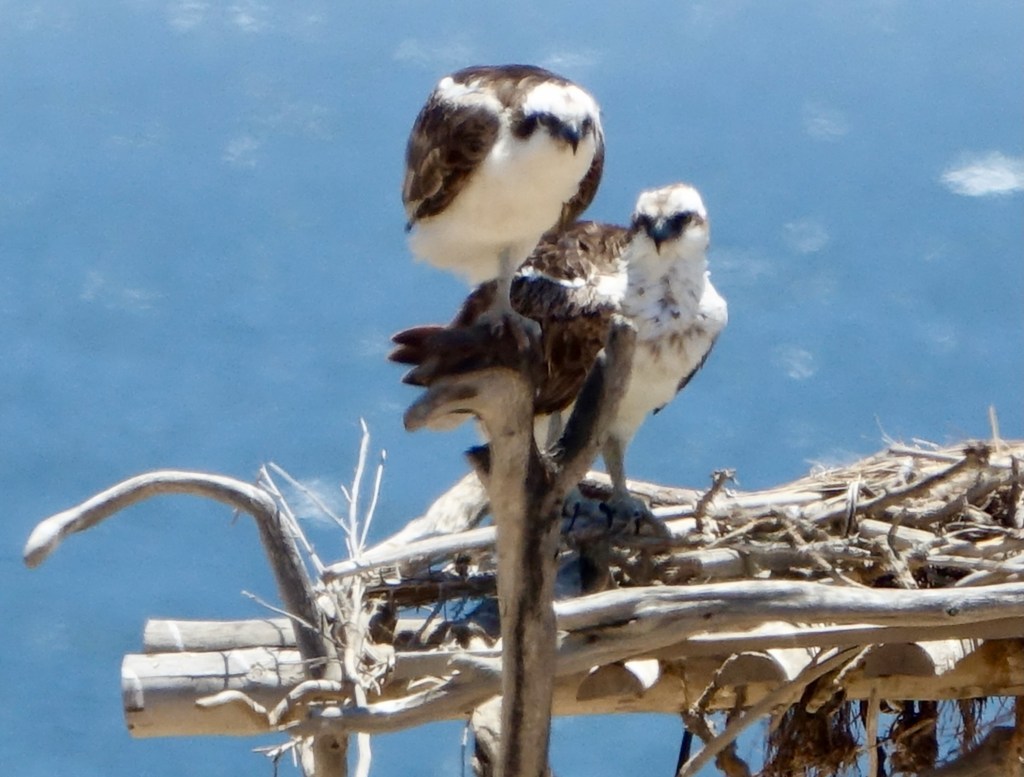
First, they need a new architect. This nest, well, the truth is, they’ve never finished the nest. My guess, and I’m only an observational scientist, is that they are likely two-year old birds, at least the male. He has definitely chosen a nesting site, made an honest attempt to attract a mate, found a willing female, and then wasn’t quite sure what to do next. The photo above is either a look of love, or a look of “I don’t know, do you?”

Second, it’s VERY late in the season for mating. While other nests have hungry chicks demanding constant nutrition, ‘our’ birds (my neighbors deeply involved in what has been a challenging love triangle), come and go, more like dating than mating. Although they do coo (if you can call an osprey call a coo), neck a bit, as in rubbing beaks, and spend some afternoons simply hanging out together.

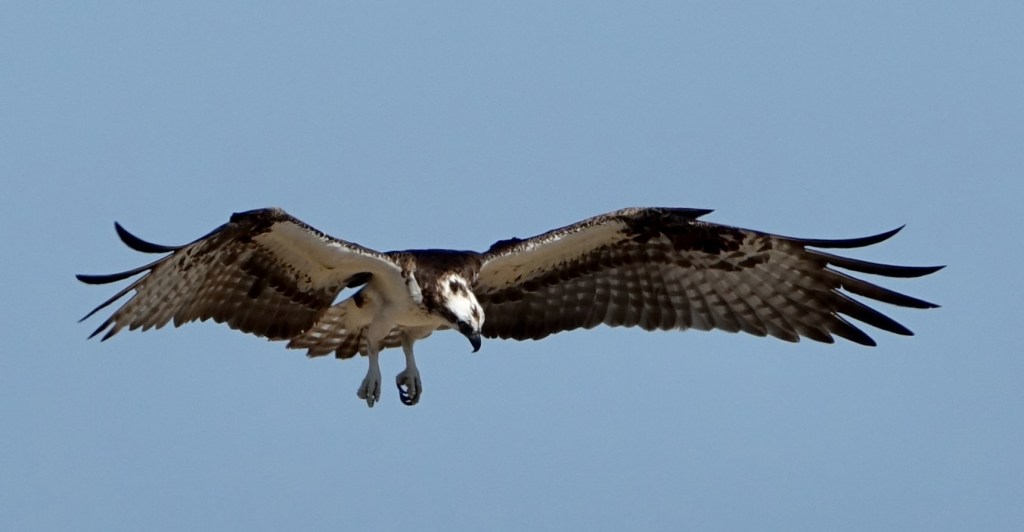
Male #1, who Ii will give a name, has certainly secured his nesting site. He is present in the mornings, brings his fish breakfast or lunch back to sup on site, and occasionallly adds a stick or piece of seawood to his abode. Afternoons, he’ll call until the female shows up and then they just sit for a while, watching, always alert to the surrounding sounds and activites.

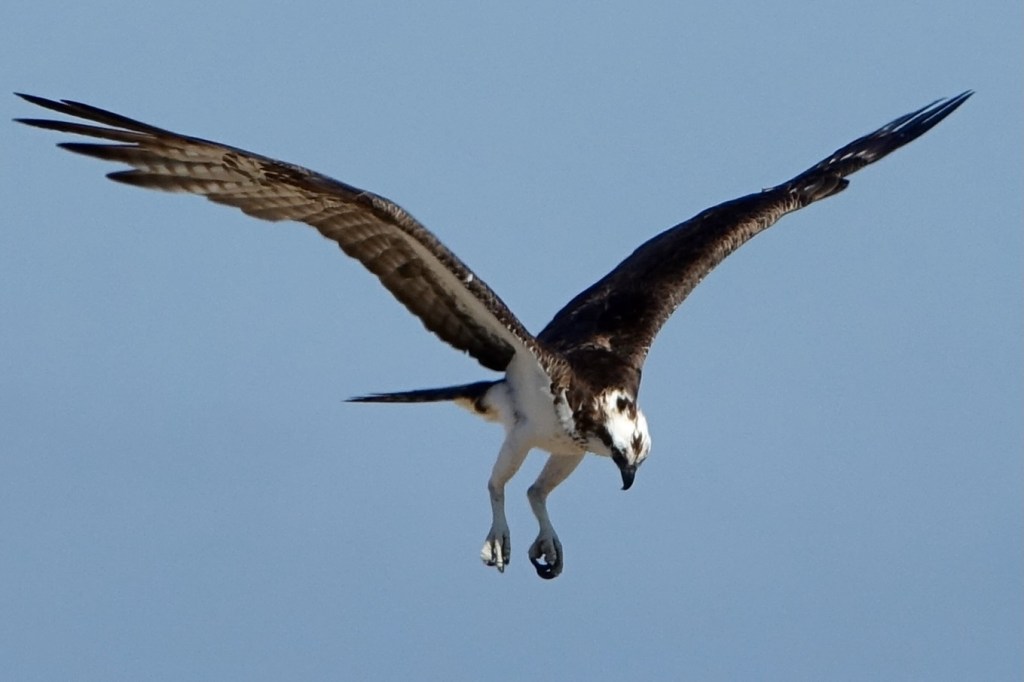
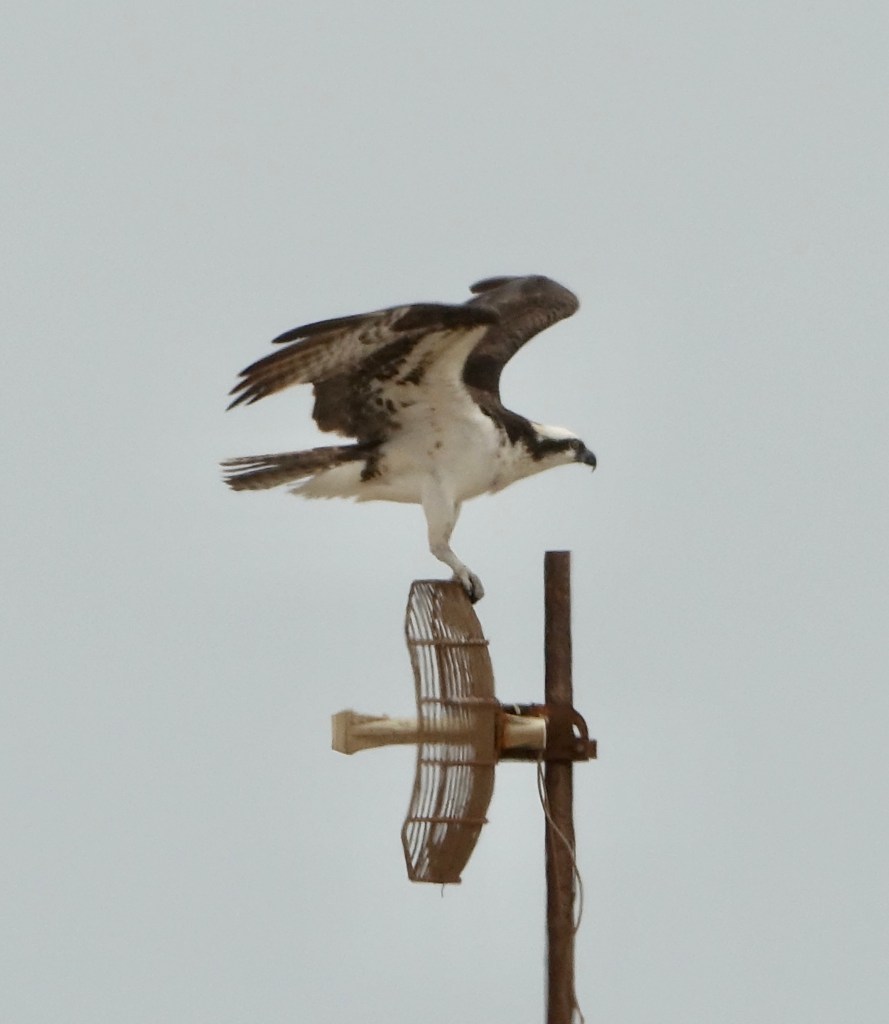
Male #2 continues his attemps to usurp the nest. When the pair is together, he will fly in, swoop down on them, ‘glare’ from the neighbors attention perch above, and do his best to disrupt the romance in progress.
As I type, Male #1 has returned with a fish and is hard at work consuming his lunch. The drama of the love saga and the joy of watching certainly interferes with my other ‘work’, as I can’t seem to stop watching. I love getting to know them, identifying their unique characteristics, and learning their behaviors, all by observation. It’s the best kind of science I can imagine and hugely rewarding.

Osprey Nesting Journey

For two years, the osprey platform remained empty. A gift from my contractor, a wooden platform with a couple of randomly placed sticks perched above a tall phone-pole like wooden stand to attract the sea-hawk raptor. My belief was that the structure had been placed too close to the water, the hunting grounds for all the other waterfowl, too close for any bird in its right mind to choose as a nesting site. At the start of year three, I had it moved farther back on the property, and still, no takers. Plenty of nests in town, huge looming collections of sticks, ropes and gathered seaweed, but my platform remained bereft of bird.

And then, he appeared. A long male who one day arrived with a stick. One stick, and deposited atop the wooden structure. You could probably hear my ‘whoopee’ on the other side of the pueblo. Day after day, for hours, he sat and waited, chirping in hopes of attracting a female. Slowly, he added a few more sticks. Some dried seaweed bulbs. Some green grasses. He’d return to the nest after hunting, large fish in his talons and settle in for his meal. Each time he spied another osprey, his calls rang out across the terrain.

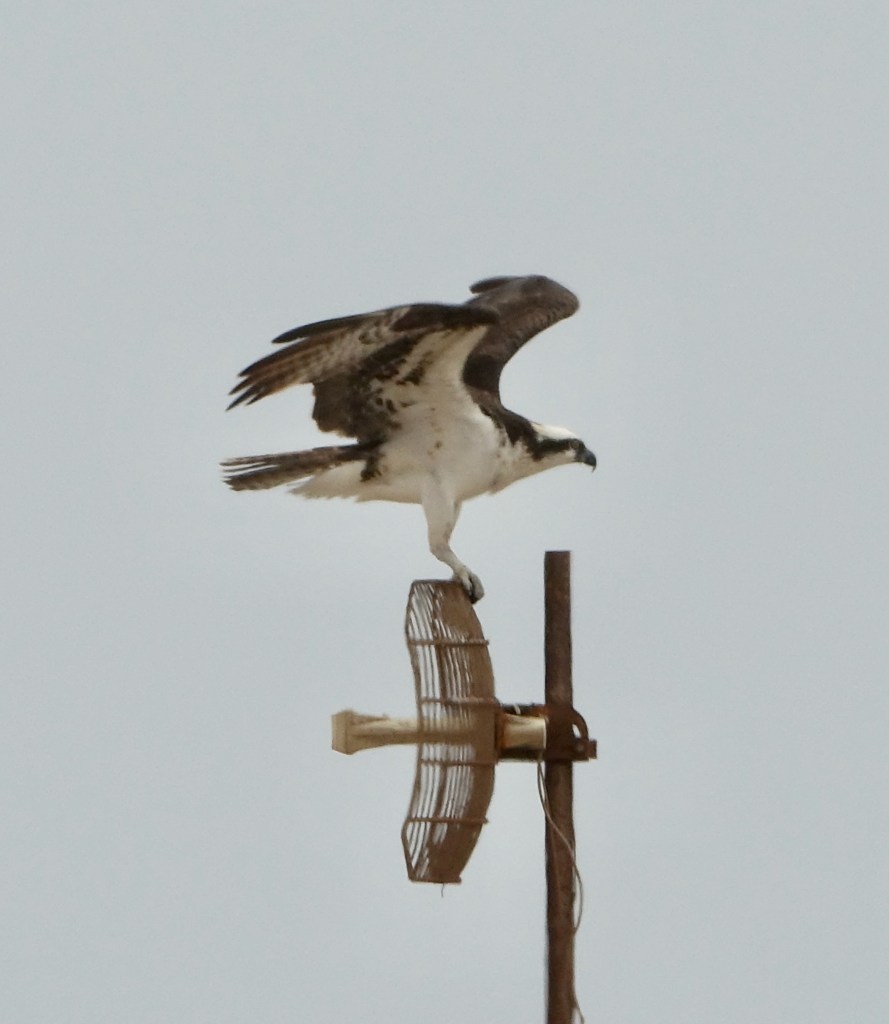
And then, she arrived. A slightly larger-then-he female who perched on the side of the nest-to-be and seemed to be waiting for him to make his move. He flapped his wings. He vocalized. He had her in his sights when another male showed up, and took a position on the neighbor’s weather antennae above the potential nest. Male #1. as I had grown to call him, seemed beside himself, confused as to what was more important. Chase off male #2 or get to creating a marriage with Female #1.

Eventually she grew tired of waiting and flew away. Male #1 was back to solitary. Less time on the nest, but still, but he did add a few more sticks. A bit more seaweed. Lunch and dinner of his catch. Always vocalizing his shrill call whenever another osprey entered the neighborhood.

And now, two weeks after her initial visit, Female #1 has returned. She’s decided to spend more time on the platform. I have yet to see her bring her own nesting materials to what might be her home, but I remain hopeful.

I’ve spent much of early spring fixated on nesting cameras of bald and white eagles across the USA landscape. From Big Bear Mountain in southern California to U.S. Steel in Pennsylvania, a cam in Traverse City, Michigan and elsewhere, the laying of eggs, the hatchlings, the loss of chicklets, an almost consuming watch of eagles has only whetted my appetite for an experience up close and personal on the platform at the edge of property.

Bring on the baby osprey!

Loki Look Out

At the edge of the Pacific, I am washed in my own personal solace. The heaviness of the larger world slips away and I am able to breathe. Loki, my silly sweet Australian Cobberdog, seems to be getting a taste. Or maybe he’s simply looking for lizards, or whales, or another dog passing that might be a playmate. His long legs balanced atop the wall, I love watching the search all that spreads before him.

My passion for the Pacific originated in my teens, when the beach became a refuge, bearing both a sandy towel or game of hearts, and a canvas mat or surfboard on a wave. When friends piled up in long summer days, the air perfumed with coconut oil and tuna fish sandwiches with lemonade and potato chips. When the long pause in and/or near the water could quell disquieted thoughts. Where family troubles or teen angst vanished.

Something in the persistence of the horizon. That deep cerulean blue line.

I laughingly say that my skin gets itchy if I’m more than 20 miles from the ocean, and when I get within 10, I can scent the pungent seaweeds and tossed shell fragments, as if carried on a particular air current designed for me. I climb back into my skin, my watery alter-self contented with the proximity.

When I’m immersed in the water, my body feels as if it is 12 years old. The aging muscles and bones suddenly young again. The exquisite weightlessness, the dolphin-like quality. The freedom. The fluidity.

Wallace J Nichols writes about the positive impact of the ocean on the human species. His award winning book, Blue Mind: The Surprising Science That Shows How Being Near, In, On, or Under Water Can Make You Happier, Healthier, More Connected, and Better at What You Do explores exactly what the title promises. Decades ago, a scientist friend said that ocean air bathes the body in negative ions, which in contrast to their name, have been shown to have a beneficial effect on the human psyche.

I no longer understand cities or their draw, and am sure that Loki has caught my ‘crowd allergy’ as he stares out and searches. Ah .. there .. an osprey with a fish. Ah .. there .. a pelican diving. Ah .. there … the chatter of a cactus wren, the slither of a lizard, the float of a cloud. Free from high-rises, traffic jams with road rage, sniper shootings …. We are out here on the edge, Loki and I, building a space where our thoughts are not boxed and our creativity flourishes.