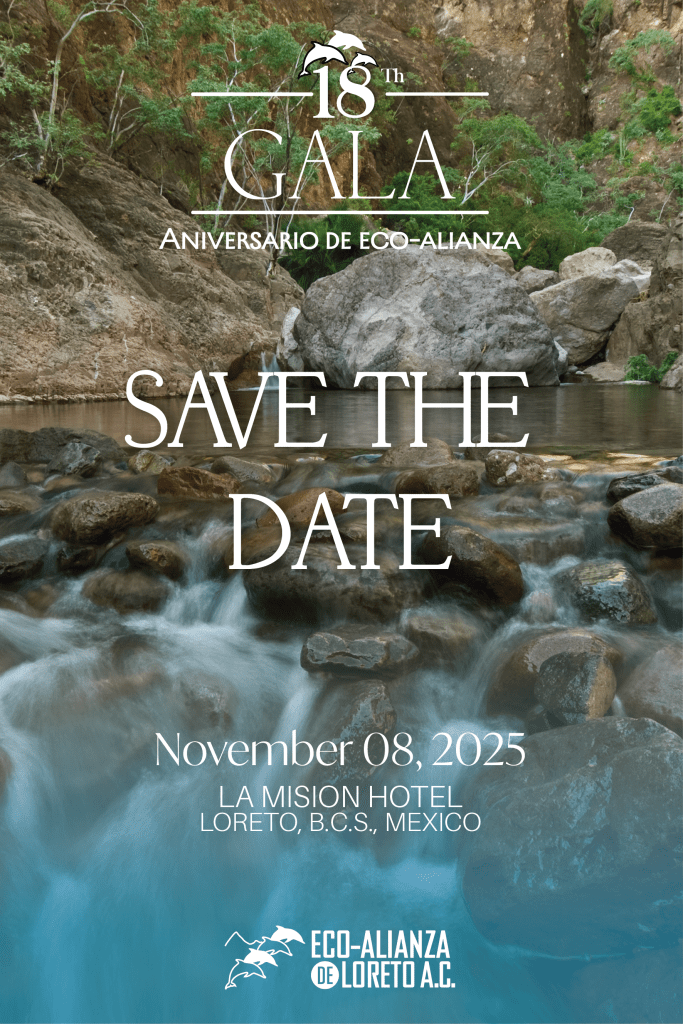
Eco-Alianza’s Annual Gala promises to be a night to remember. Celebrating 18 years of environmental education and outreach, the Gala, known as one of the ‘best parties in Loreto’, provides support for our on-going programs in education, clean water, sustainable fisheries, scientific exploration and more. Our central focus is the health and sustainability of Loreto and surrounding areas.
Once again, La Mision Hotel‘s gorgeous ballroom will be the site of a sumptuous feast, surprising silent auction treasures, and lively bidding-wars on items ranging from adventurous outings, fishing packages, guest stays, and more.
Mark your calendars – November 8, 2025 – SAVE THE DATE! Make early travel and accommodation arrangements, and prepare to enjoy all the magic that Loreto has to offer. Extend the invitation to family and friends. More details and tickets sales forthcoming.
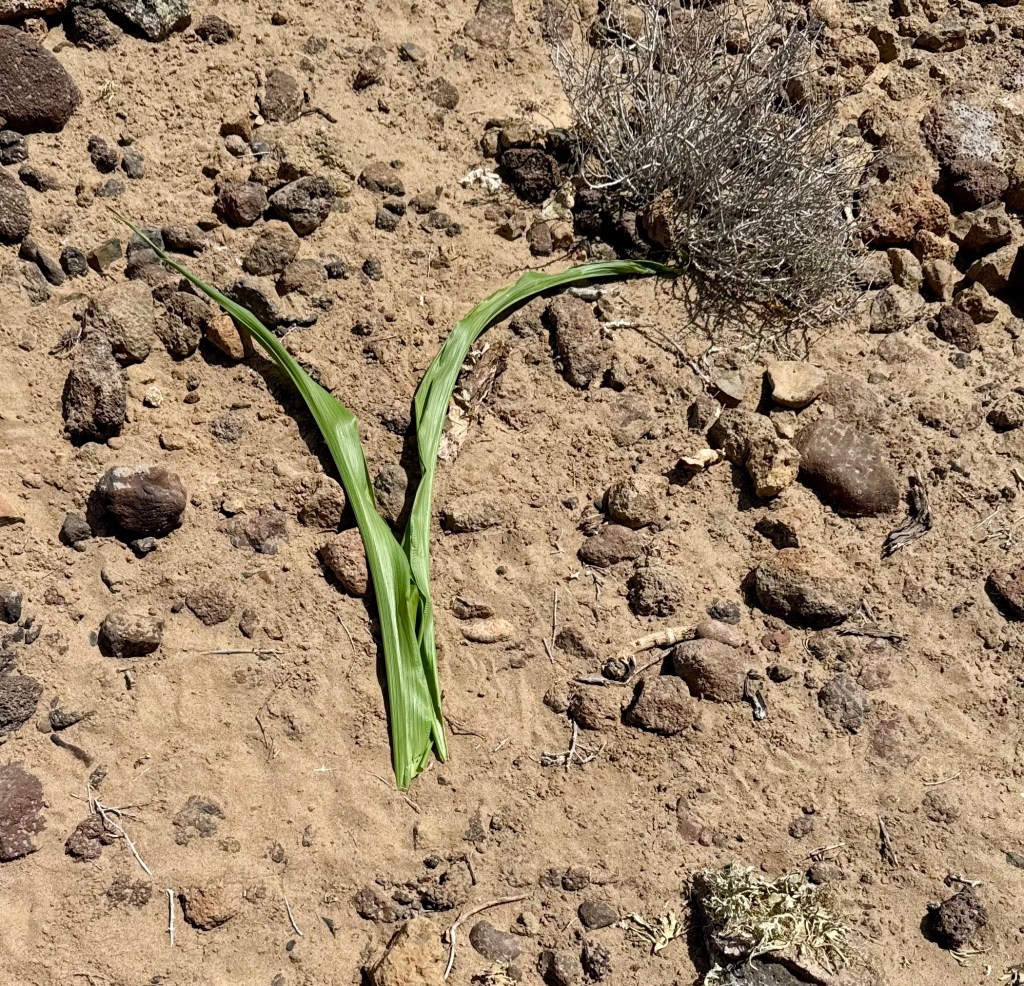
The large jackrabbit to be exact. The one who has been mowing down my corn, chomping off the recently sprouted stalks, and strewing leaves across the rocky soil. I sprinkled wolf piss around the base of the rows, and it’s slowed him down, but I don’t trust the solution to last. Today, the corn and squash/melon patch will be enclosed with small animal fencing. I don’t mind sharing, but I have my limits.
In the dream, there were footprints everywhere. Rabbit footprints on the couch, the bed, the sheets. Across the floor. A trail of dusty tracks, as if he’d even moved into the house.
The garden is part of a community project for sustainable living. The ultimate goal, spearheaded by my neighbors, is to have a network of at least 26 vegetable gardens in our tiny pueblo of San Juanico. While in college, I’d had a backyard produce garden that provided for six of my neighbors, so a program of sharing what is grown feels right at home.
Early in the afternoon, I had removed the netting from the vegetable bins to allow the birds to help me deal with an invasion of cutworms that were gnawing their way through the carrots and lettuce. The birds must have been watching me, the black-chinned sparrows and the cactus wrens descended onto the freshly turned earth as soon as I stepped away. Their small beaks made fast work of my refuse. Worms a delicacy in the dry arid desert.
The dream startled me awake. My mind racing with thoughts of the rabbit, about the unprotected produce. The lure of lettuce. Enough so, I went out with flashlight at 3am, but no rabbit could be seen. The lettuce, of course, is already spent, so not really an issued. Bolted, and lifting its flowery heads to the sun. I’m waiting patiently to collect their seeds, which I’ll use in the fall for the next crop. But in my sleepy state, I imagined it vanished, like a 5-course meal and a very stuffed rabbit unsuccessfully trying to hop away.
Morning light, coffee in hand, I trudged outside to assess the damage. There was none. My dream had been for naught, or possibly a future warning? What my approach did do was to startle the feeders. Mr. and Mrs. Quail and a pair of tiny cactus wrens had taken to the bin to assist in pest control and continue the worm consumption. No food sources go untouched in the desert.
I found myself thinking about historically how man has moved into wild-lands, filled them with tasty treats – green crops and animal herds, like cattle and sheep – and then been furious, that the wild-life decides to feast on the buffet laid out before them. The wolves and coyotes, akin to kids in a candy store, delighting in such delicacies, and then poisoned or trapped or shot for doing what comes naturally.
My rabbit, well, he’s cute in a big-jackrabbit kind of way, and I have no intention of harming him, no matter the struggle over my garden. I’m just going to help him not be so teased. Or at least, I’m putting a more defensible barrier between my crops and his taste buds.
Update on osprey love story and nesting development.
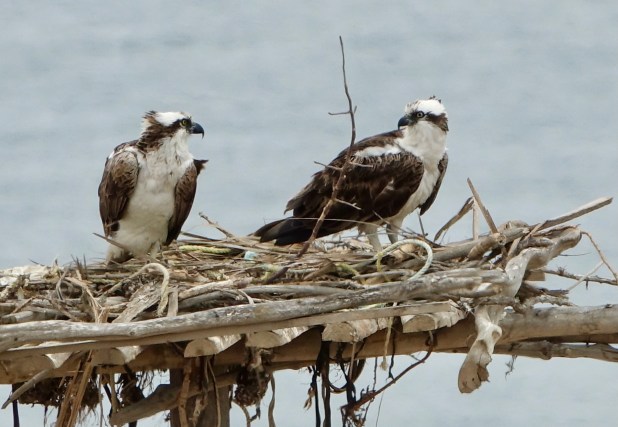
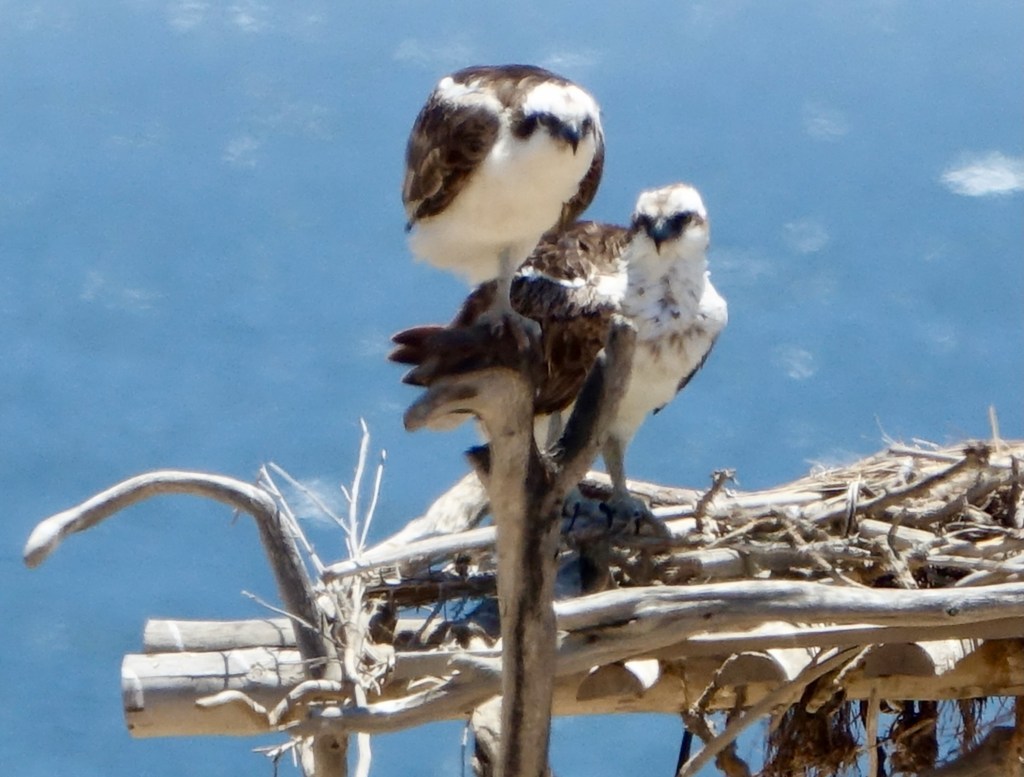
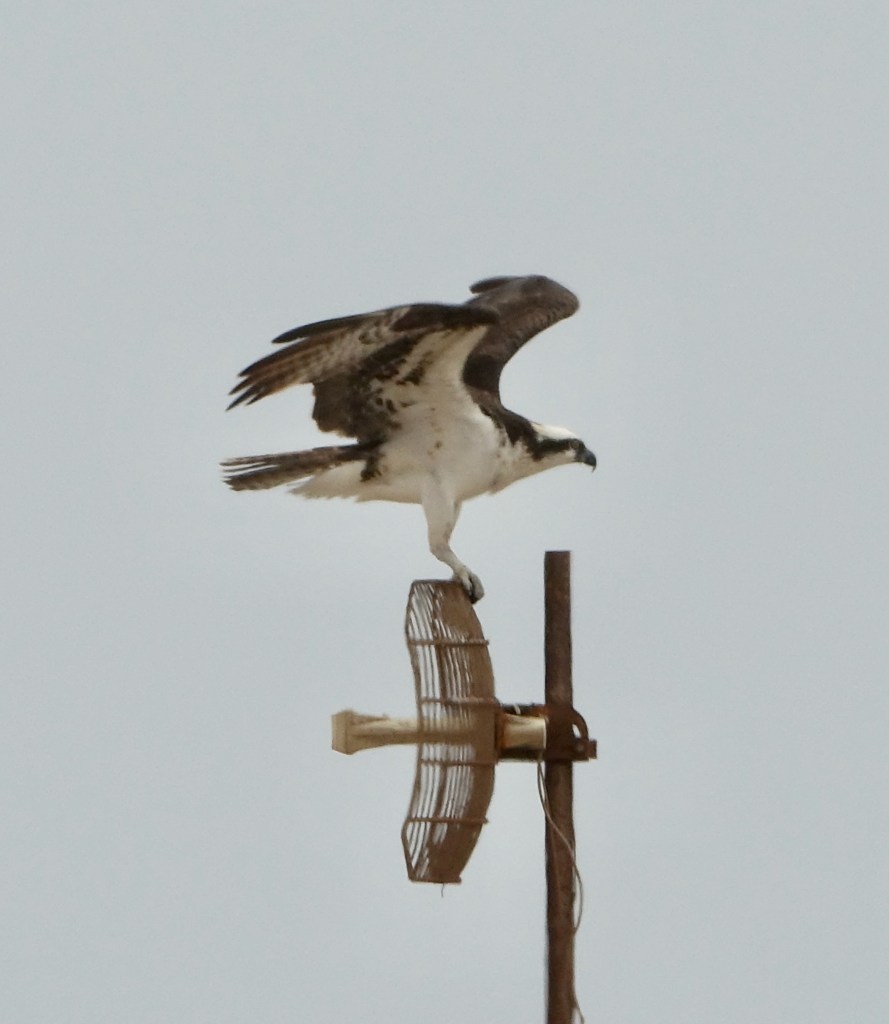
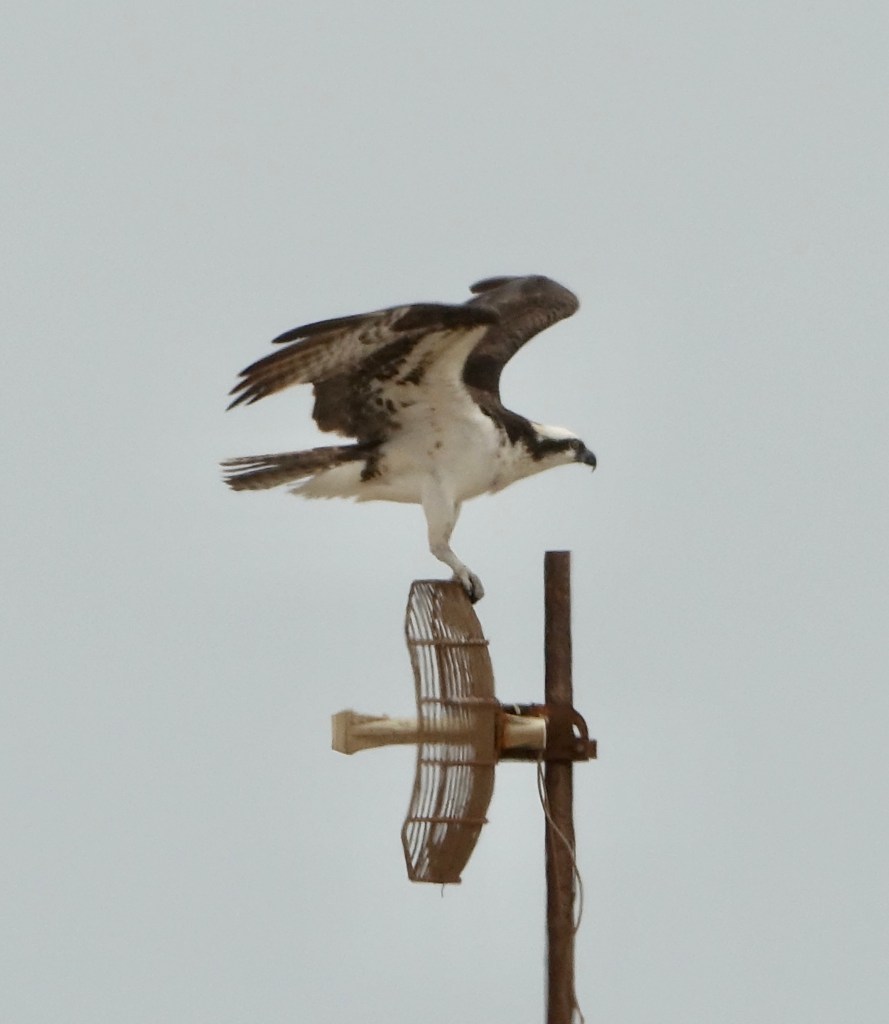
First, they need a new architect. This nest, well, the truth is, they’ve never finished the nest. My guess, and I’m only an observational scientist, is that they are likely two-year old birds, at least the male. He has definitely chosen a nesting site, made an honest attempt to attract a mate, found a willing female, and then wasn’t quite sure what to do next. The photo above is either a look of love, or a look of “I don’t know, do you?”
Second, it’s VERY late in the season for mating. While other nests have hungry chicks demanding constant nutrition, ‘our’ birds (my neighbors deeply involved in what has been a challenging love triangle), come and go, more like dating than mating. Although they do coo (if you can call an osprey call a coo), neck a bit, as in rubbing beaks, and spend some afternoons simply hanging out together.
Male #1, who Ii will give a name, has certainly secured his nesting site. He is present in the mornings, brings his fish breakfast or lunch back to sup on site, and occasionallly adds a stick or piece of seawood to his abode. Afternoons, he’ll call until the female shows up and then they just sit for a while, watching, always alert to the surrounding sounds and activites.
Male #2 continues his attemps to usurp the nest. When the pair is together, he will fly in, swoop down on them, ‘glare’ from the neighbors attention perch above, and do his best to disrupt the romance in progress.
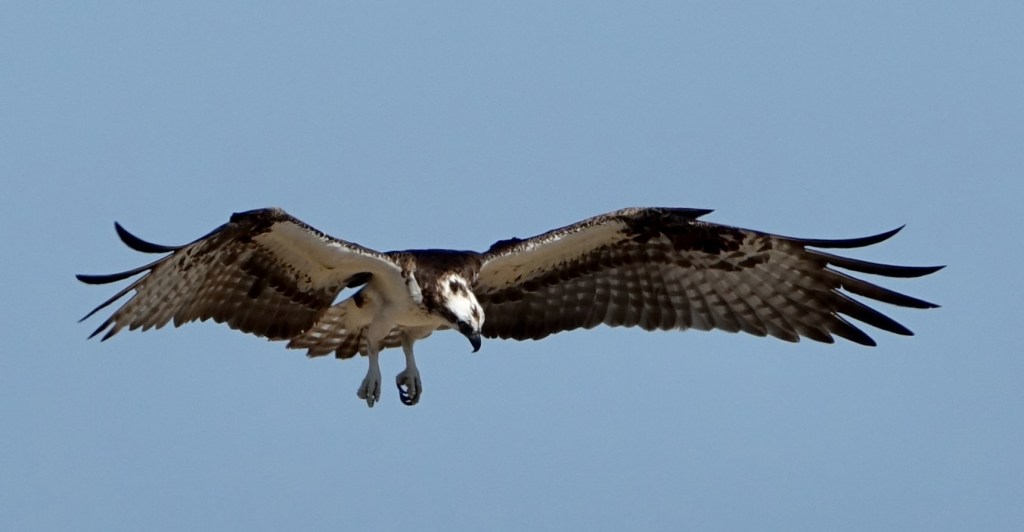
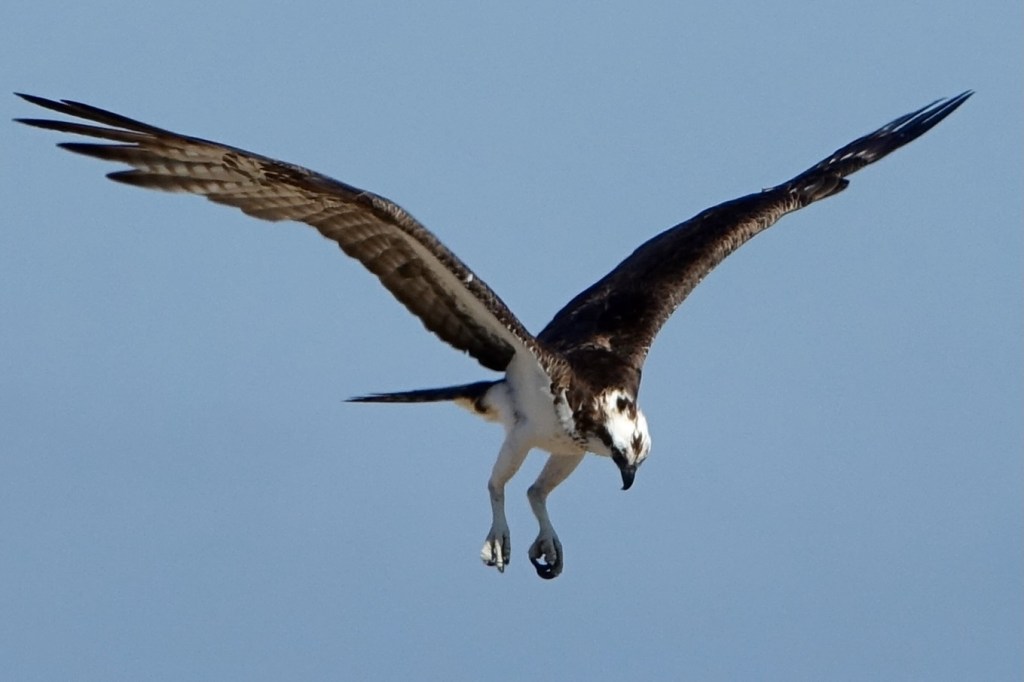
As I type, Male #1 has returned with a fish and is hard at work consuming his lunch. The drama of the love saga and the joy of watching certainly interferes with my other ‘work’, as I can’t seem to stop watching. I love getting to know them, identifying their unique characteristics, and learning their behaviors, all by observation. It’s the best kind of science I can imagine and hugely rewarding.
For two years, the osprey platform remained empty. A gift from my contractor, a wooden platform with a couple of randomly placed sticks perched above a tall phone-pole like wooden stand to attract the sea-hawk raptor. My belief was that the structure had been placed too close to the water, the hunting grounds for all the other waterfowl, too close for any bird in its right mind to choose as a nesting site. At the start of year three, I had it moved farther back on the property, and still, no takers. Plenty of nests in town, huge looming collections of sticks, ropes and gathered seaweed, but my platform remained bereft of bird.
And then, he appeared. A long male who one day arrived with a stick. One stick, and deposited atop the wooden structure. You could probably hear my ‘whoopee’ on the other side of the pueblo. Day after day, for hours, he sat and waited, chirping in hopes of attracting a female. Slowly, he added a few more sticks. Some dried seaweed bulbs. Some green grasses. He’d return to the nest after hunting, large fish in his talons and settle in for his meal. Each time he spied another osprey, his calls rang out across the terrain.
And then, she arrived. A slightly larger-then-he female who perched on the side of the nest-to-be and seemed to be waiting for him to make his move. He flapped his wings. He vocalized. He had her in his sights when another male showed up, and took a position on the neighbor’s weather antennae above the potential nest. Male #1. as I had grown to call him, seemed beside himself, confused as to what was more important. Chase off male #2 or get to creating a marriage with Female #1.
Eventually she grew tired of waiting and flew away. Male #1 was back to solitary. Less time on the nest, but still, but he did add a few more sticks. A bit more seaweed. Lunch and dinner of his catch. Always vocalizing his shrill call whenever another osprey entered the neighborhood.
And now, two weeks after her initial visit, Female #1 has returned. She’s decided to spend more time on the platform. I have yet to see her bring her own nesting materials to what might be her home, but I remain hopeful.
I’ve spent much of early spring fixated on nesting cameras of bald and white eagles across the USA landscape. From Big Bear Mountain in southern California to U.S. Steel in Pennsylvania, a cam in Traverse City, Michigan and elsewhere, the laying of eggs, the hatchlings, the loss of chicklets, an almost consuming watch of eagles has only whetted my appetite for an experience up close and personal on the platform at the edge of property.
There’s a magic in this slender peninsula that lies beyond the borders of cities or towns. Beyond the hustle and bustle of commerce and development. That sits on the edge. The untouched. The yet to be disturbed by the heavy hand of man.
Here, the coyote hunt small prey. Range cattle forage outside of fences. Red-tailed hawks and osprey soar over land and sea, eyes pinned in search of their next meal.
Tall cardon reach their stately trunks every upward, aside paloverde, paloblanco, creosote and straggley cerote. Random water holes, estuaries and narrow canyon pools remind us that water is still the essence, especially in the dry dry desert.
It’s in these lands my soul finds a freedom, a sense of expansion. In the desert, one must look with refined eyes to ferret a tiny flower, a scampering beetle, the tracks of lizard and quail. A roadrunner zooms past. A kingfisher calls from a tree branch. A flotilla of pelicans glide across the face of a wave.
Light from the rising sun reflects in my face. Home in the fierce dry landscape. Home in the magic.
After the rains, after the cleanup and the repairs, after the bulldozers push rocks and dirt into breaks in the roadways, after everyone sighs and takes a breath, after Hurricane Kay moves off of the Baja Peninsula – the greening begins.
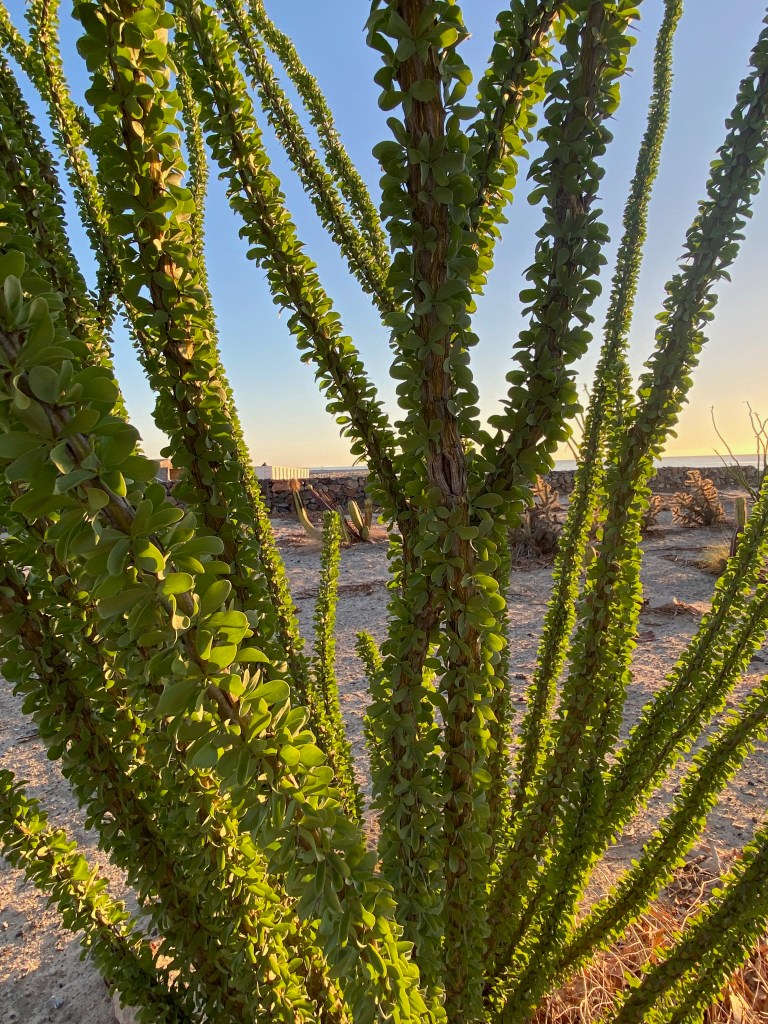
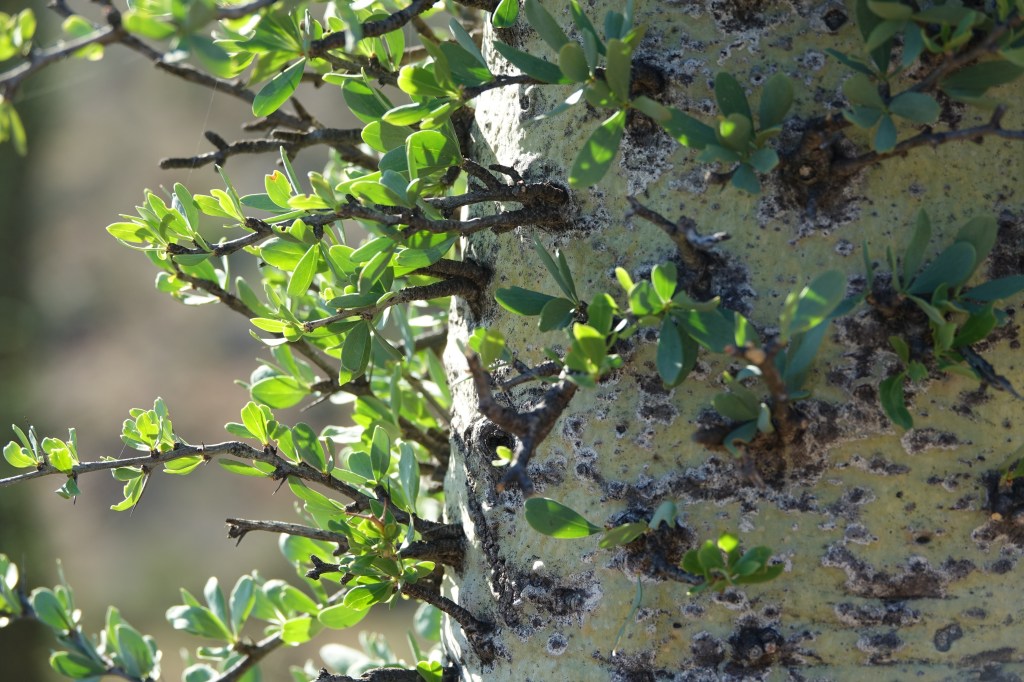
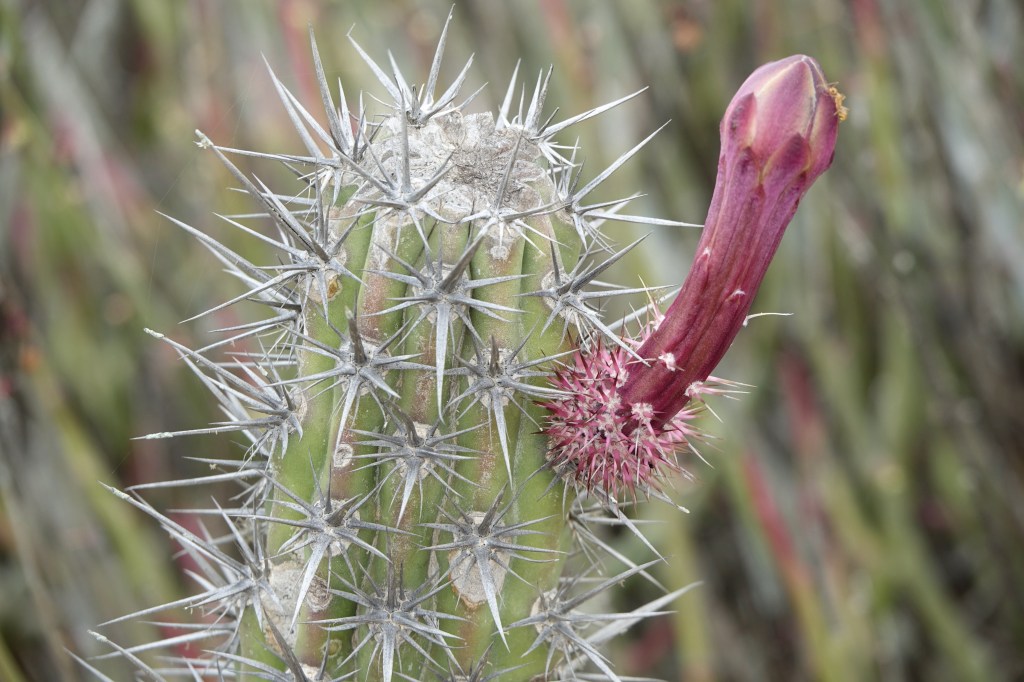
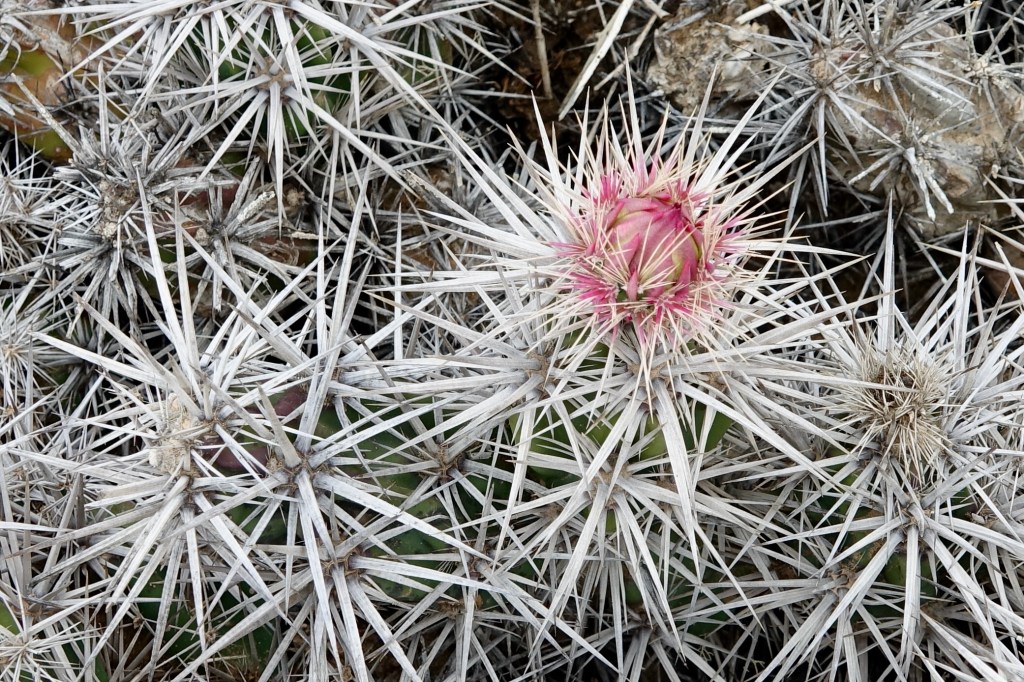
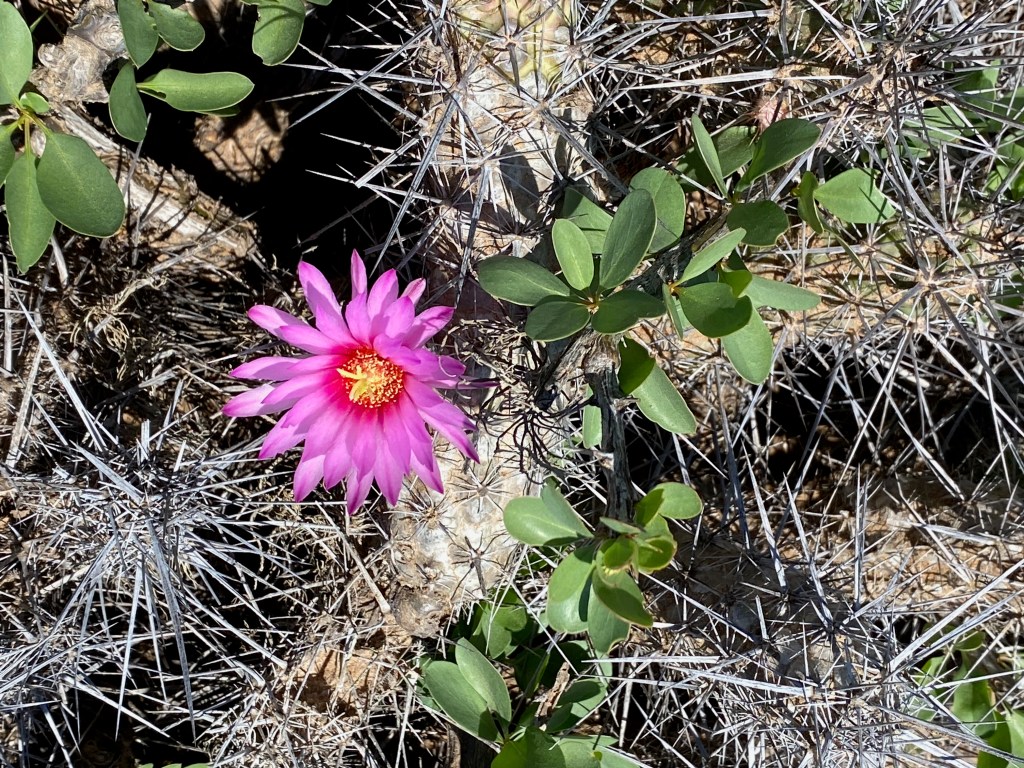
Almost overnight, or at least it seems as so. The crackle-bone-dry desert landscape of a 5-year drought springs into life. Grasses push up from the crispy earth. Cireos naked spines flesh out in coverlets of tiny leaves. Barrel and other cactus burst forth in flower. Arroyos raging waters diminish to a trickle, and up-canyon, narrow rocky slots carry mountain waters through granite channels laid bare by the earlier rushing waters. Yellow and orange butterflies flutter on light breezes. Dragon flies chase the oh-so-not-loved mosquitos born in standing water. Range cattle, horses and loose goats chomp on grasses sprouted on the edge of the road. The world alive again. The brown desert carpeted in green.
Green desert carpetCireo leafing outCireoGrasses everywhereRoad repairsCattle grazingTIny flowersWinged creatures pollinating The Greening of the desert.
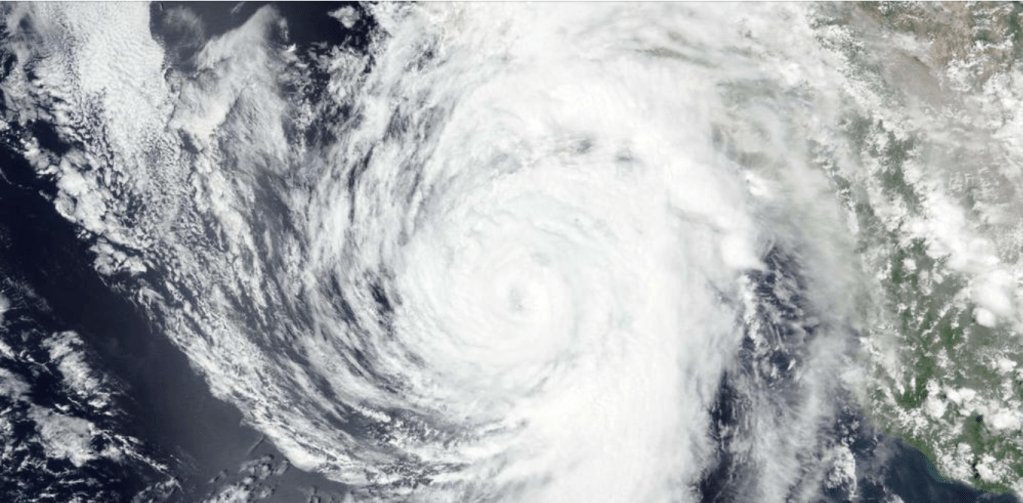
Water water everywhere. That’s Kay’s swan song, with arroyos washing out roads along the entire peninsula. She wasn’t even a strong hurricane – a category 2 in her heaviest moment – but she was grand – huge arms nearly 600 miles across. Her winds ran as high as 72mph in various locations, but her water. The rain. The desperately needed rain came all at once, the ground crusty dry. No way to absorb, but rush and run down the mountain faces and arroyos.
Day before Hurricane Kay heading toward InsurgentesSame Road – two days after Hurricane Kay
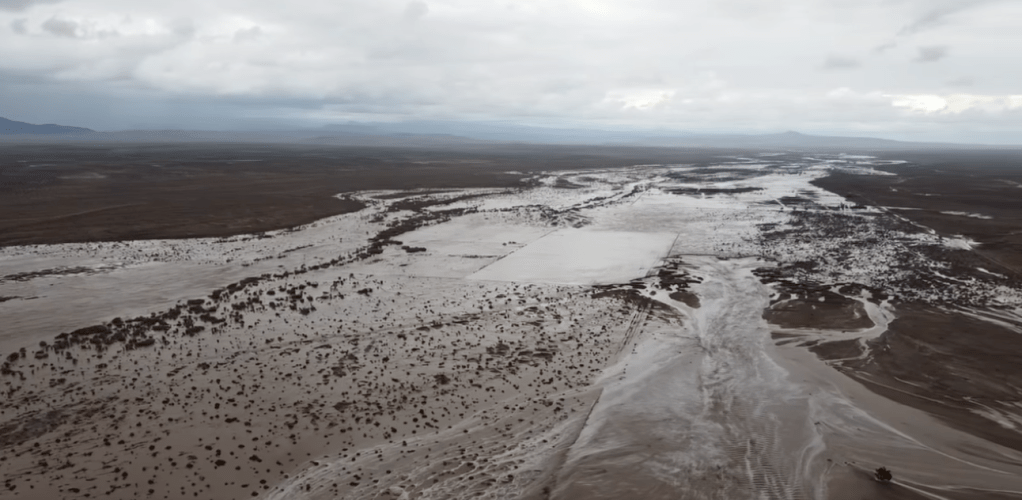
Multiple towns took hard hits. The Mulege river once again breached its banks, flooding everyone and thing in proximity. San Felipe, usually a dry sandy desert, found itself with streets of rivers, more suited to kayaks or canoes.
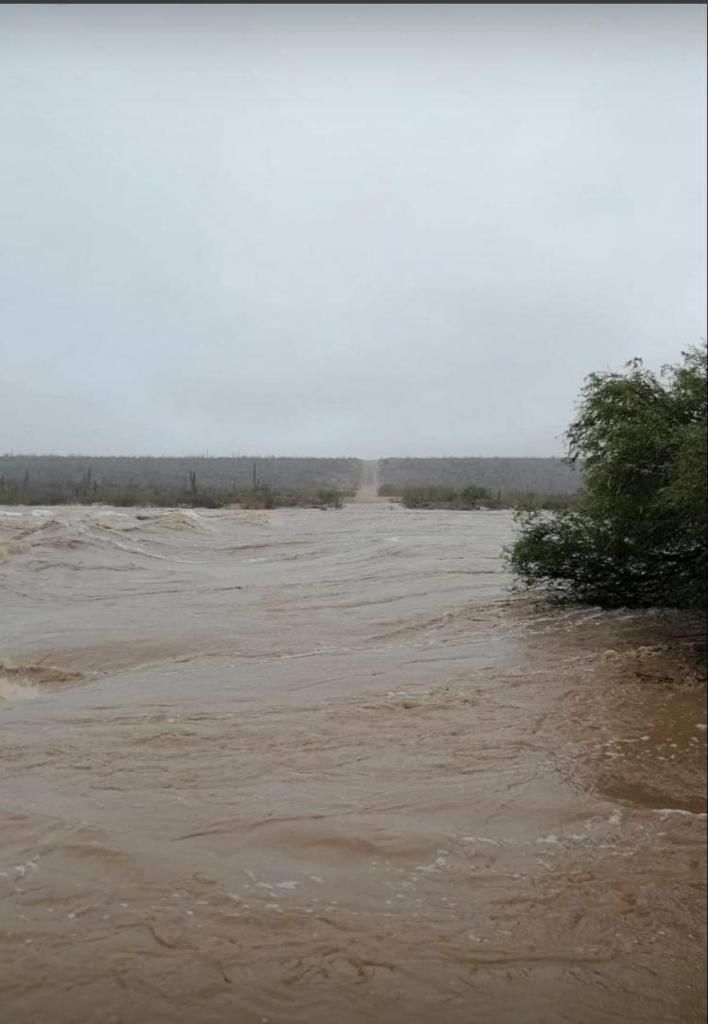
The major effect of Kay was on MEX 1 the transpeninsular highway that transits between Tijuana and Cabo San Lucas. The road cut in so many places that traffic and commerce were actually halted for three days. Today, the 13th of September, most roads have some measure of passage, and the large double tractor trailers could be seen heading south. Below, some photographs, borrowed from various posts and publications, communicate what my words lack.
Between Vizcaino & Guerro NegroSan FelipeJesus MariaBetween Loreto & Santa RosaliaGuerro NegroMex 1 NorthToward MexicaliJesus Maria
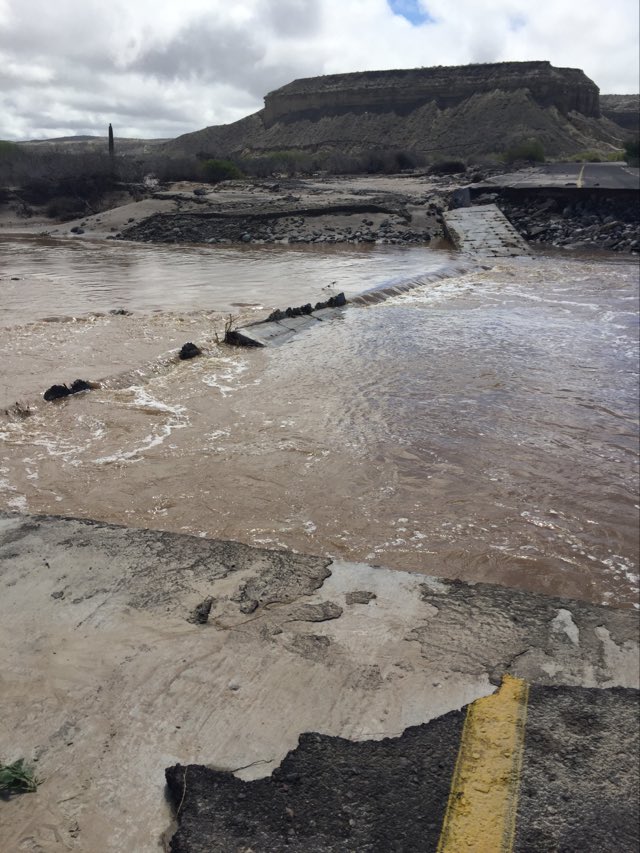
Close to home, or the home I cannot yet reach, the highway between Insurgentes and San Juanico washed out first in Insurgentes, and then the bridge was obliterated over the wash a few miles outside of town.
Arroyo crossing (or lack of) near San JuanicoArroyo crossing (or lack of) near San Juanico
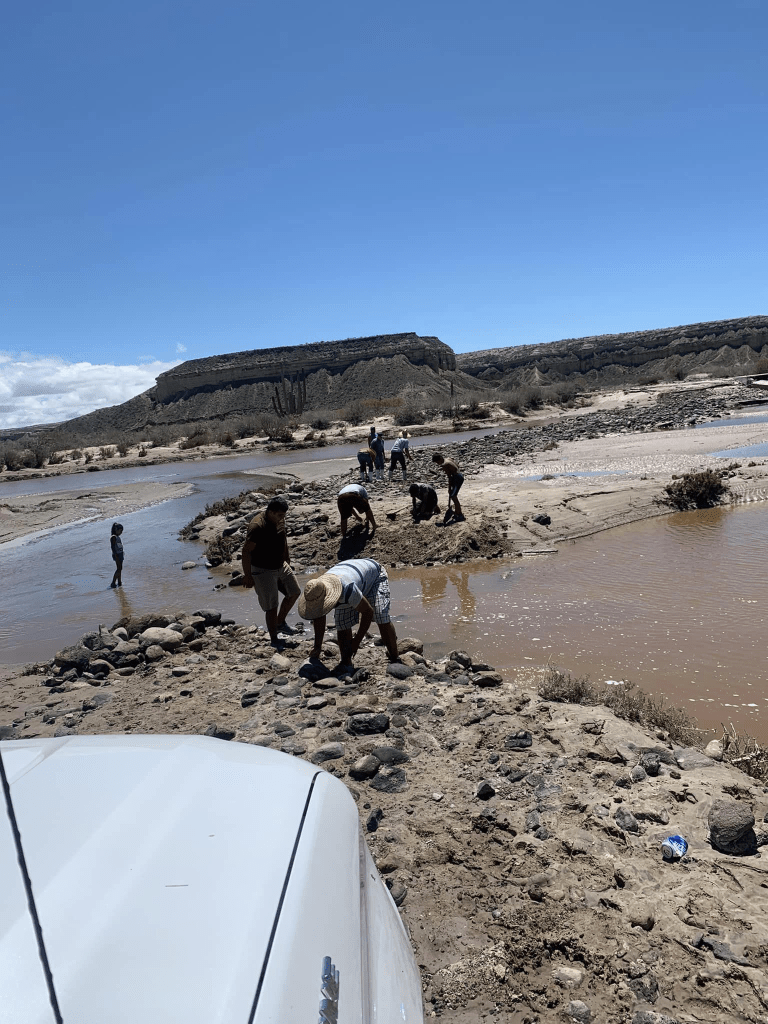
The townspeople came together, and with shovels and arms full of rock and mud, began the process of crafting a crossing. It’s this spirit of ‘can-do’ which continues to fuel my love for Baja.
Arroyo Work (photo: Jenny Smith)Arroyo Work (photo: Jenny Smith)
Figures they’d name the late season hurricane after my mother, Kay. Although to be honest, my mother was nothing like a hurricane. More like an ebb and flow tropical storm, most of the time delightful, oftentimes windy and unpredictable. Always Mom, gone too soon for me, and now, as the storm edges up the Baja peninsula and bends the palms toward the ground, her memories churn inside my head like the uprooted branches flowing down the arroyo.
It wasn’t easy being her daughter. She was vivacious, charming, a sparkling light in whatever room she occupied. She inhaled the air in a room in the same way, decades ago, she inhaled the swirling grey smoke of a Pall Mall cigarette, or the condensation laden glass of her icy evening scotch. She was Girl Scout President, PTA President, Community Chest President. She was always in front of the train. Dressed impeccably. Coral colored lipstick smudge-free. A full-mouthed smile, even though she hated a front crooked eye-tooth that looked like a ragged cat.
I could never quite measure up, and yet she was my greatest cheerleader. In the belongings she left behind, a folder of clippings, all my newspaper columns for ten years. She was always there, even in the middle of my life when her drinking shadowed the woman I loved and make our relationship so damned difficult. Our own stormy decades.
1:49PM – September 7 2022
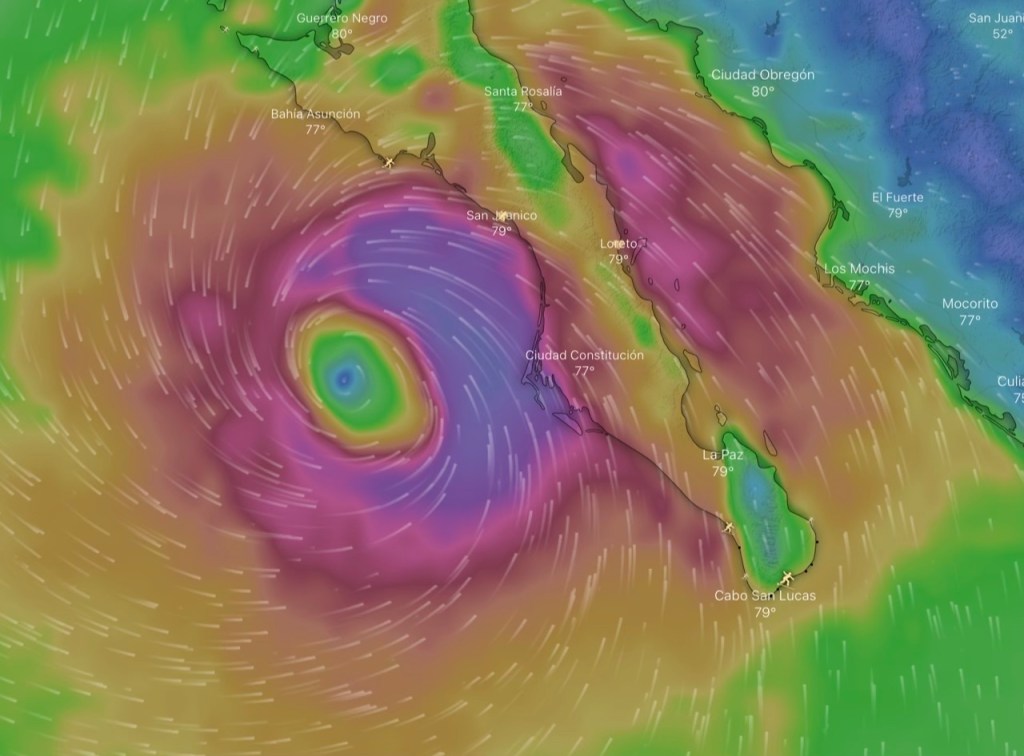
Hurricane Kay, not quite her alter-ego, is only 12 hours old. Much much to come, with the bulk of the winds due to hit Loreto sometime around 3am tomorrow, the 8th.
Last weekend, the cone predictions (area of effect) lined straight up the middle of the Baja. by the end of the weekend, the trajectory had moved westward, and by yesterday, even more so. The predicted landfall of lower Baja shifted, and now only the tip of Guerrero Negro is in the sights of the spinning ball of wind and rain. A wet storm, rain has fallen in Loreto since yesterday. Light and then downpour, back to light and downpour. And we are only at the beginning of the storm.
Yesterday I drove from the Pacific west coast back to the east coast and the Sea of Cortez. A number of reasons, but shelter and power were the primaries. The drive was rather harrowing, with moments when the water pouring from the sky was so heavy it required lowering speeds to 15mph, or simply stopping. The road between San Juanico and Insurgentes has been under renovation/reconstruction, and the day before, a large swath was as yet unpaved. I was extremely grateful that the workers had pushed forward and laid the asphalt on the last stretch. Otherwise, the deep mud on both sides would likely have found my truck up to the axles. The photo below shows Highway One between Insurgentes and Loreto with river-like lakes on both sides. An idea for you, of the amount of water falling.
Mex 1 – Day BEFORE Hurricane Kay – just a little water both sides of main highway
Mom didn’t much like inclement weather, which another area in which we were quite different, odd on it’s own, since we shared a birthday 22 years apart. She was a sunshine and blue sky kind of gal. While I am quite happy in sunny beach weather, I get a thrill out of storms. As long as there is no loss of life or widespread damage, when the heavens let loose and the winds whip up the sea, it’s as if some wild child has been unleashed. An aliveness that is tamped down when weather is too calm or normal.
Anyway, this storm, this storm called Kay, has me racing from childhood, to young adulthood, to motherhood (her grandmother-hood) and into her senior years, now chased by my own.
My mother was always optimistic, and that trait I did inherit. She suffered her own dark days and losses, as have I. But always, her words still ring in my head. “It’s going to work out fine,” she said. Even when it’s tough to see through a storm to the potential rainbow on the other side, I hear her. “Everything will be alright.”
Sea of Cortez, Afternoon, September 7, 2022Tropical Storm Javier – September 2, 2022
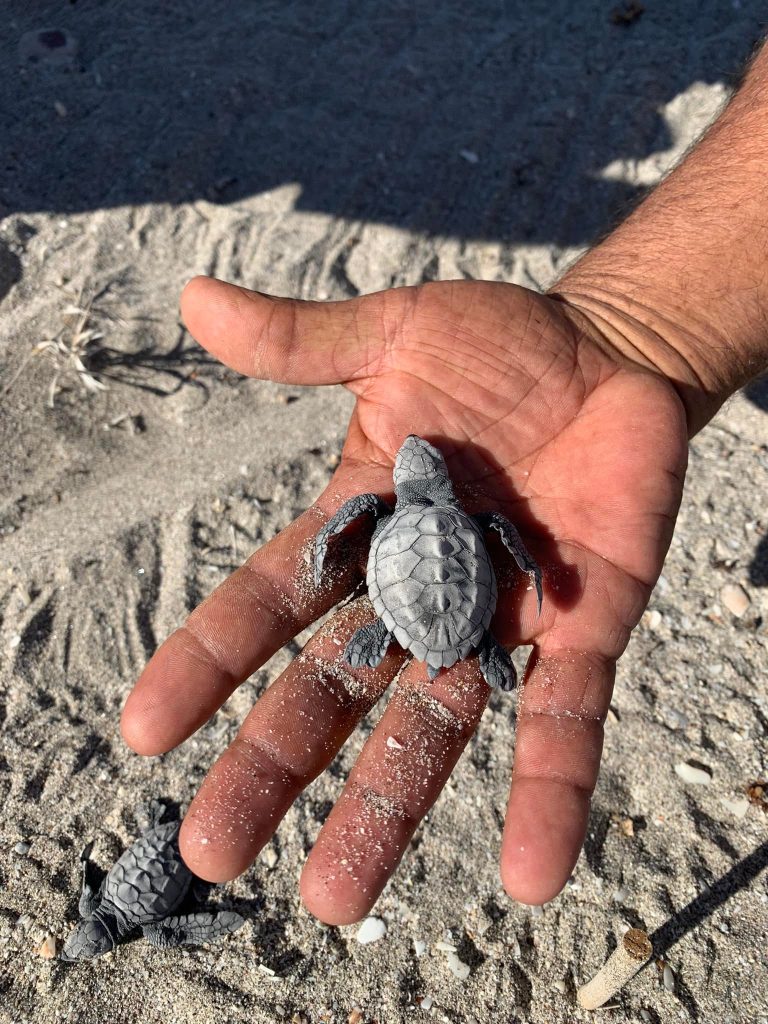
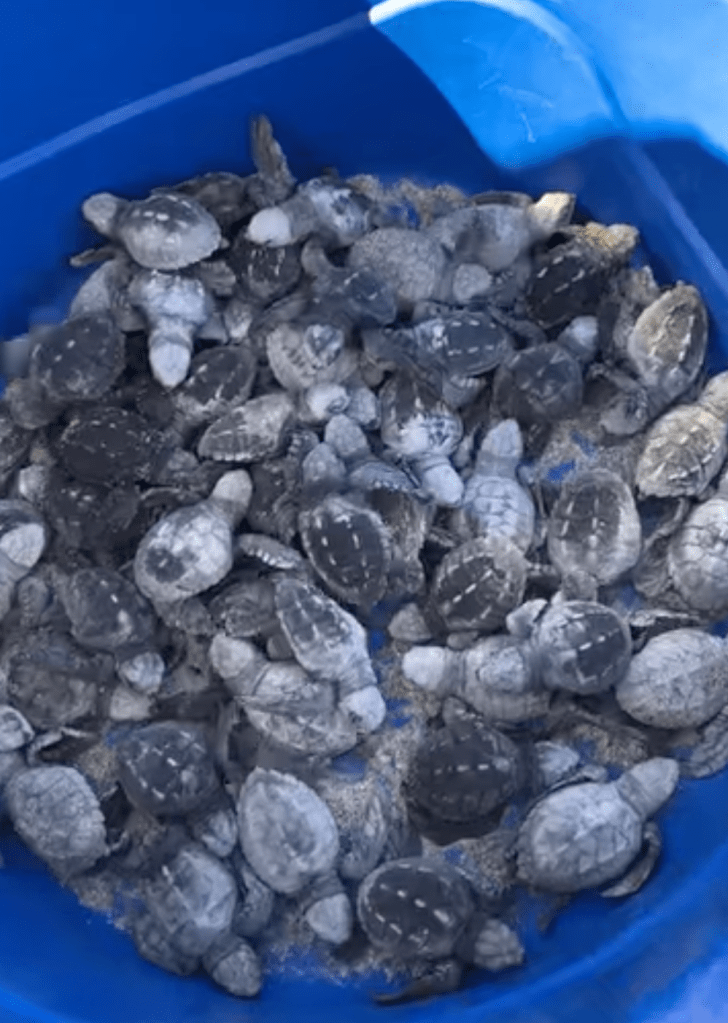
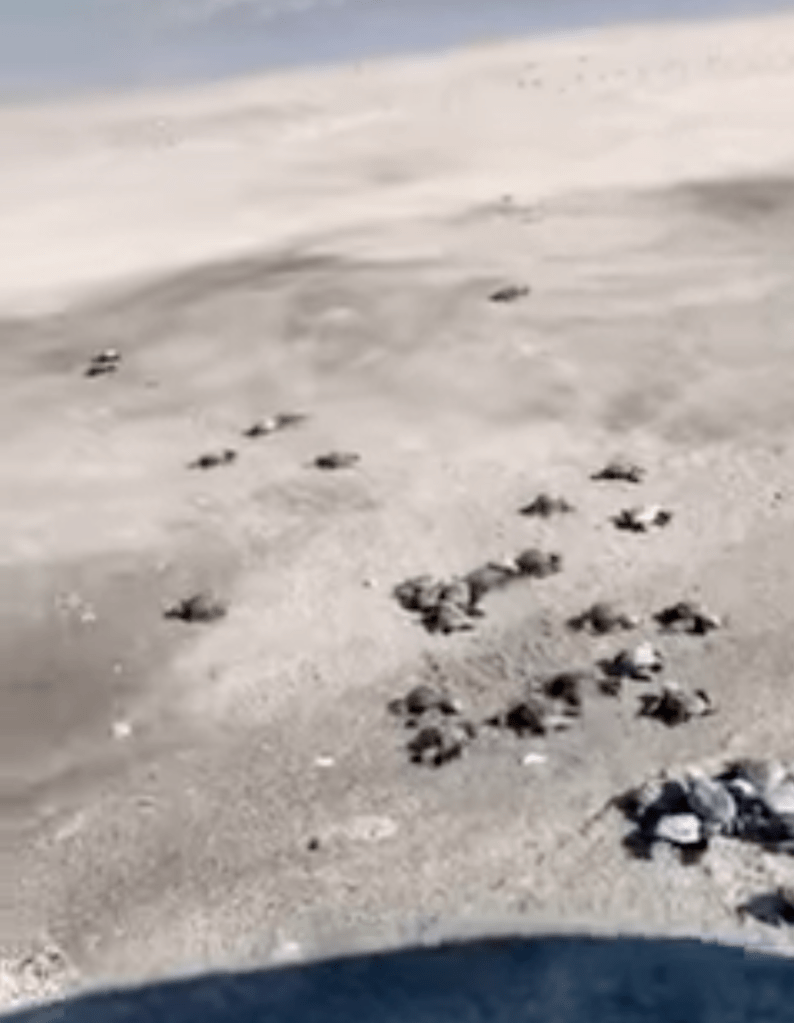
“On the way into San Basilio on Saturday, Martin Castro and I were informed of a very late turtle nest hatch after 72 days of incubation (normally they hatch from 45 to 60 days). We hustled over to the nest site, where we have installed protectors that were designed by Martin to protect the nests from coyotes and raccoons, who can smell the buried eggs and will dig them up and eat them.
For the next three hours or so, We watched as Martin, who is the Director of the Sea Turtle Sanctuary at San Basilio expertly helped them through the hatch and to get into the sea successfully. His knowledge and care is really impressive! Over 60 hatchlings made the transition to their new environment.Since the late season hatches are almost exclusively males, this is the last time they will ever be back on land during their lives.
Under Martin’s leadership, this effort has seen over 500 hatchlings survive this year, up from only 88 the first year. I have seen this before, but never watched so many actually hatch, breathe for the first time, have their bodies expand into their normal shape as they take in breaths, and then launch out into the world, where only a few will survive to adulthood.”























 Baja Dreaming
You must be logged in to post a comment.