
April Wind Waves
wind wind wind wind .. batman wind .. relentless wind.. the sea a frothy foamy mix of white and deep blue …
ah .. but on the backside, high 80s – low 90s predicted 🙂 get that bikini off the shelf and join me on the beach!
April Wind Waves
wind wind wind wind .. batman wind .. relentless wind.. the sea a frothy foamy mix of white and deep blue …
ah .. but on the backside, high 80s – low 90s predicted 🙂 get that bikini off the shelf and join me on the beach!
It seemed incomprehensible that Santa Ana winds whipped through the canyons and once again turned parched hillsides into conflagrations. I was sitting in the path of a Hurricane Norbert, and rain fell from the sky in buckets.
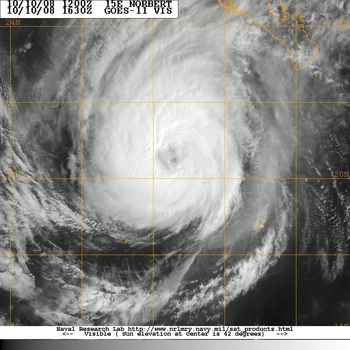
Category 4 Hurricane Norbert heads towards Baja California
Norbert had his origins off the southern coast of Mexico as a loosely formed tropical depression, and slowly grew as it ambled toward the coast of Baja at a leisurely 7 to 10 knots. To the great surprise of those who predict the course and strength of these storms, Norbert went from a Category 1 to a 4 on the Safir-Simpson scale. NOAA called it a very dangerous storm with sustained winds of 135 miles per hour with higher gusts.
Steve and I had driven south on a resupply trip, as we like to call them. Boat parts, shower mats, curtain rods, special foods, DVDs, books, a case of wine, and meds for a friend filled the Hummer as she made her way down Baja 1. When we left, there was a possibility that the storm would veer westward and spin down in the cooler waters of the Pacific.
For Steve, the trip was a quick turn-around. We had scheduled a fundraiser for Cheryl Kinsman at our home Saturday afternoon, and he needed to return. With another quick look at the weather, we kissed goodbye. He told me to be safe, that he loved me (always good to get that last “love” piece in the conversation), and that he’d pick me up Tuesday at LAX.
Dark clouds began to obscure the sky late that afternoon, but Norbert was moving slowly, already downgraded to a Category 3 — winds sustained at 115 mph. We had finished all preparations. I had enough water for at least a month, ample canned and dried foods, flashlights, extra batteries, a satellite phone fully charged, as well as a marine VHF radio and a car filled with gas (thank you, Steve). The front patio was closed off with plywood and all furniture had been moved inside.
Still, Norbert lingered, his long spiral arms spinning above the water, his well-defined eye staring into and out of his center.
Saturday morning, my neighbors Al and Barbara Jordan planned a “Bloody Mary Hurricane Breakfast.” Val (of Laguna history — Iverson’s 76 station at the north end of town — of course no longer there) and her husband, Barry Wilkerson, showed up on their quad. Next-door neighbor Jeanne and I drove the one long block to ensure we wouldn’t get drenched on our return.
The storm was predicted to come ashore at around 1 p.m. It would hit the Pacific coastline first and then have to cross the Sierra Gigantica. While still a Category 2 storm, the factors of coming from the west and moving over the land mass would further reduce Norbert’s punch.
We sat in Bab’s kitchen sharing storm stories and watching the sky grow darker. Al’s boat mechanic was in the garage working on some bearings. Barry pulled out a photo of the 314-pound tuna he had just caught on a fishing trip in Puerto Vallarta. It was a normal morning — except for the unspoken nervousness of what was to come.
It started to pour. Not just drops, but buckets. The courtyard quickly filled with water from the first squall line as we sat down to a breakfast of fried/poached eggs, tortillas, beans and melon.
We ate, cleared the table, and with a short break in the rain, all the guests headed for their respective homes. I had planned to finish a book and — if I had power — watch a movie between running in and out to check on the house and the storm.

Wind whipped Sea of Cortez
The winds picked up around 2 p.m. and blew steady until the next morning. I would guess the steady blow around 50 mph with higher gusts. Certainly not what was forecast, oddly disappointing, while simultaneously being a great relief. We kept power, although the water was cut (common in storms at our end of town), and so I was able to send Steve photographs and e-mail blow-by-blow stories of the storm.
Around 3 a.m. the seas had gone totally wild. Waves built and crashed on the outside sandbar and everywhere the water looked angry. The storm surge mixed with a high tide pushed the water over my patio, depositing ripped cactus arms, sea stones and dead fish tangled with broken branches and bits of trash.
The road into our ’hood was again given back to the arroyo as water from the mountains raced toward the sea.
Earlier, a young Mexican had driven onto the compacted dirt as it began to flash. The road gave way under his car and tumbled it on its side. He opened the door and was washed into the churning river. Friends tried to throw him a line, but he was unable to catch it and was sent into the storm. Tuesday, the police force combed the beach for his body, but as yet, no trace of him has been found.
Storms come and storms go. This one was gentle, by standards — no great damage to the city, but the loss of even one life is a tragedy.
Here, the mountains burn, and occasionally the earth rolls. We are not so almighty powerful as we would like to believe. Storms on the outside tend to echo what happens on the inside. We find our fears, we stare them down, and then we clean up afterward.

Weather! I love September. Bright hot days can give way on a whim to dark threatening clouds. I was spending a few precious moments in the sun before showering for my flight back to the states, when a squall-set powered in from the south. Winds whipped the sea into a frothy soup of white dancing caps, as small boats on the out-islands ran for the safety of shore.
I was hoping that enough rain would fall that the airport runway would become a lake (this happens during heavy downpours), and that the plane would be canceled. Unfortunately, the storm blew through in a hurry, the runway dried up, and it was fly home (sadly) back to the world of traffic, speedy everything, and work.
ROAD TRIP~ with stove, parties, friends & whales.
And I mean – road trip! Left Laguna mid-morning with overnight in Guerro Negro. Great dinner – as always – at the Malarrimo Restaurant. Got up before the sunrise and headed east. Watched the sun slip over the lip of the Sierra as we dropped down the grade toward Santa Rosalia.
With great luck and no traffic, we pulled into Loreto around 11 AM. Got the truck unloaded, and on call – Carol’s connection – Richon – arrived to look at the stove and what I need for installation. No one believed I could get a stove installed in one day. This IS Mexico. But I was driven and committed.
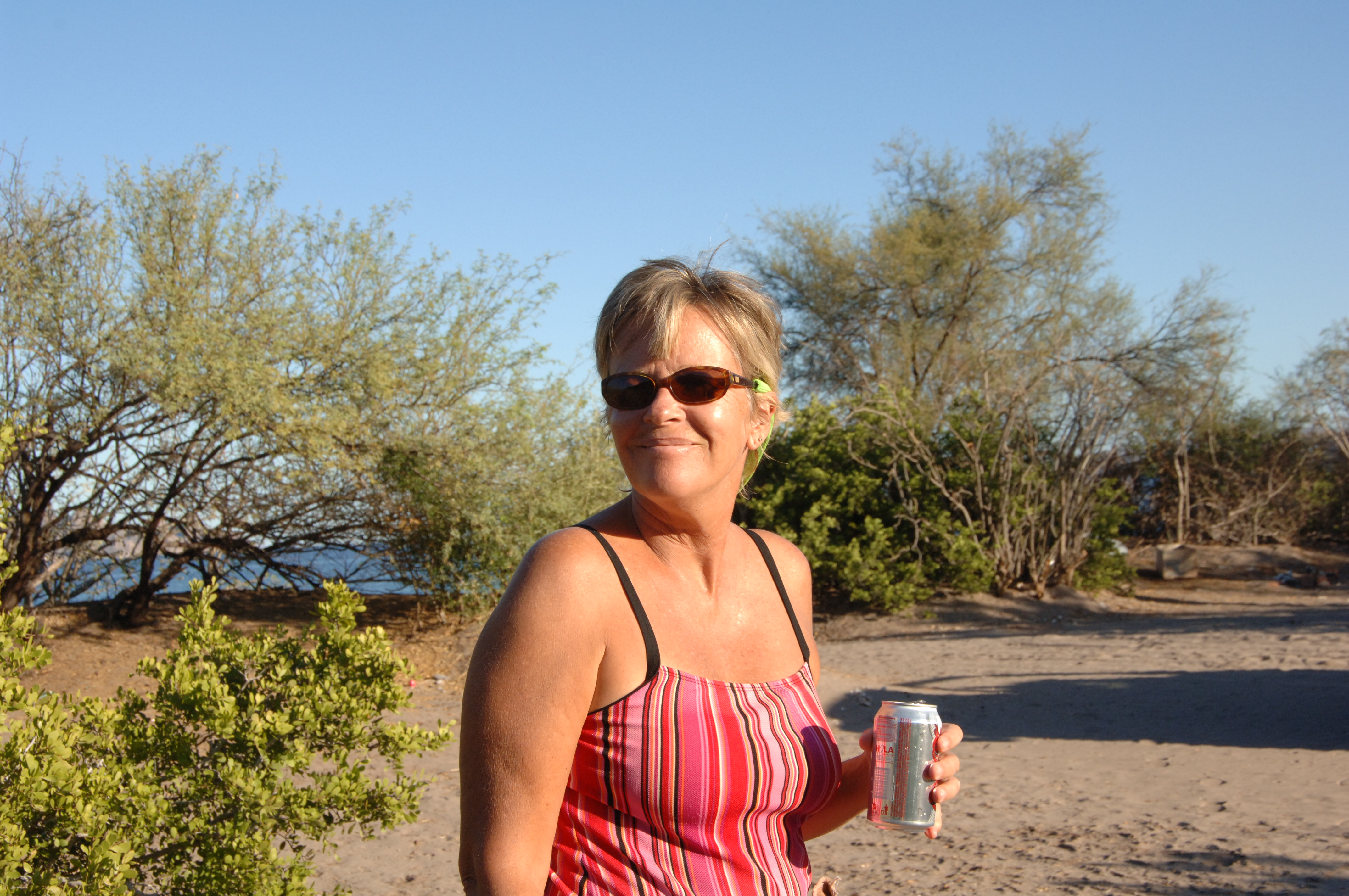
Val Wilkerson
Barry and Val came by to chat – and stayed 🙂 That’s how it works in Loreto. Richon brought Juan. Alexander came over. Jeanne stopped by and brought her girlfriend, who was fresh from fishing with Chris & the boys.
Steve was deep into rum & cokes until he realized that all the orifices on the stove needed to be converted from natural gas to propane. Sobered him up (grumpily) fast .. and the job was done.
In the meantime, Jeanne kept saying she wanted to go to sleep and have tomato soup .. but now Steve was grousing about dinner.

Carol & Lee Boyd at Meditarraneo
We were supposed to eat at Mediterraneo, Carol & Lee’s excellent restaurant on the Malecón, but now it’s after 8…. and cranky is a good word to throw out. .. So.. with grand and gracious spirit, Jeanne opened her freezer, found ground turkey and a meat loaf was created.
There were potatoes at the house from Boots & his wife Arianna who had been staying while they searched for a place to live. We mixed russet and sweet for mashed, crafted a salad of cucumbers and tomatoes.. and celebrated a feast. Alexander had gifted Jeanne a bottle of tequila for her birthday, and this was the time to enjoy.
Wild night and tired, Steve and I crashed down. Woke early for sunrise and a morning of client work – while we had DSL internet connections.
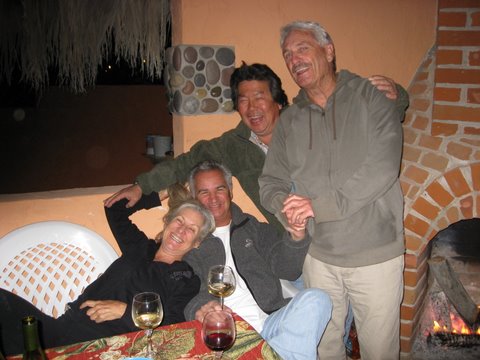
Catharine, Dennis, Steve, & Bill
We made an overnight stop in San Juanico where we partied – is there a theme song here? – with old friends and new. We were the guests of Dennis Choate and Donn Stein in their hacienda complex. Donn lent his palapa for the night .. sheets were hastily changed and the party began.
Dennis had good friends, Bill and his daughter, Cathy, staying in his guest house. Once upon a time, Dennis and Bill had been arch sailing rivals, but now, spinnakers aside, they are best friends. Dennis builds boats – Transpac and more – at his shop in Long Beach – Dencho Marine.
It might have been the case of wine we brought down for the boys, or maybe it was the fabulous food of the local chefs, but the evening was one of great revelry and memories were created out of deep laughter.
Sailboat racers, surfers, bikers ….. and thank god for the morning after – coffee drinkers. Bill – you are forever my hero for the espresso!
We all drank too much, ate too much, and laughed harder than we imagined possible. Dueling iPods provided music and Bill, CC & Steve traded iPhone tricks and info. I woke up next to my vitamins .. Cathy in her clothes. Too much fun …………..
Quick check of the surf, not much happeing, and Steve and I jumped back in the Hummer for the drive north along the salt flats to San Ignacio Lagoon.

Calle Davis
Quietly, in warm waters, tragedies are born. Rapidly rising vapors condense to form clouds which push aside cool air. Perfect conditions – low sheer, converging winds and hot ocean temperatures – and small spinning vortexes are born.
Such was the beginning of John, a tropical depression born on the west coast of Mexico, who grew from to a category 4 hurricane. Initially, John bounced along the Pacific Coast of Mexico, pouring rain into the coastal cities as he changed shape and status again and again. The predicted storm track was toward Cabo San Lucas, then into the cooler water of the Pacific.
Instead, John took direct aim at Cabo San Lucas, and for a while, the press also took aim. Tourists were bussed to the border. Hotels and restaurants were evacuated. John slid close, but instead of coming ashore, he slithered around the east end of the peninsula toward the hotter waters of the Sea of Cortez.
La Paz, the capital of Baja California, was next on the target list, and the press kept some coverage, but with no deaths or major damage, attention moved back to the war on Iraq and the rain spawned by Hurricane Ernesto on North and South Carolinas.
NOAA and others continued to project John crossing the peninsula and exiting to the Pacific. John, however, had other ideas.

Mex 1 Loreto - Bridge Washout
Rain and winds pelted the east coast of Baja, taking down roofs and homes in Los Barilles, flooding La Paz, and cutting electricity and phone lines.
The press went home, but John was not done. He continued to march up the spine of the peninsula, heading toward Loreto, 217 miles north of La Paz.
Loreto’s the location of our second home and that of many good friends. Val and Barry battened down their hatches, while helping secure the front of our property. We exchanged emails, analyzed every hurricane url available, and prayed for a turn in the storm. Friends Lynn, Randy, Rosie and Mike raced south to arrive before the storm hit.
John edged onto land, dropping to a category one hurricane, and then a tropical storm. Winds gusting to 65 kts whipped through Loreto, downing power lines, transformers and cutting off power, water and phones. Flooding ripped apart streets and arroyos were impassable.
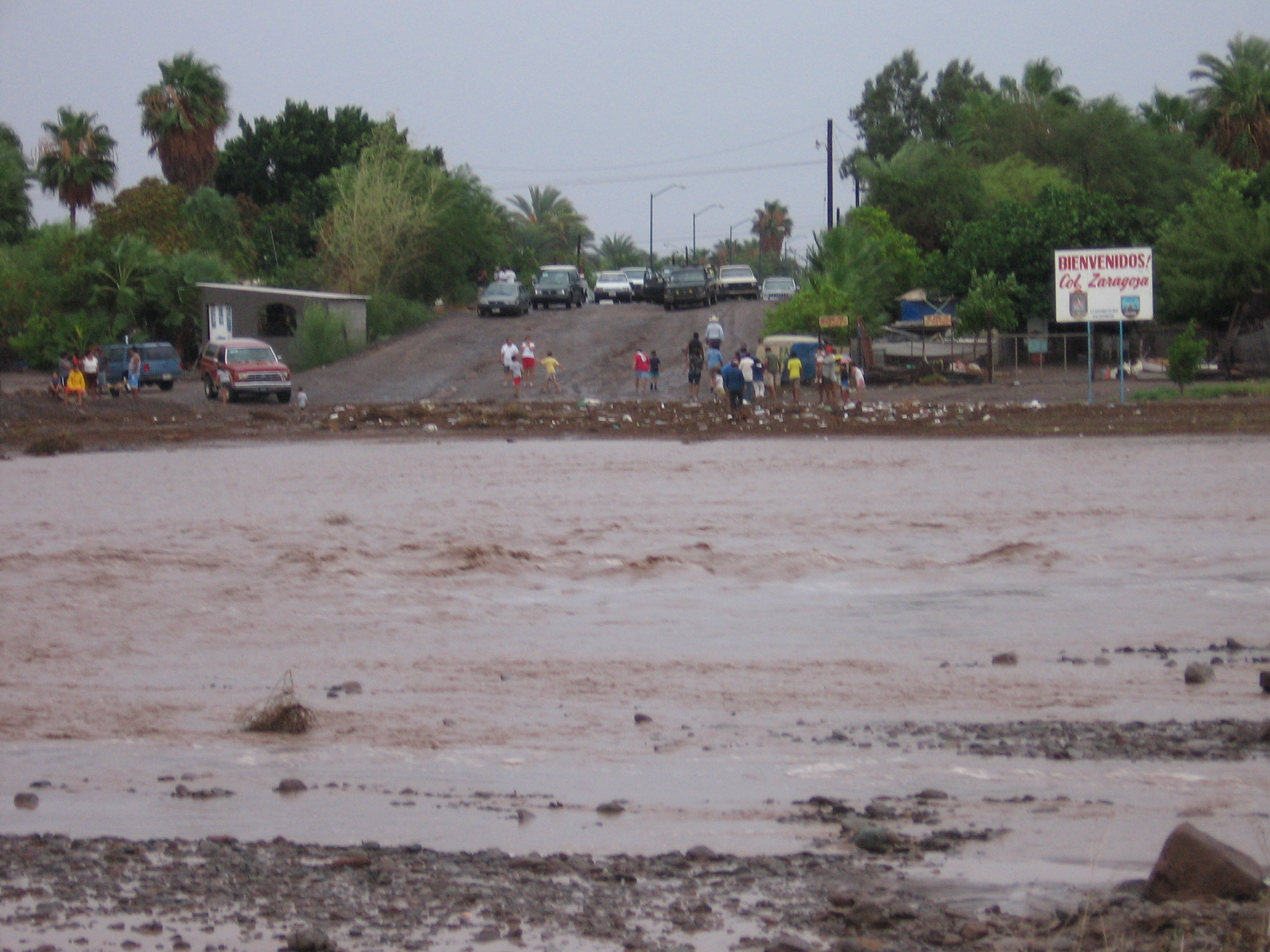
Arroyo Candeleria - Access to Casa de Catalina
Communication stopped and worry increased. It was 36 hours after the center of the storm arrived in Loreto and the next time I heard from Val.
When she came back on-line, she reported that all were fine, but that Highway One was closed. She sent a photograph of the normally dry Loreto River cutting through the highway.
All traffic north and south had stopped, and there were rumors that the road in St. Rosalia to the north was destroyed in many places.
Loreto, while flooded, had suffered minor damage compared to towns to the north. John “parked” himself in the mountains behind St. Rosalia and dumped his load of rain. Slowly, reports sent via ham radio operators, began to drift in of a horrific story.
The small town of Mulege, population approximately 3100, had taken the brunt of the storm. The generally tranquil river that flows through the center of town had risen 18’ in 6 hours. The banks were home to date palms, playgrounds, several trailer parks, restaurants and camping spots. As the water rose through the night, people were forced to flee their homes with only their shoes (if they had time to put them on). One American, Peter George Clark, died, when he was swept away inside his trailer.
Roads into Mulege were closed on both sides with arroyos washed out and boulders blocking traffic. Stunned townspeople with no place to sleep, no water to drink or wash, and no idea where to start wandered the streets.
The first photographs were via a computer powered by a generator in a house on the hill. They showed the total devastation of river level. No CNN. No MNBC. Just townsfolk – trying to make sense of the enormity of the situation.
Cleanup and restoration will not stop at with the first round of emergency services. Those wishing to help can log on to http://forums.bajanomad.com/ There are several listings within the message threads of ways to provide assistance, from local folks driving trucks, Flying Samaritans, and Rotary Clubs. It’s a small town, off the radar screen, and even $25 can make a difference.
John ended quietly, just as he had begun, but not over the Pacific as predicted. John headed inland toward the southwestern United States, where once again, he crossed the radar screen of the media.
Rain to drizzle. Drizzle to sun filled skies. The tasks of cleanup, restoration of lives, and rebuilding.
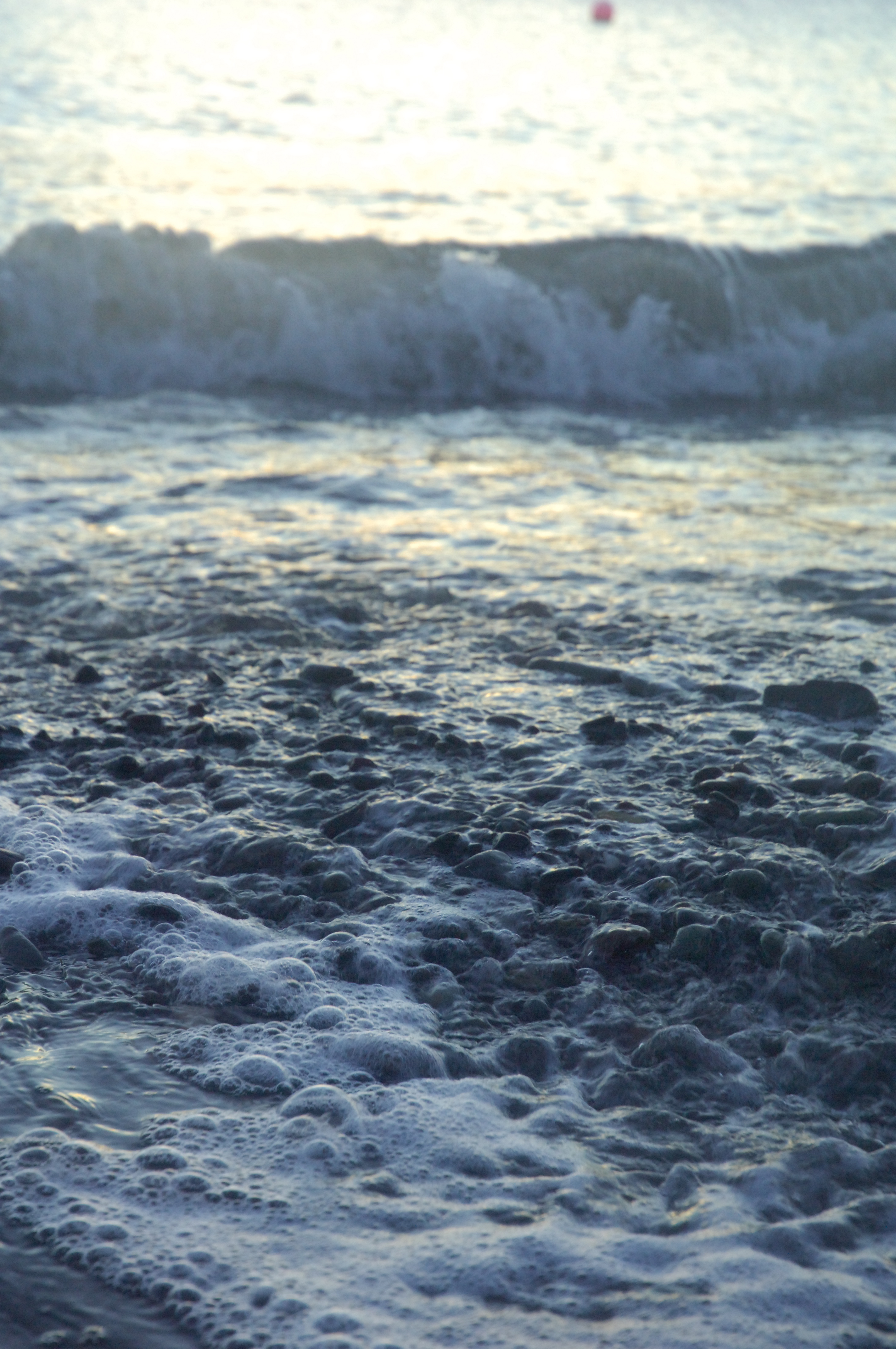
WindWaves in front of Casa de Catalina
The wind kicked up yesterday afternoon to around 24 mph and continued into the night and this morning. The sand bar just off the beach has become a kind of offshore break .. well, for very small folks. Waves pick up off the sand bar and build to shore, breaking at 1-2 feet.
It’s pretty wild to see a line of waves – albeit small in stature – pouring into shore.
 Baja Dreaming
You must be logged in to post a comment.